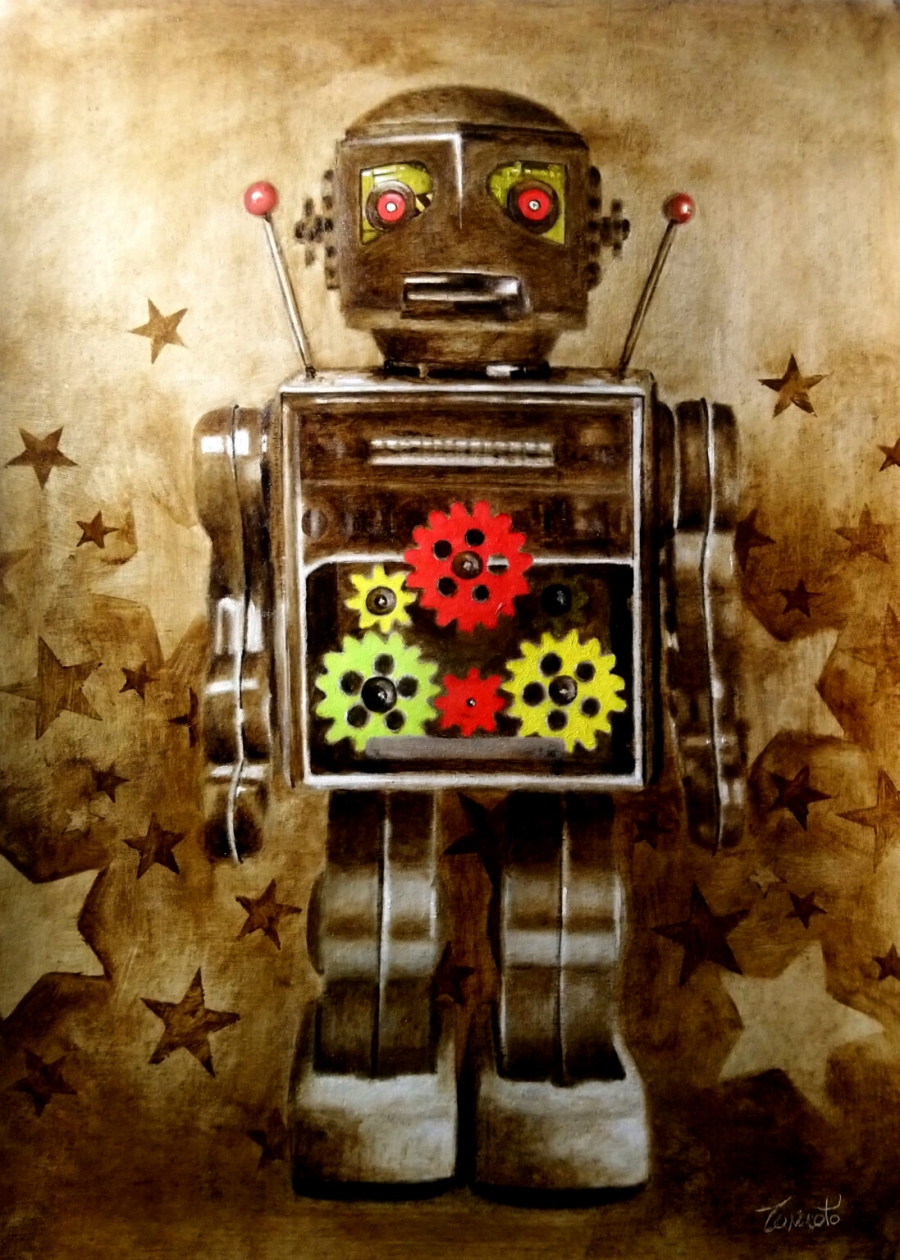
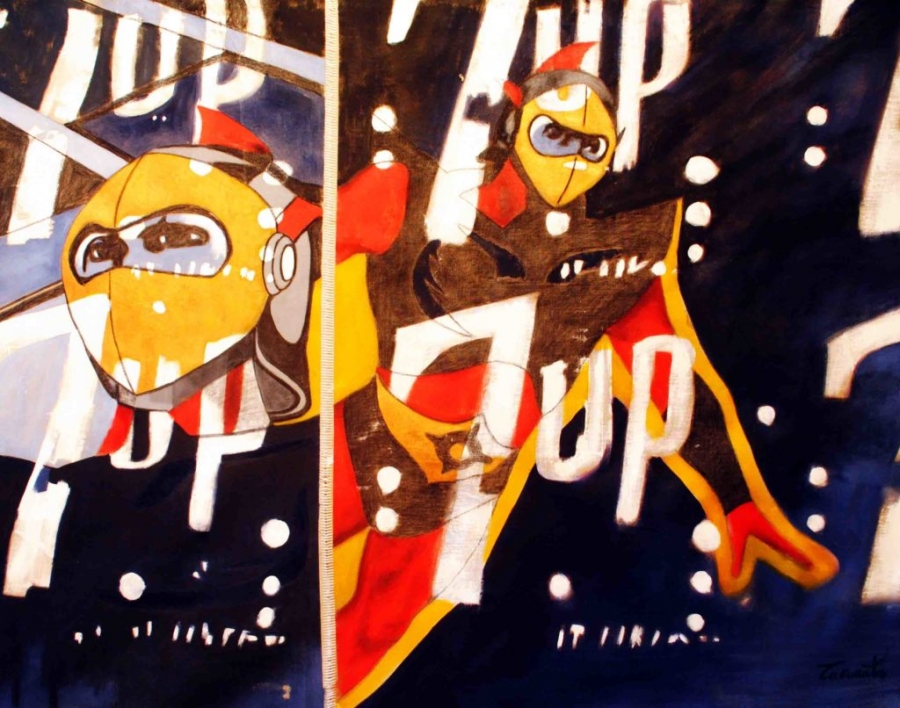
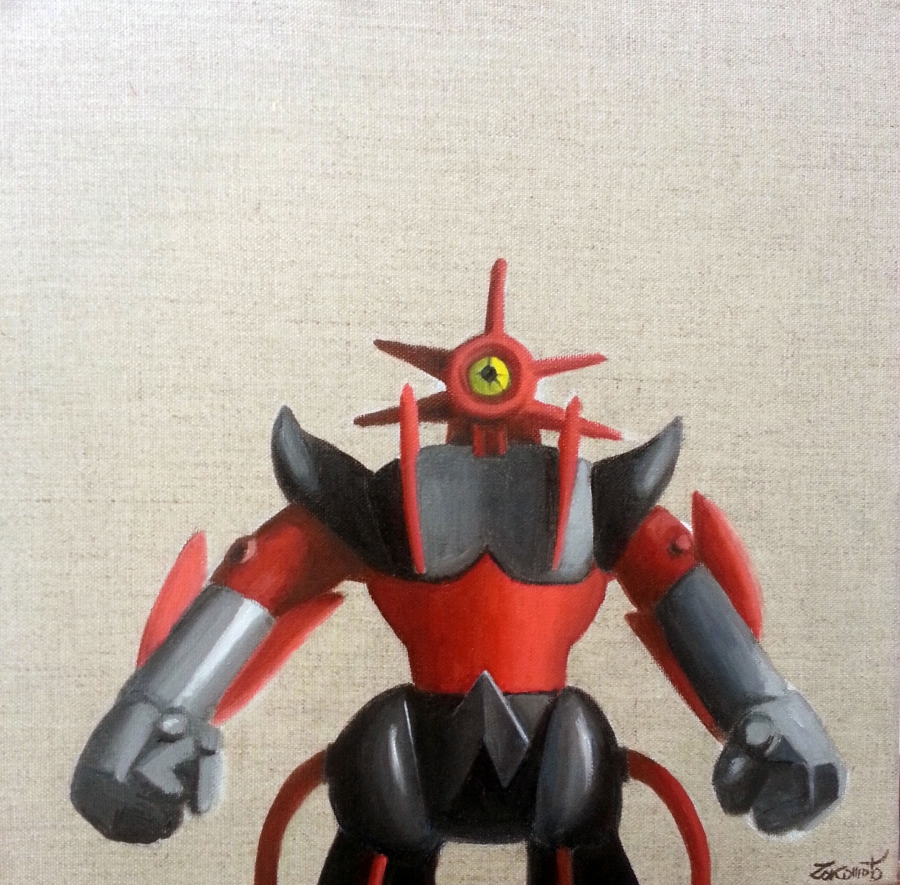
In my view Akira Zakamoto has every right to consider himself a Japanese artist, for a very simple reason: as a child he had a healthy obsession - devoting every moment of the day to reading Japanese comics.
For him this was initially the experience of a child reading stories of wholly surreal heroes, of thrilling metaphors. Then, when the moment came to choose a profession, he decided to become a painter, and he became one by vocation, not out of professional coolness.
He never stumbled into any academy of fine arts, but studied communication - that is, the relationship between advertising and the object. When he left that thoroughly persuasive trade as well, Zakamoto did not forget his childhood, his boyhood bound up with manga, the Japanese comics that for Hugo Pratt were literary images.
Zakamoto is a painter who owes everything to the past, to dream, but he also drew a lesson from that drawn literature: the sense of warriors and of heroism, which he revisits in terms of justice and indignation. His compositions are anything but elegiac, and what deserves appreciation in them is Zakamoto's inner solidity, which allows him to regard men and things in their condition of truth. For our painter, is the depiction of the hurricane a disturbance of the spirit? On the contrary: he is able to grasp its metaphor as a warning message.
For him painting is the persuasive and cultivated medium for communicating the daily mystification of reality. His inner solidity, in this case, does not allow him to be swallowed up in the sea of lies. Constantly engaged with the disquieting themes of our time, his attentive artist's conscience is guided along a path of pitiless representations. His images are expressed in a key that is often ironic, amused and amusing, and on other occasions hallucinatory. In every thematic event Akira Zakamoto holds to his profession as a painter and as a chronicler of his own time.
In effect his tale is that of an apocalypse which serves to lift the veil from the present, so that a new future may then be built in a new revelation in a paradisiacal key. It would be no exaggeration to declare that Akira Zakamoto is the heir of the social realism that moved through Italy between 1946 and 1970 - artists who were already riding high with critics and the market and who at the same time managed to produce allegories of the class struggle and of the youth struggle of 1968, of young bourgeois who had become anti-bourgeois.
Akira Zakamoto, however, is a talented painter who is anything but a realist: he is thoroughly surreal. He is a persuasive inventor of metaphors, able to reconcile elegance of form with a content that is more often than not disquieting.
The painterly execution is always impeccable. Zakamoto plays on tonalities, on chromatic counterpoints, on the delicacy of transitions; for him painting is what creating harmony rather than disharmony is for a composer. Disharmony is what he observes out in the world, and here lies his indictment, verifiable in his recent works, in the 2015 cycle - absolutely important on an Italian painting scene that today gives us no content but aesthetic constructs for homes in need of economic status symbols.
What is astonishing is to still have, today, a painter who works on paintings in order to deliver a message, and who is at the same time a writer who spends his time travelling and writing. The artist favours telluric visions and, at the same time - a curious fact - he takes up Venice with the expressive calm of a painter in the landscape or urban-architecture tradition; and here he plays in a cultivated, sly manner, like all those intellectuals of the brush who give no discounts when they sink their blade into uncomfortable truths.
His paintings are not uncomfortable visually: on the face of it they are pleasant, decorous. But the difference between Zakamoto and an arte povera artist of '68 is that the artists of '68 used curious, unusual materials - such as Manzoni's shit - and the bourgeoisie paid over the odds for them even though the works had been conceived so as not to be saleable, whereas Zakamoto plays another, far more refined game: he offers the cultivated, engaged bourgeoisie his message, which hung on the wall can be pleasantly decorative and, looked at closely, can bestow a consciousness that is not social but universal. The French novelist André Gide would have called Zakamoto "un avertisseur": his works are indeed a constant warning.
Paolo Levi
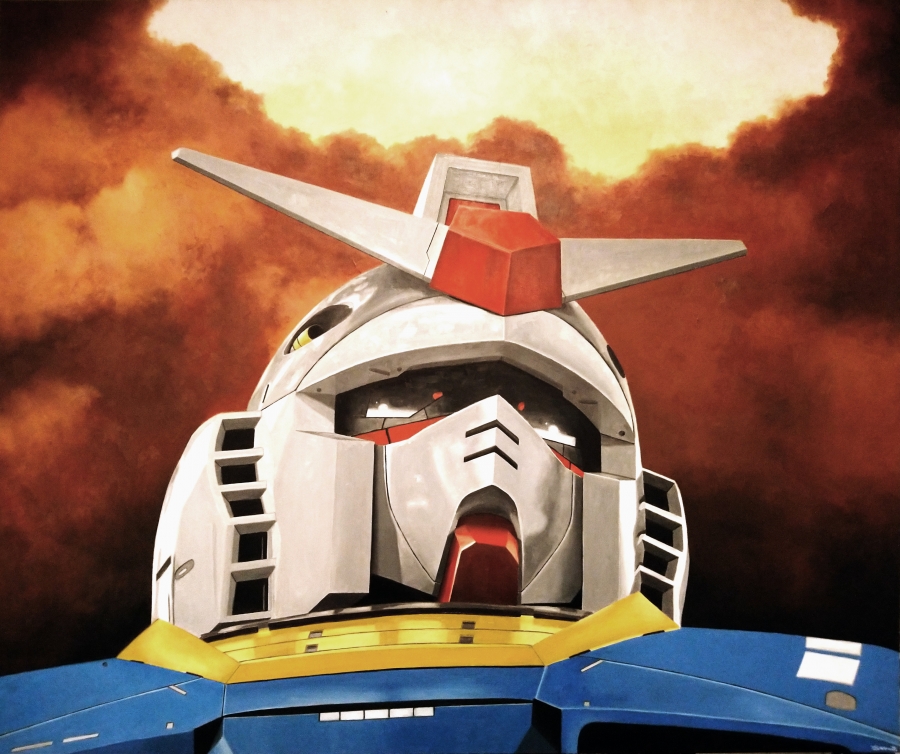
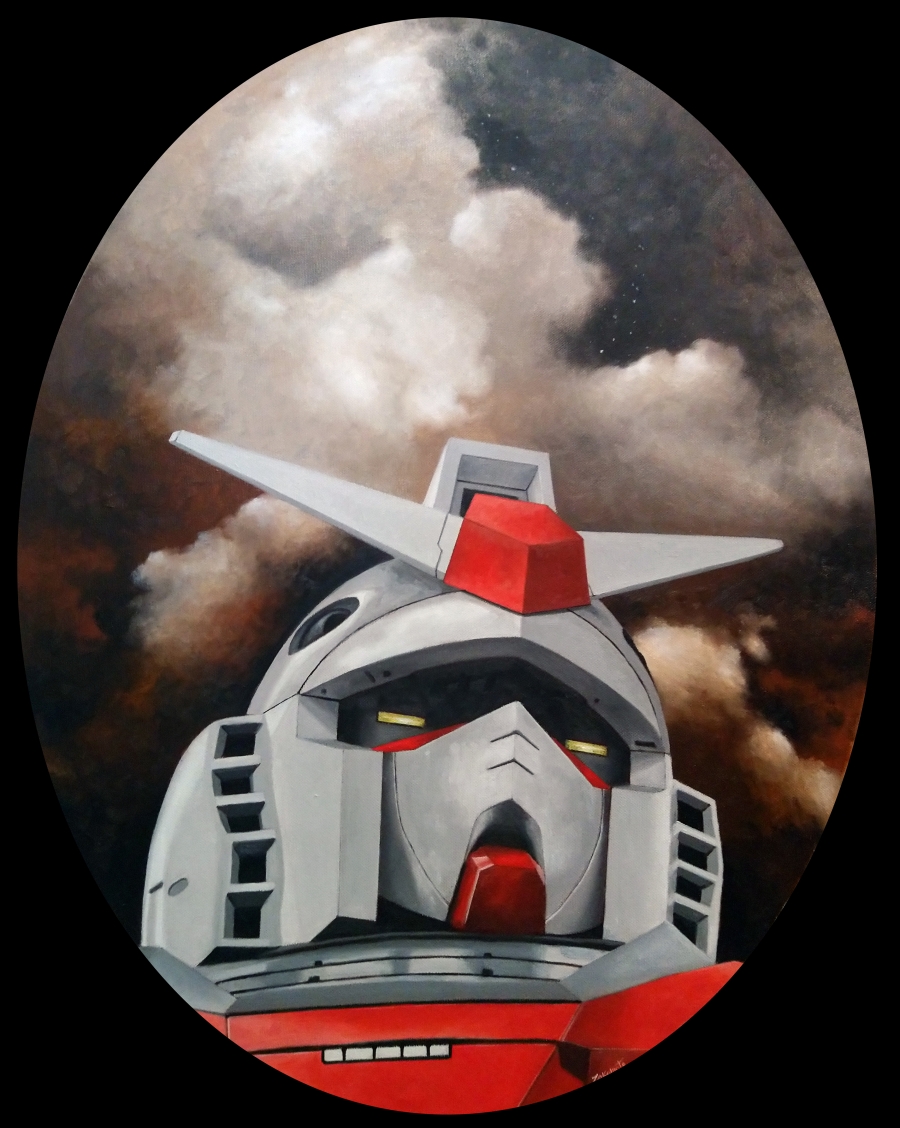
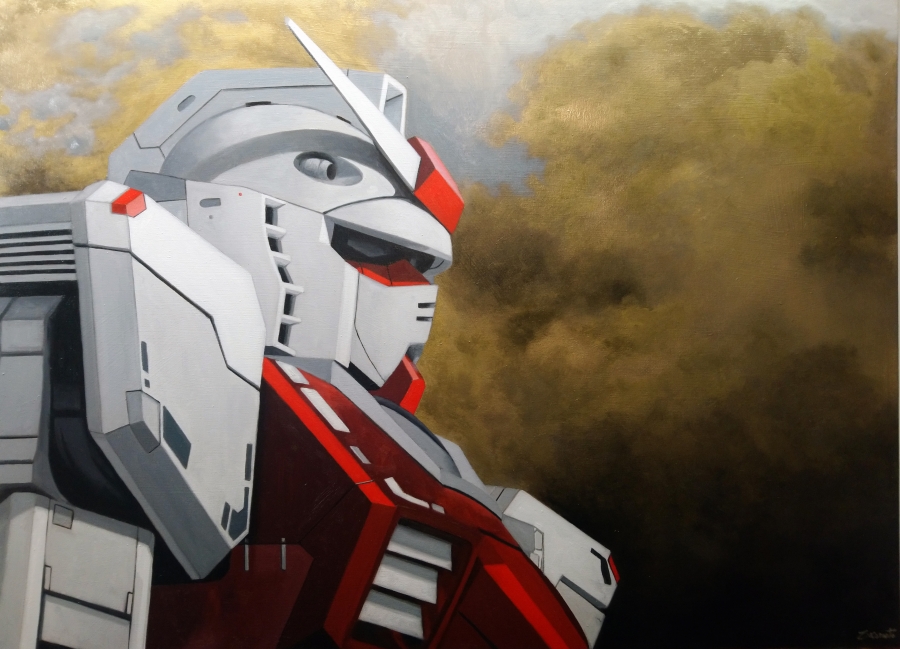
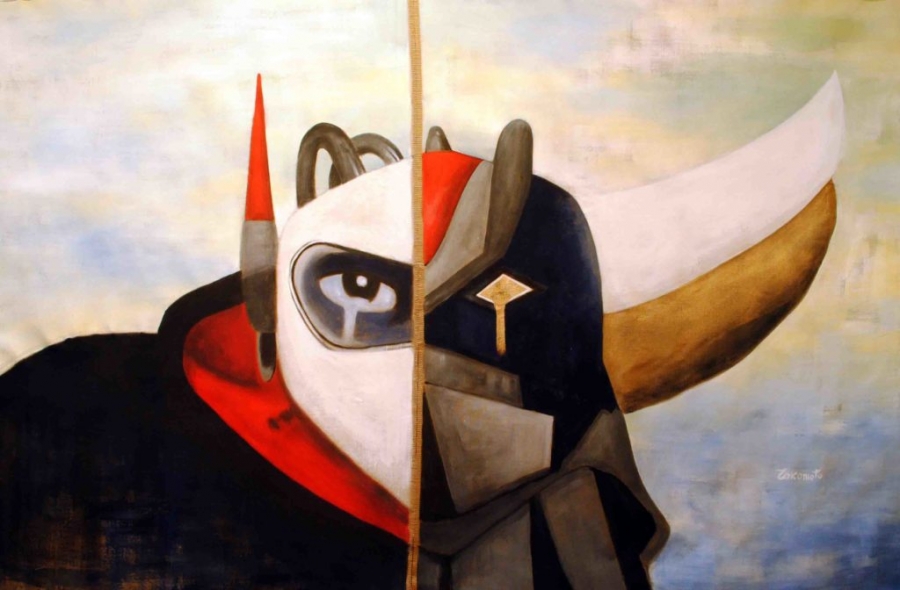
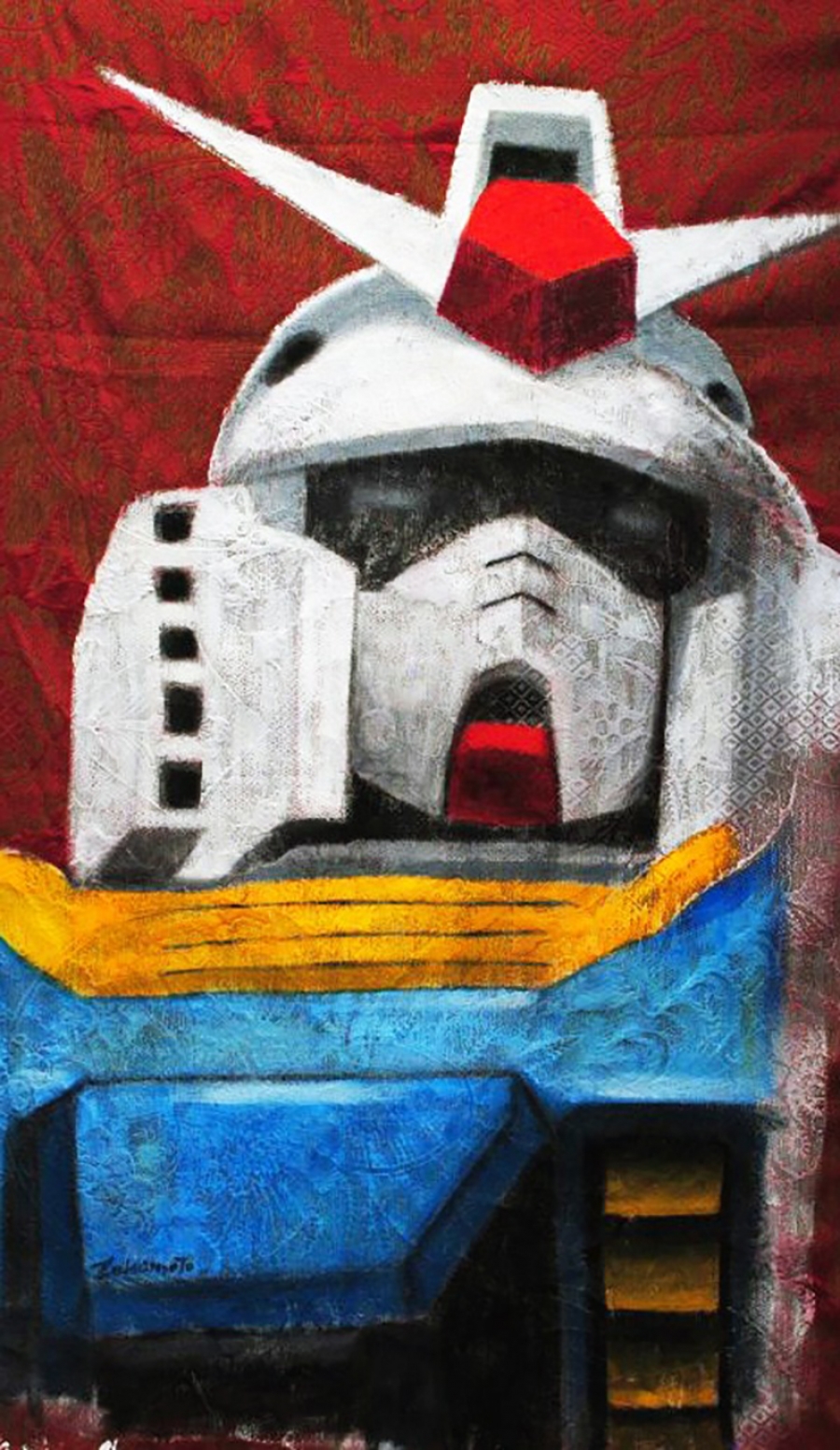 GUNDAM Oil on silk 100 x 200 cm. Akira Zakamoto
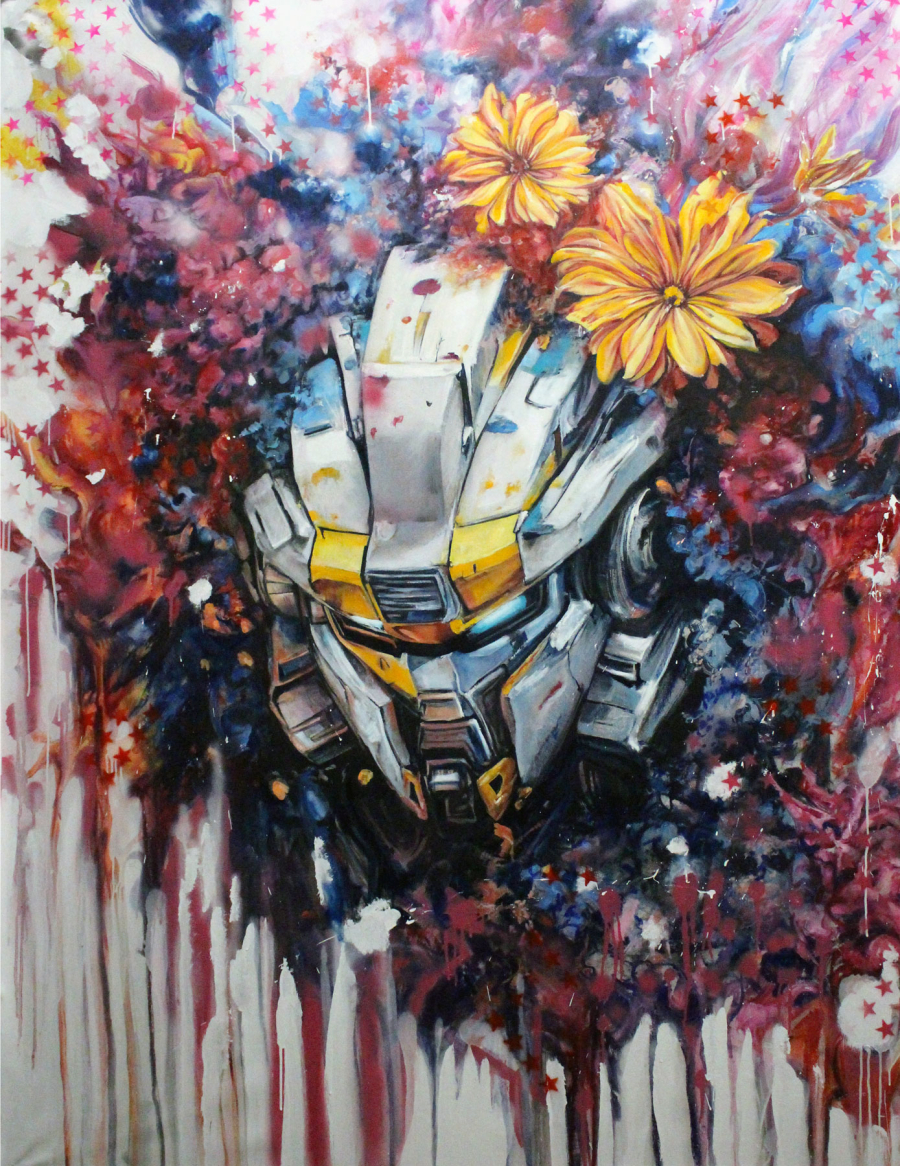
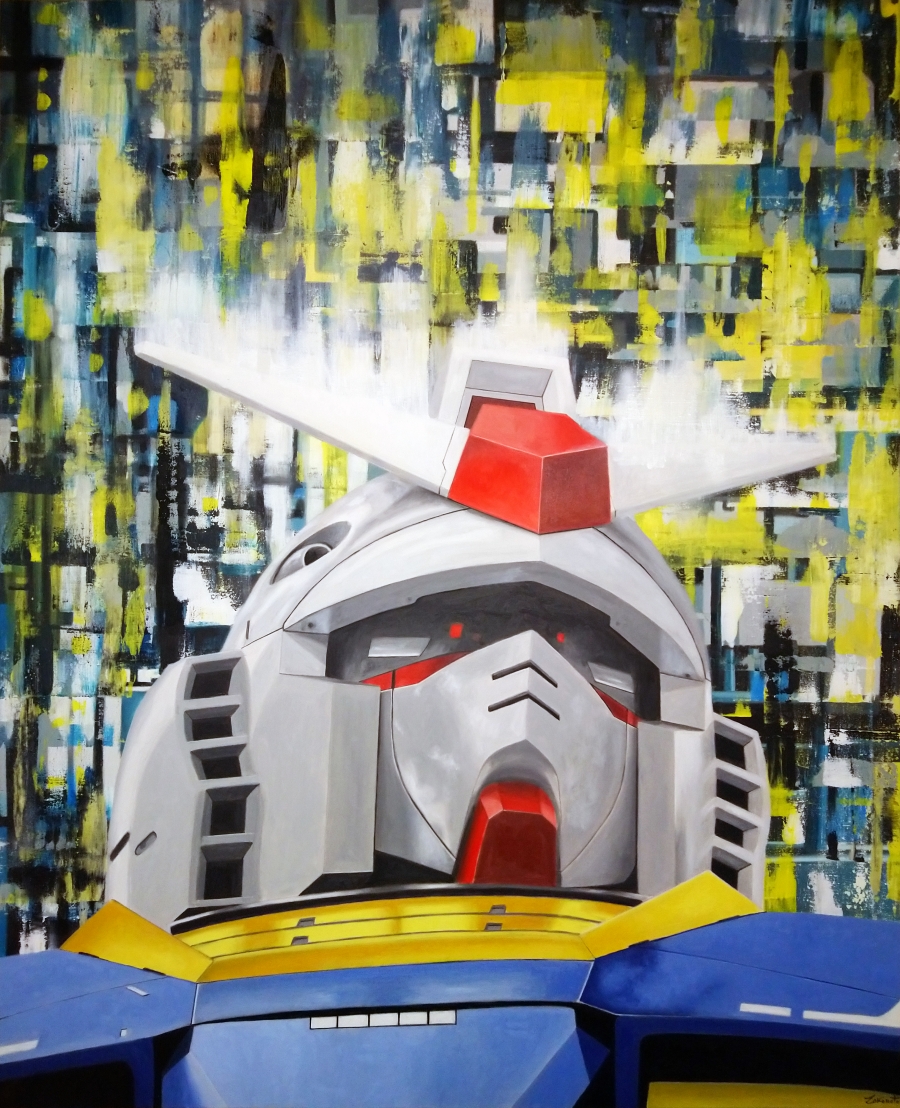
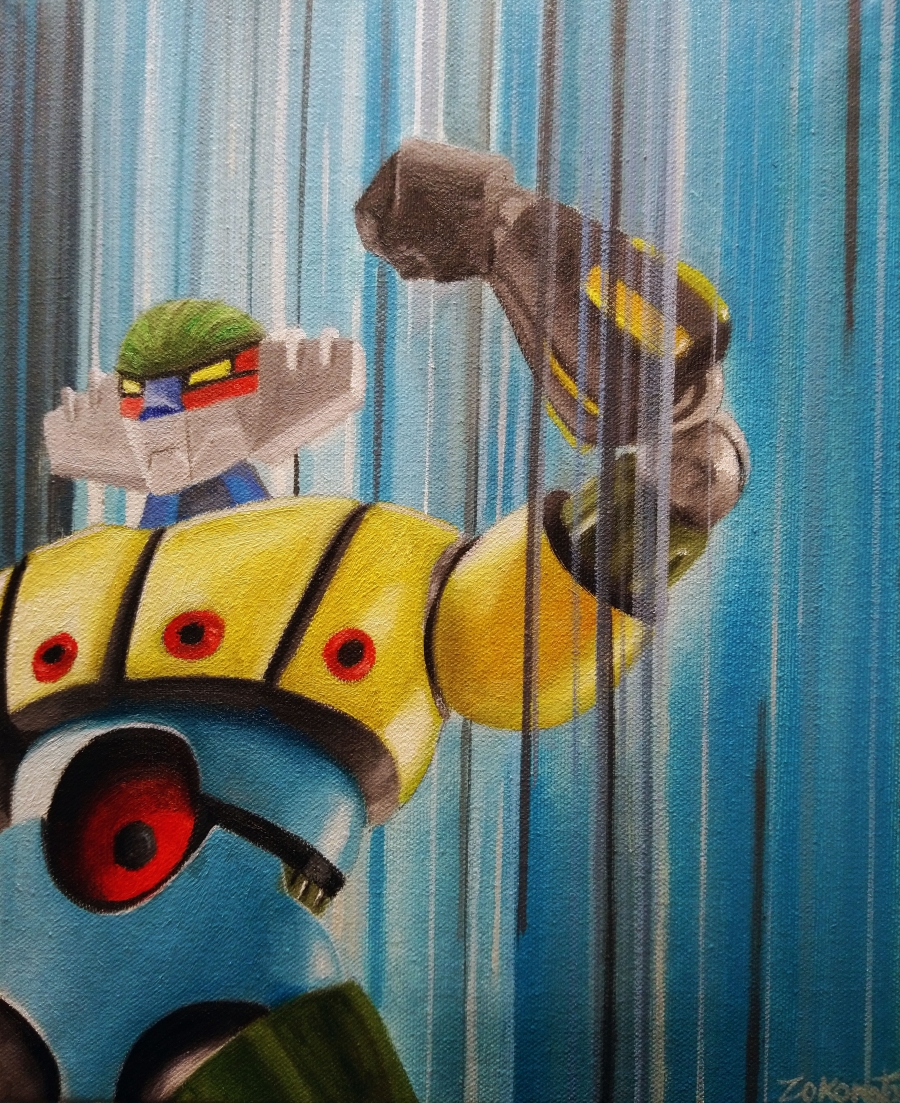
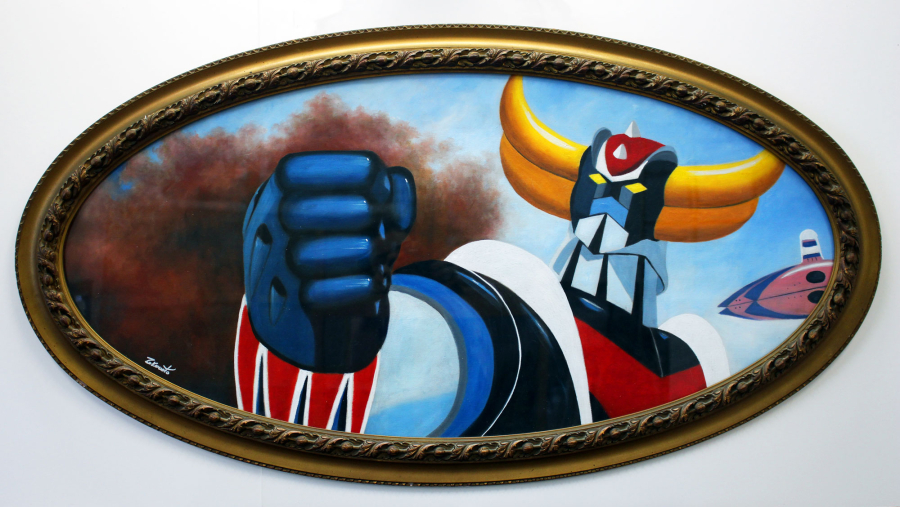
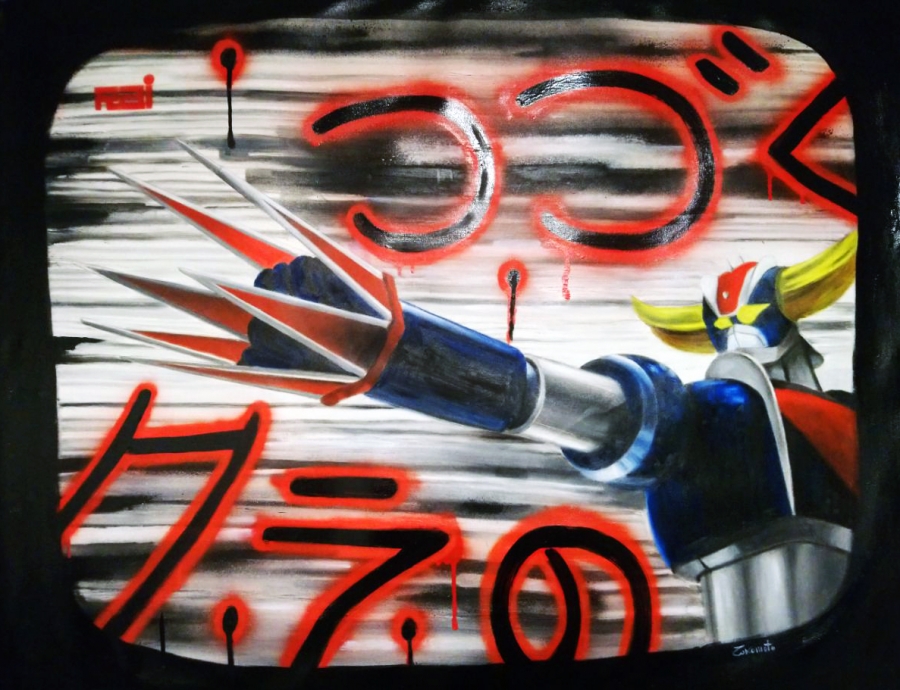
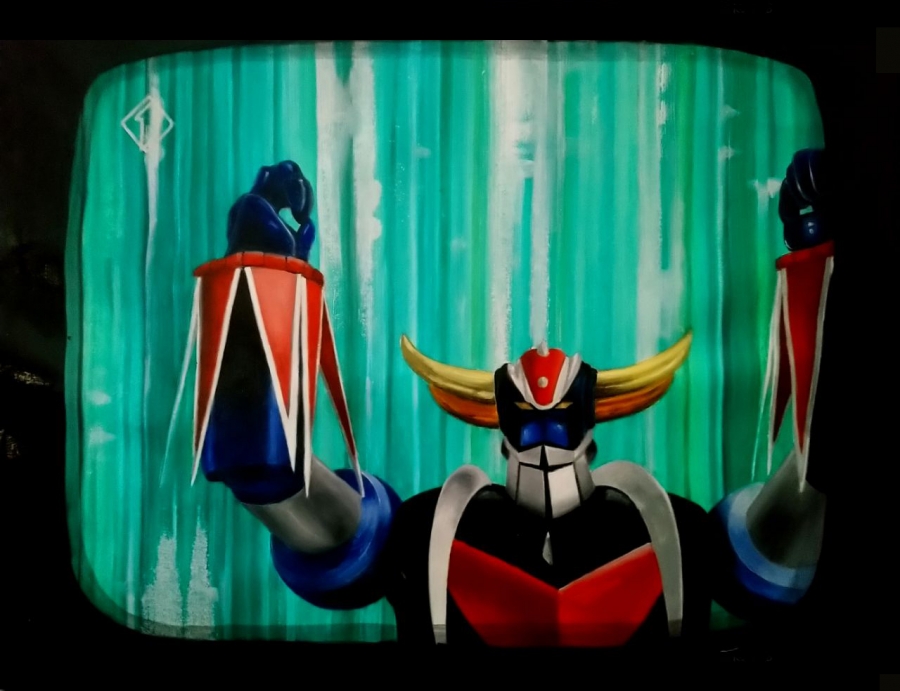
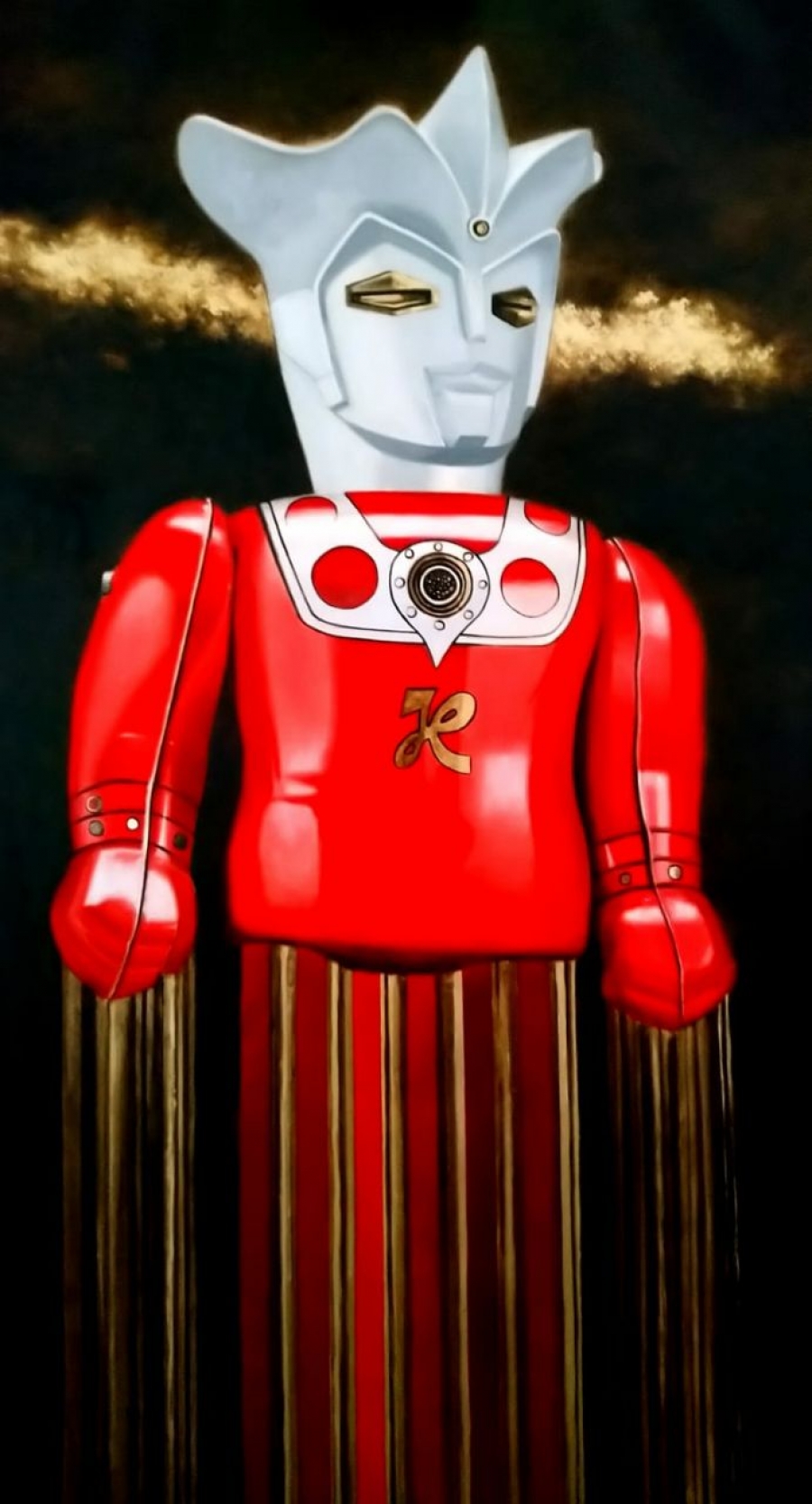
In these canvases Gundam, Actarus, Devilman and Grendizer live again. Warriors and heroes, elected supreme dispensers of justice in the painting of images that are anything but sentimental, and all the more evocative and meaningful for it. They are images that convey unmistakable messages, often ironic, at times surreal, through a universal language that appeals to memories of cartoons still present today in the mind of the viewer.
In his depiction of the warrior-hero he is drawn to the fascination of the heroic phases of dictatorships. Looking at "Cold war" and "Jeeg", indeed, one cannot help thinking of Nazi propaganda posters, of the solemnity of the portrait poses of Mao Zedong ("In gold we trust"), or of Uncle Sam's celebrated call to arms addressed to young Americans.
Zakamoto's political pop investigates the relationship between message and object in paintings that look like advertisements. The mystification of daily life turns into a condemnation of economic values, of pop culture itself and of its lies (above all "Actarus7up" and "Putsch", which destroys a plausible Palazzo Montecitorio), as though the artist were driven by a duty to recount his own time, unable to rein in his harsh criticism of the contemporary world.
Akira Zakamoto's is a world of strong contrasts and hyperbole, which reflects on life through the metaphors of play and childhood. It is a choice loaded with meaning, since the futuristic and fantastical images he produces are a sublimation of the perpetual cycle of creation and destruction.
The large format of the canvases becomes an amplified vehicle for the message inherent in the images; it is a projection of the importance we ought to attach to them, but also of the power they possess, while the lowered or raised vanishing point invites us to take up a different perspective.
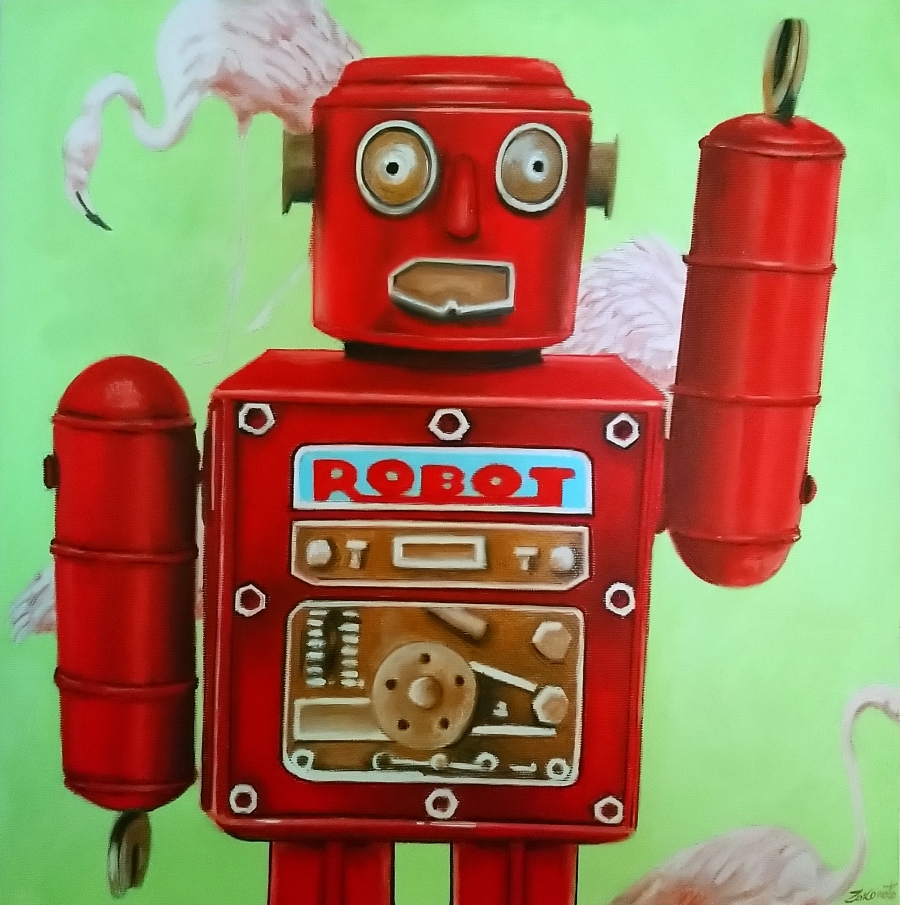
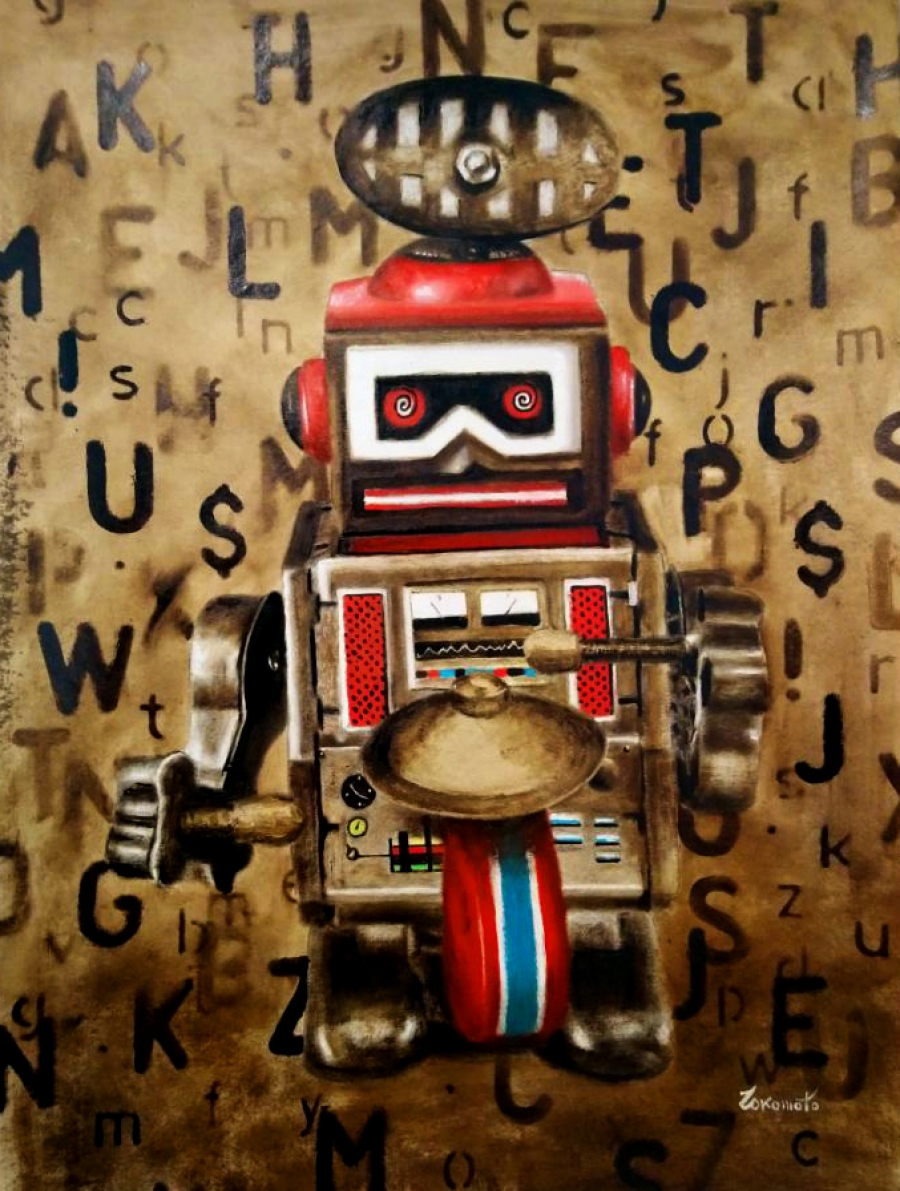
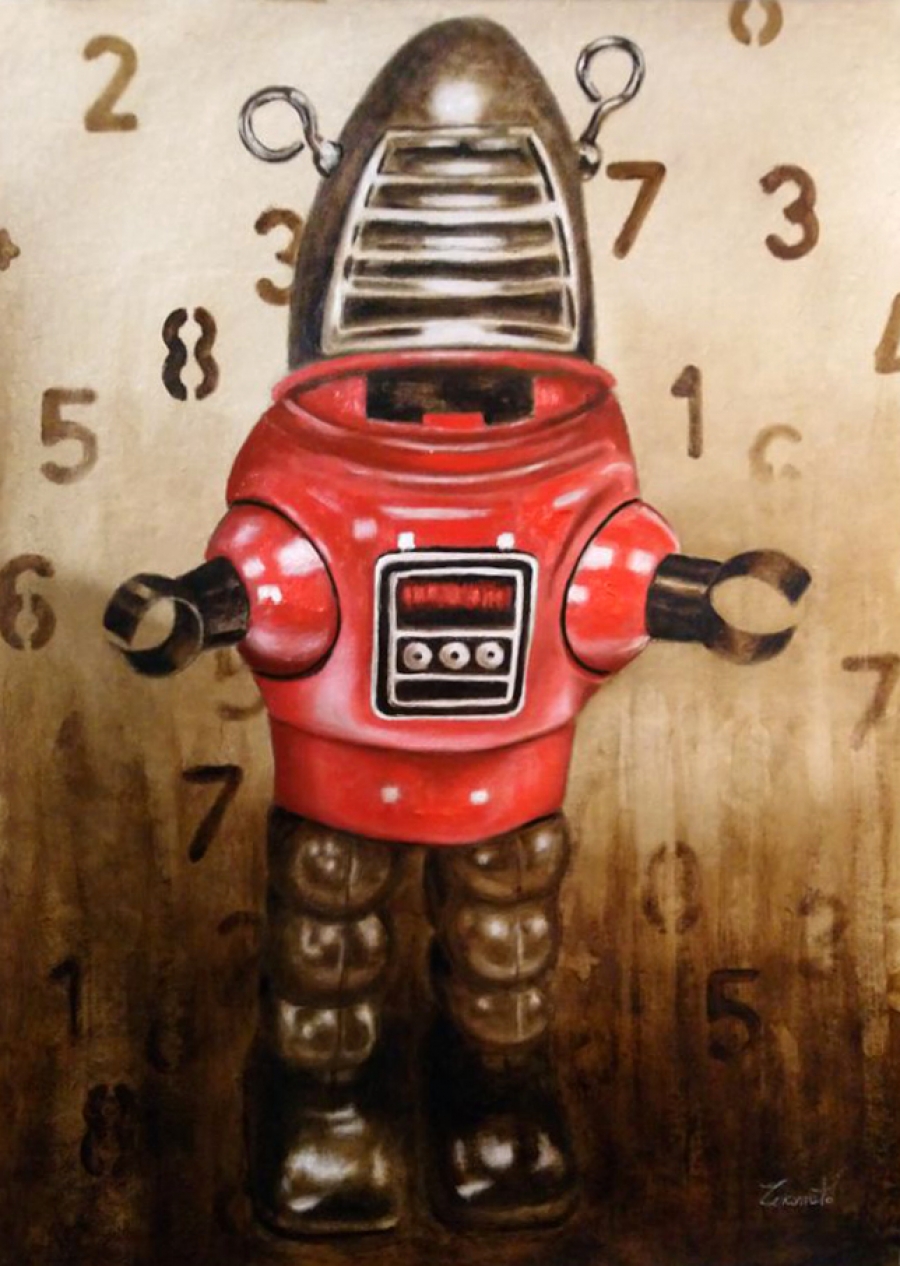
The realism of Zakamoto's painting, in which the American figurative lesson of Alex Katz coexists with the Pop lesson of Takashi Murakami, transcribes expressive immediacy from the dimension of cinema, delineating bodies and objects perfectly; even a simple toy is transformed into a monumental icon of contemporary culture and society. This verisimilitude shakes consciences, offering a privileged lens through which to perceive the world and to hope for a better future.
Marcella Magaletti

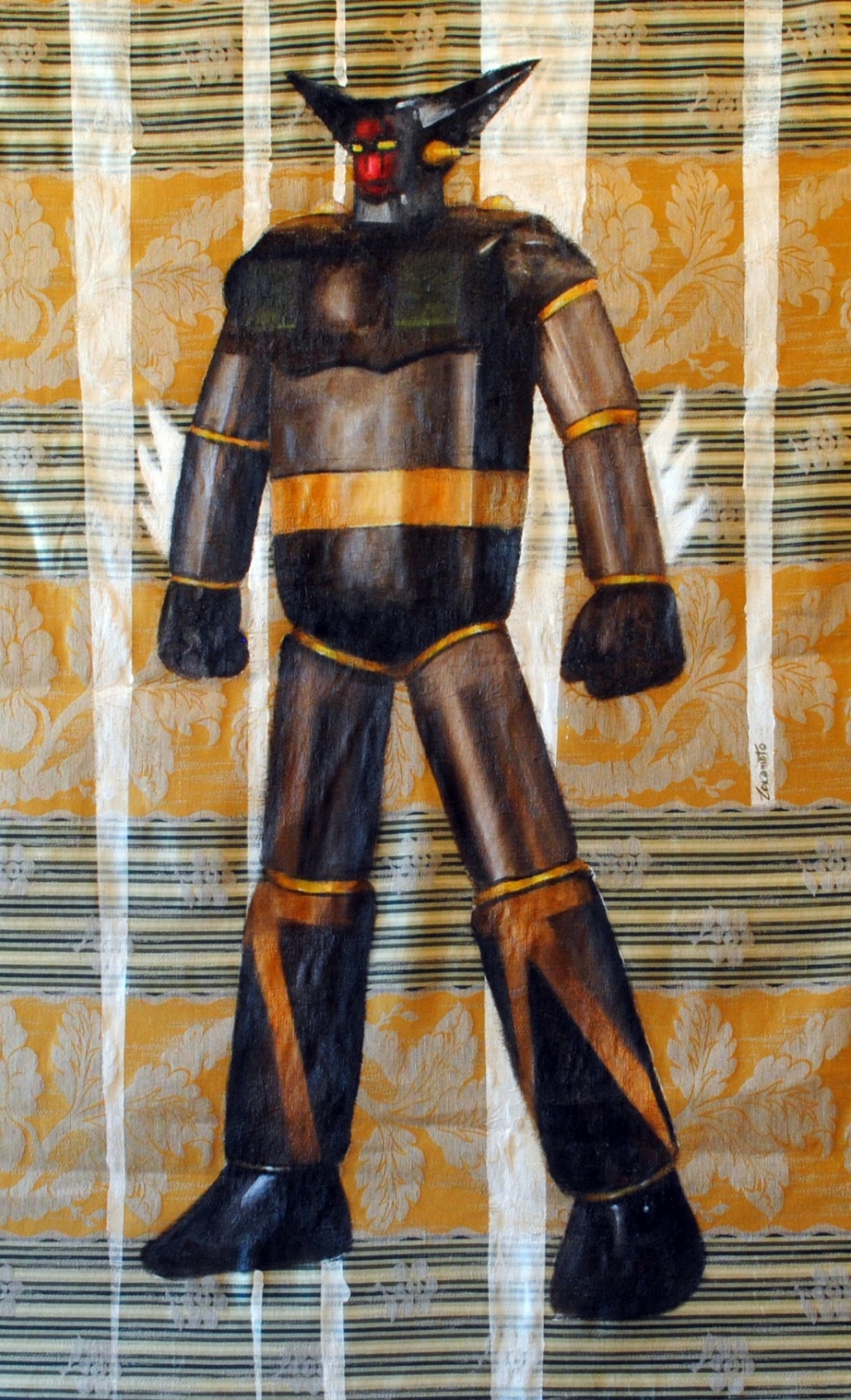 GETTER ROBOT Oil on silk 150 x 200 cm. Akira Zakamoto
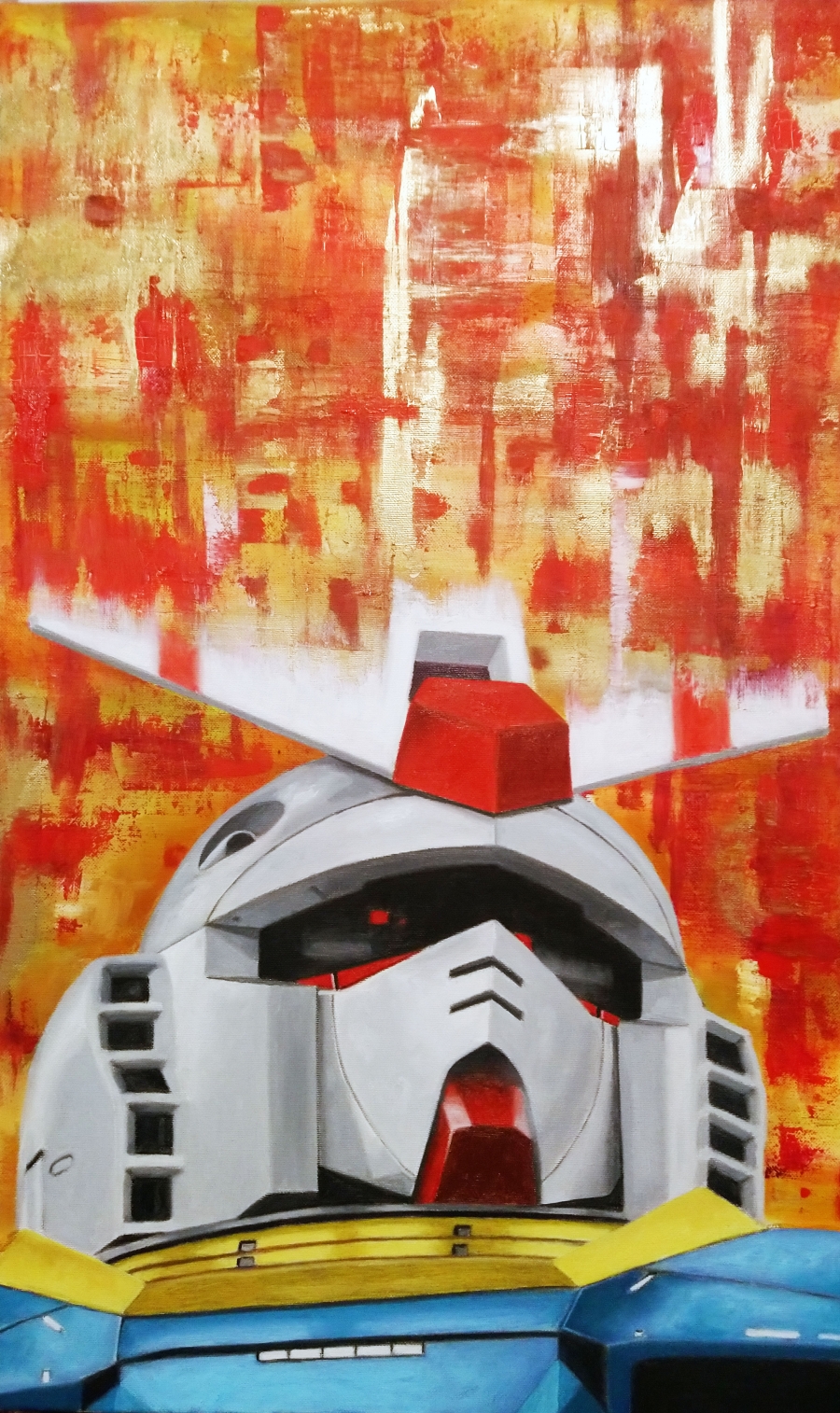
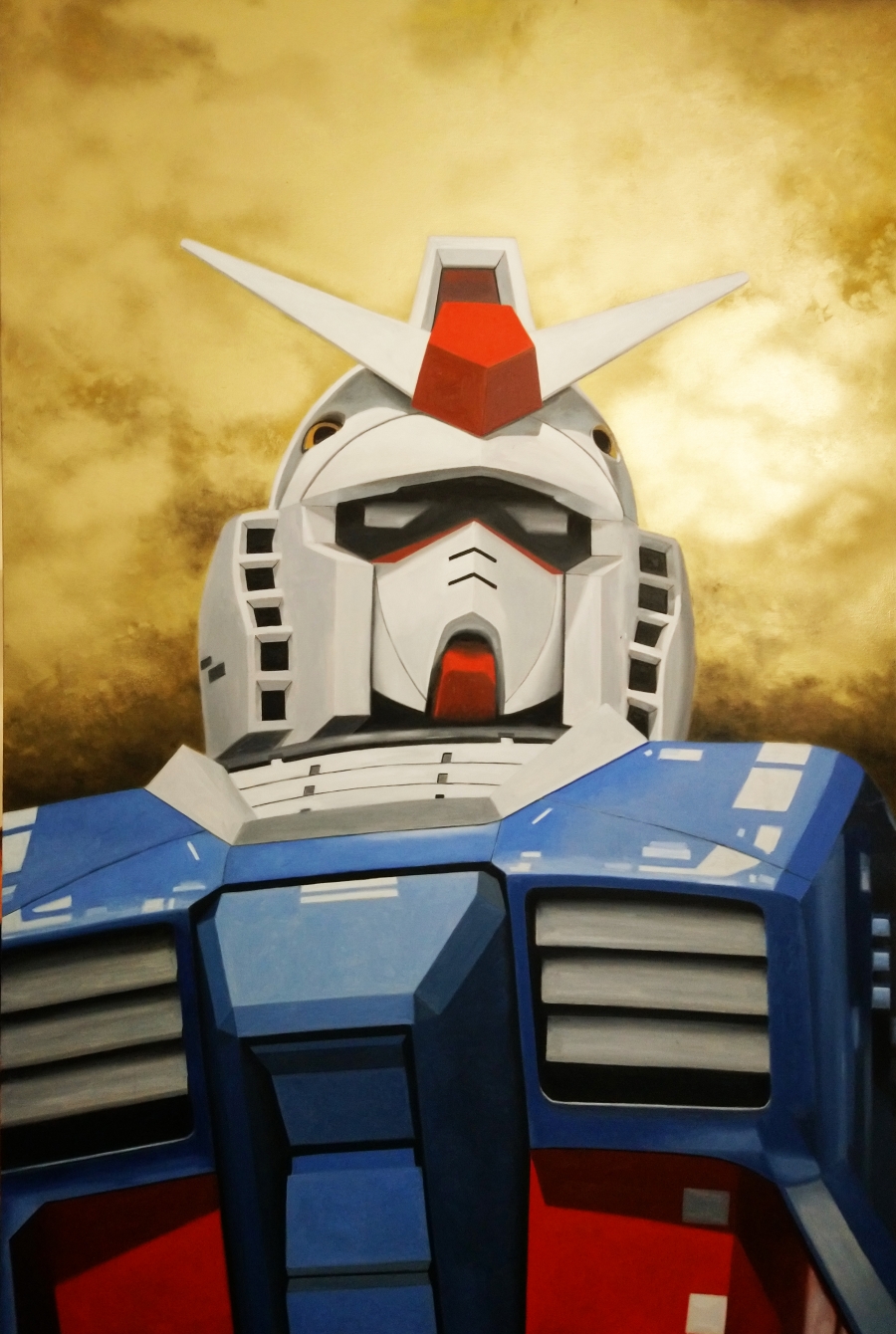
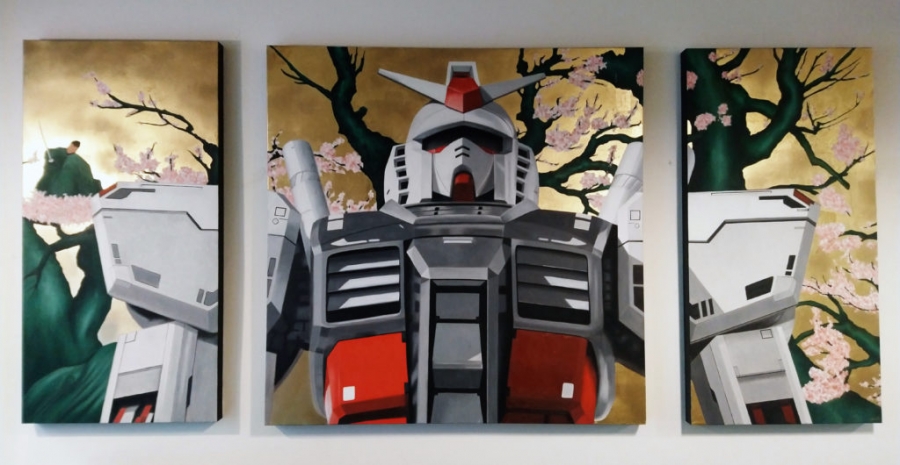 BELOVED GUNDAM - Oil and gold leaf on canvas 200 x 100 cm.
 Post-Hiroshima Japan, post-apocalyptic by definition, was the setting of the animated television imagination of Italian children in the 1980s.
The warrior-hero almost always moved through desolate landscapes in which the only way out lay in martial values (respect, strength, sacrifice) and in the technology of androids and robots.
Artificial intelligence was already present in those stories, tasked with saving the human race from invasions and catastrophes.
The anthropomorphic robots were animated by their pilots, but they also had a soul of their own, facial expressions and a kind of heart of steel that allowed them to act for the best even on their own initiative.
The overwhelming majority of the robots were apparently male, yet no one asked themselves questions about the sex of the robots or about the feelings they had for one another.
Could those marvels of engineering and mechanics fall in love?
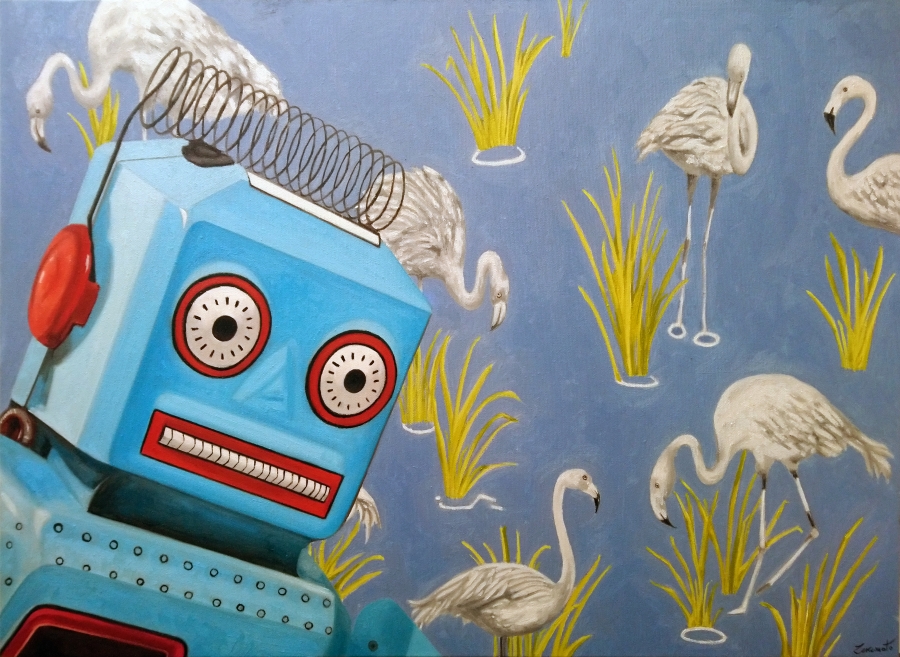
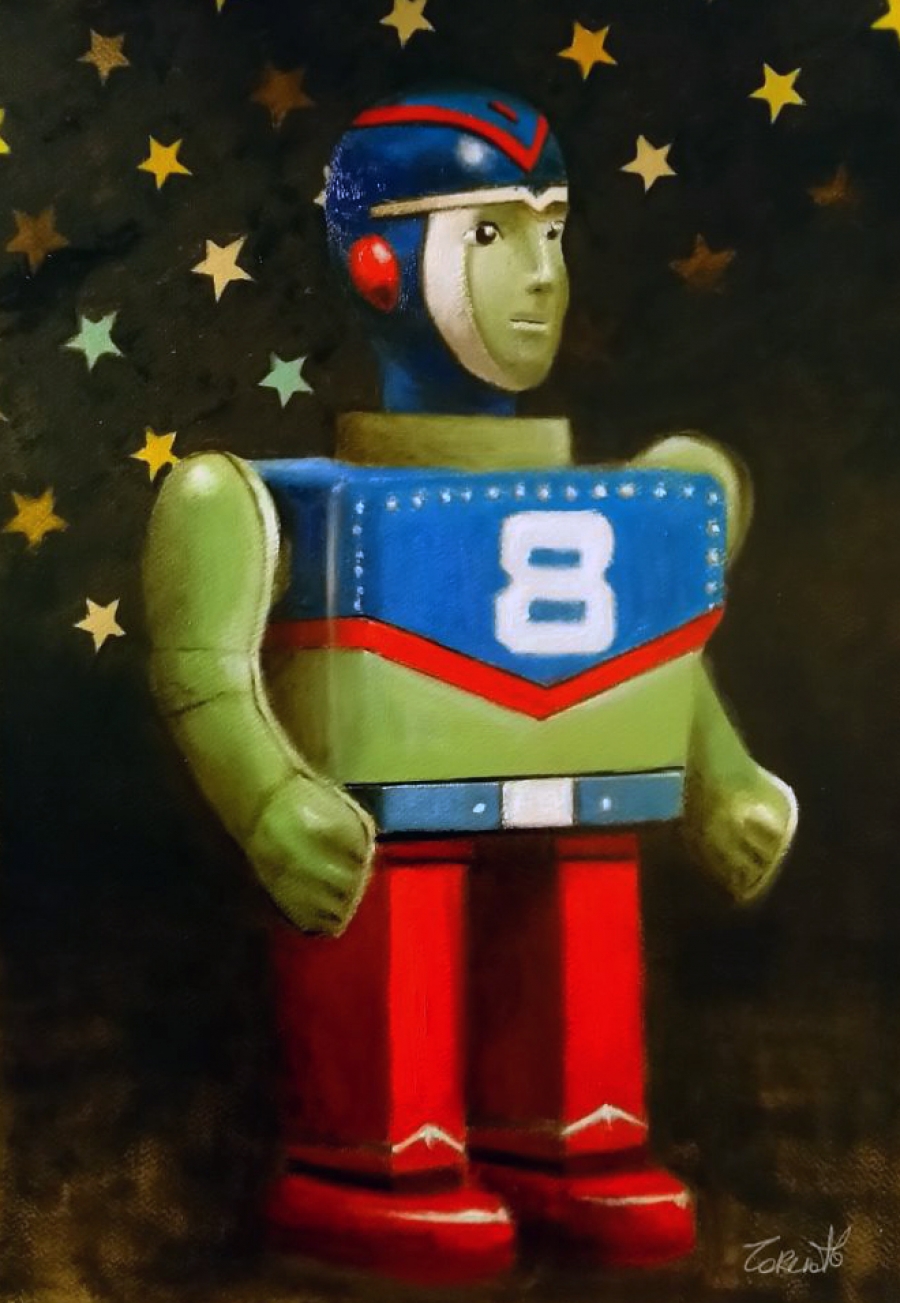
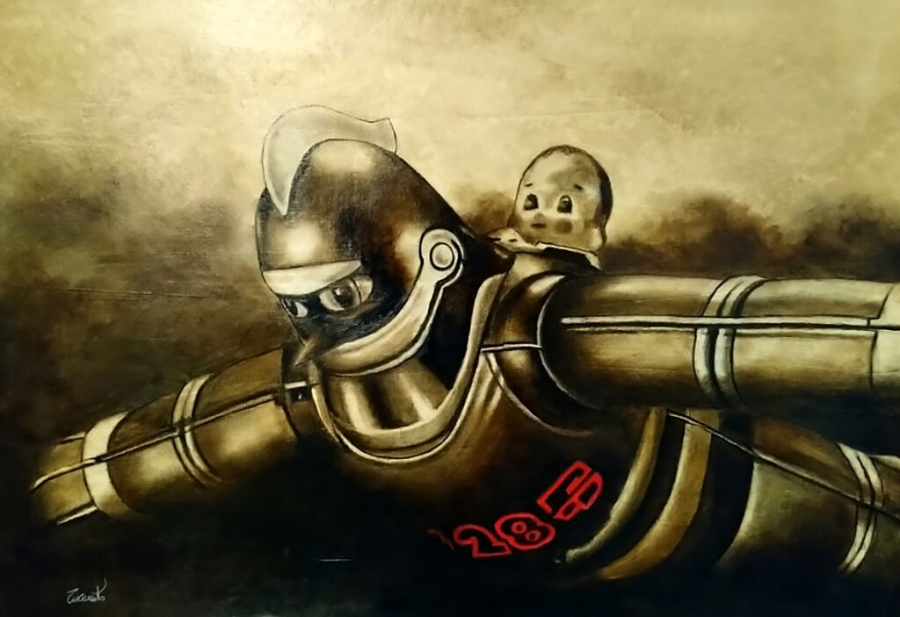 TETSUJIN TOY Oil on silk 70 x 50 cm. Akira Zakamoto
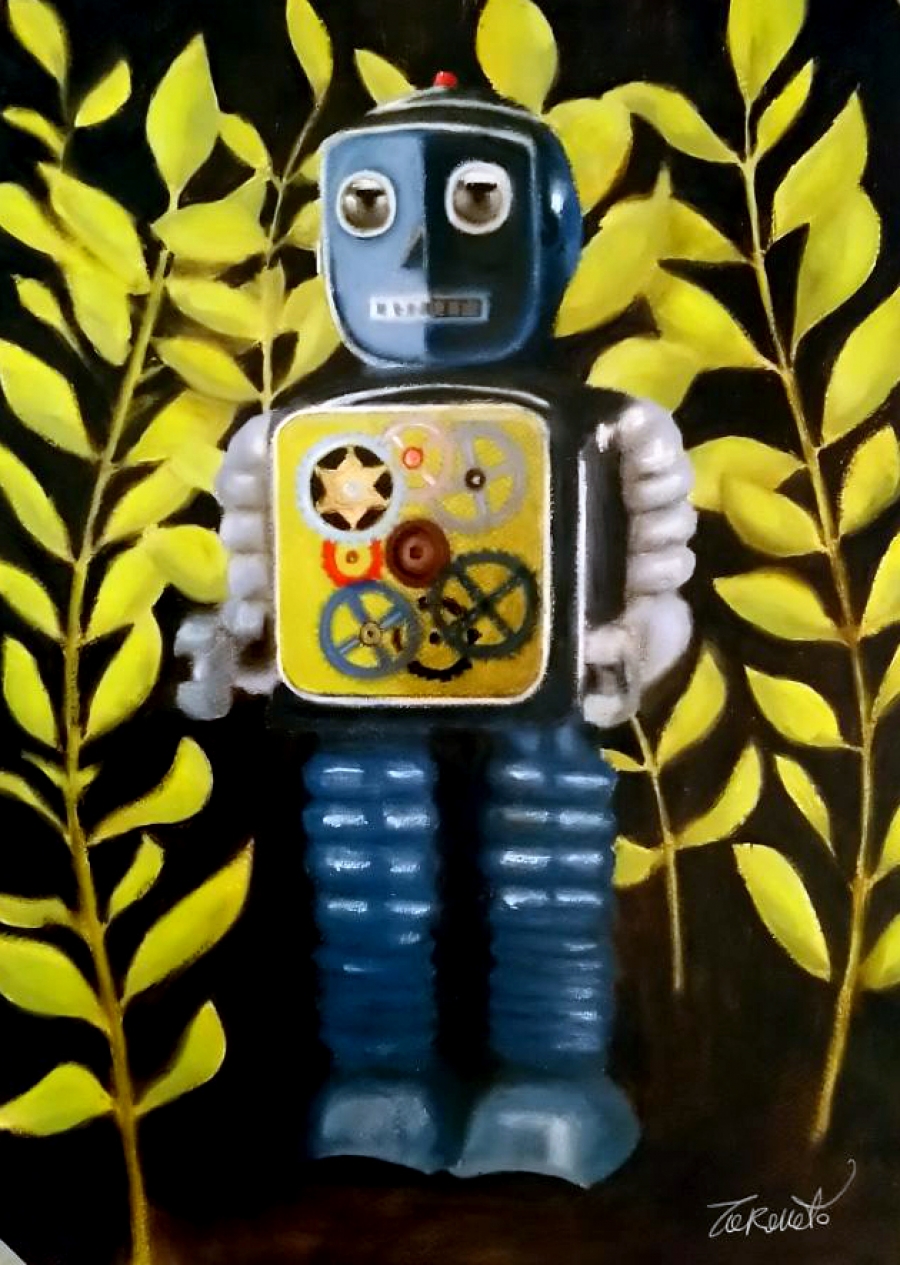 THE POLICE OFFICER Oil on canvas 35x50 cm. Akira Zakamoto
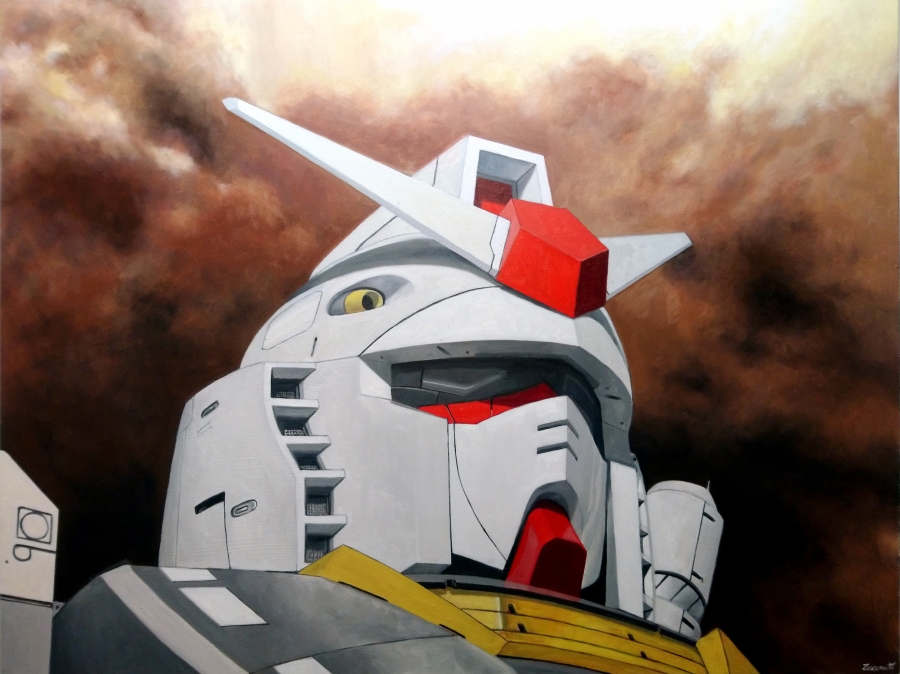
 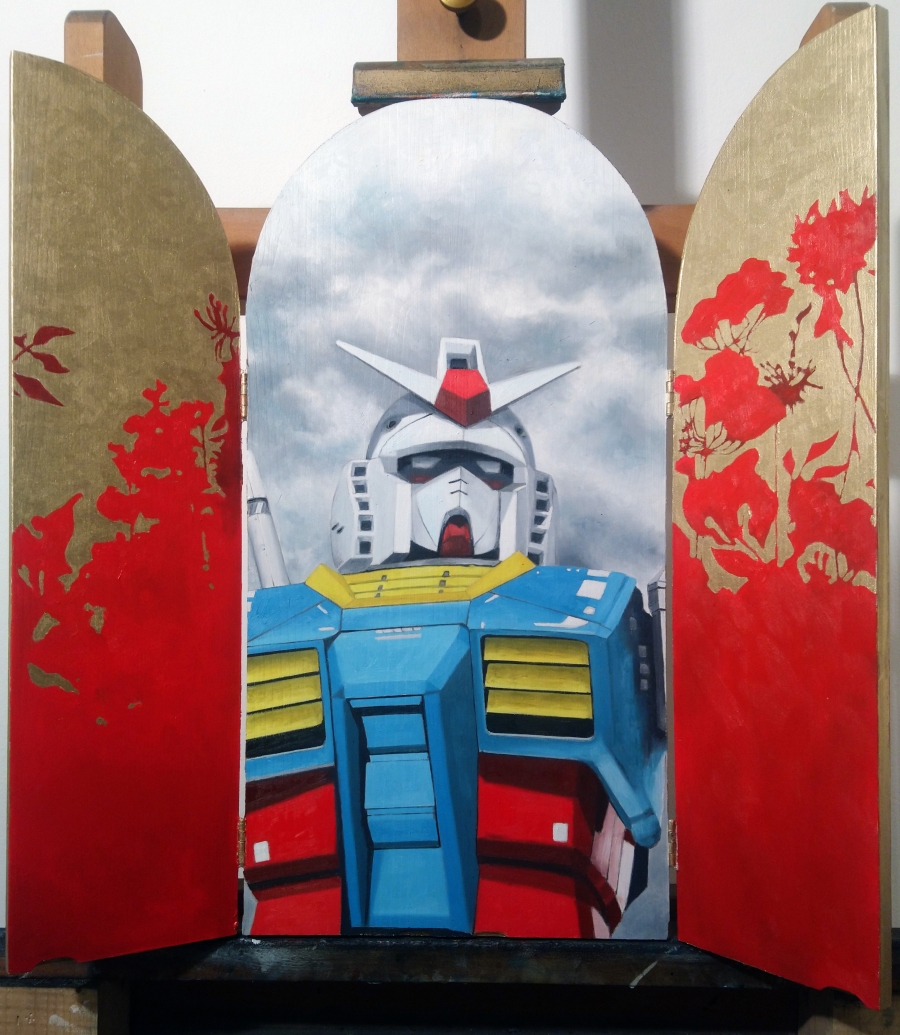 GUNDAM - ANCONETTA Oil and gold leaf on panel 60x60 cm. Akira Zakamoto
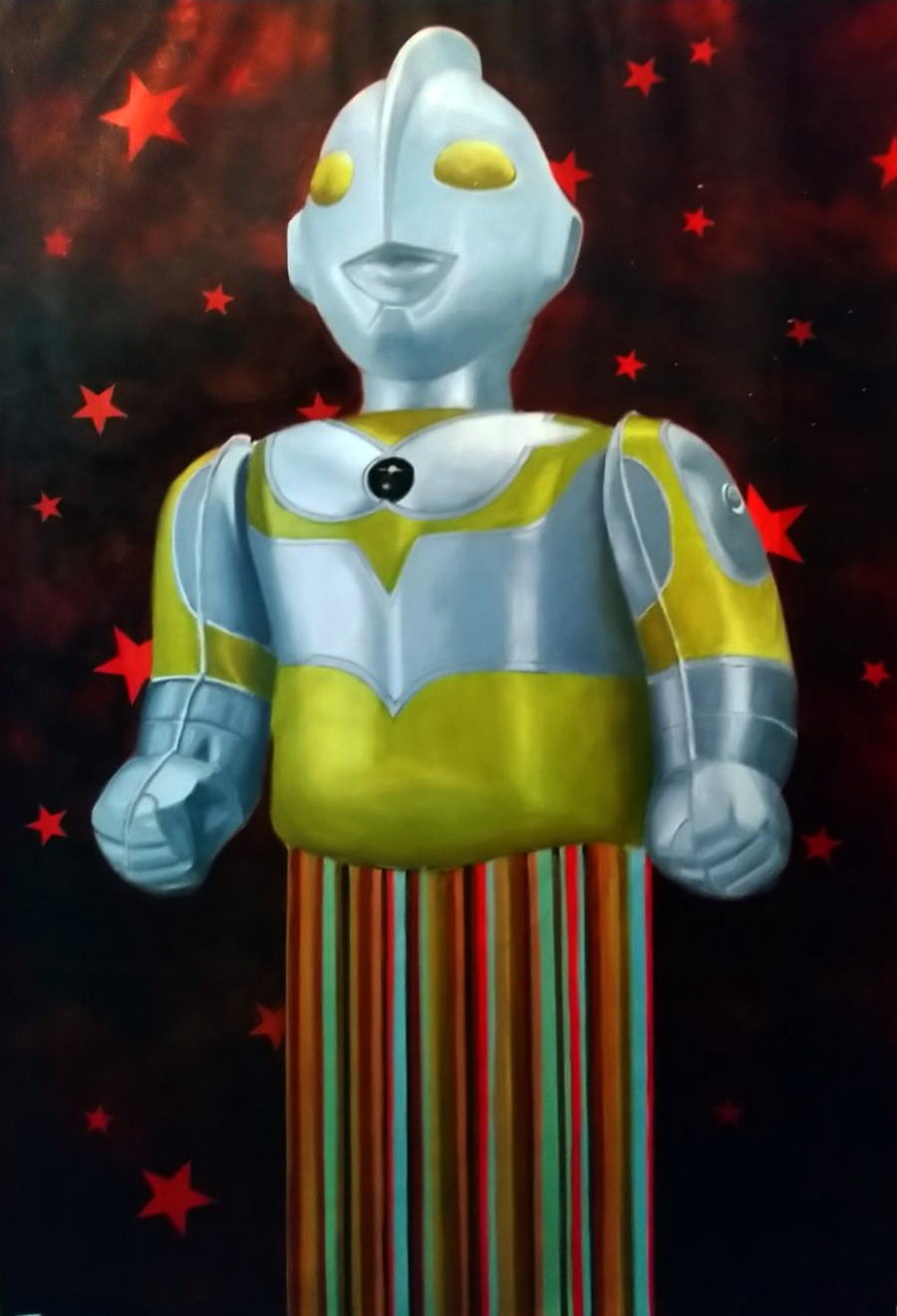
  SUPER TURKISH MASKED Oil on canvas 100x80 cm. A. Zakamoto