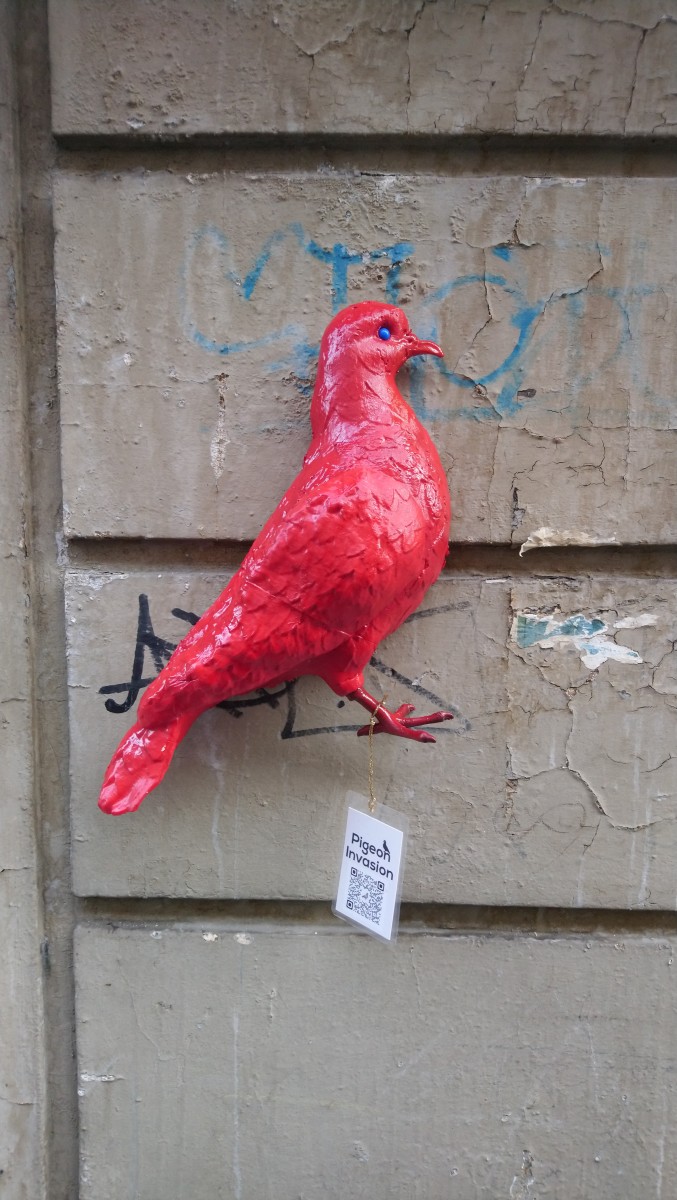
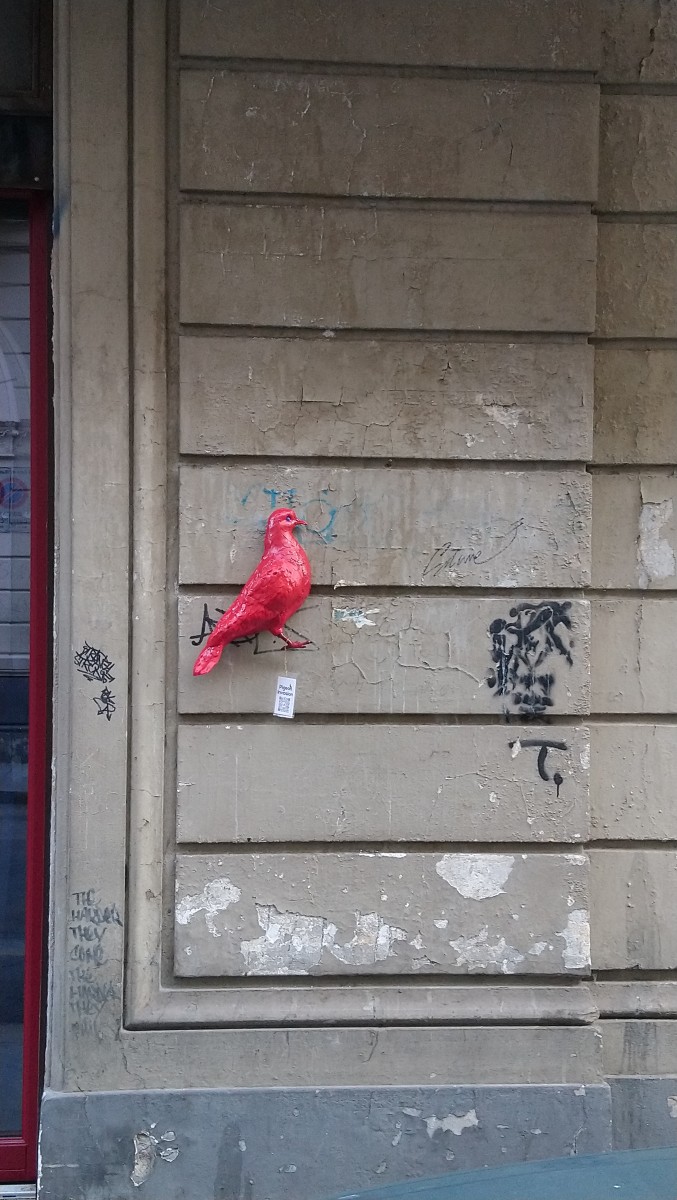
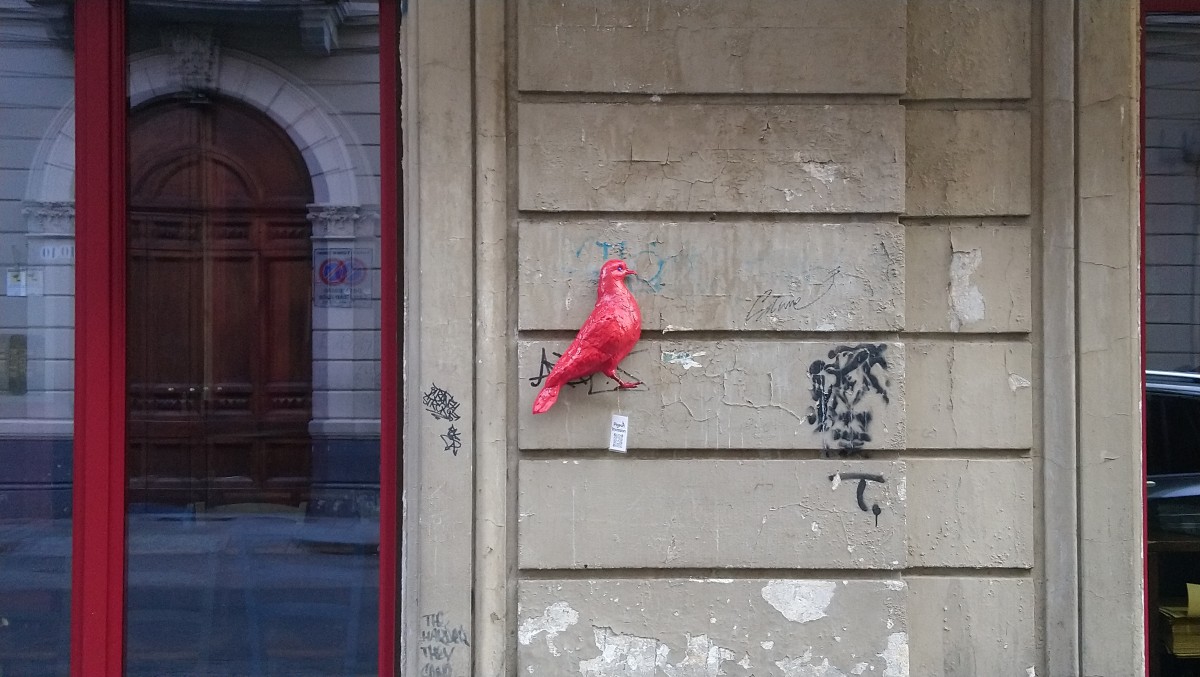
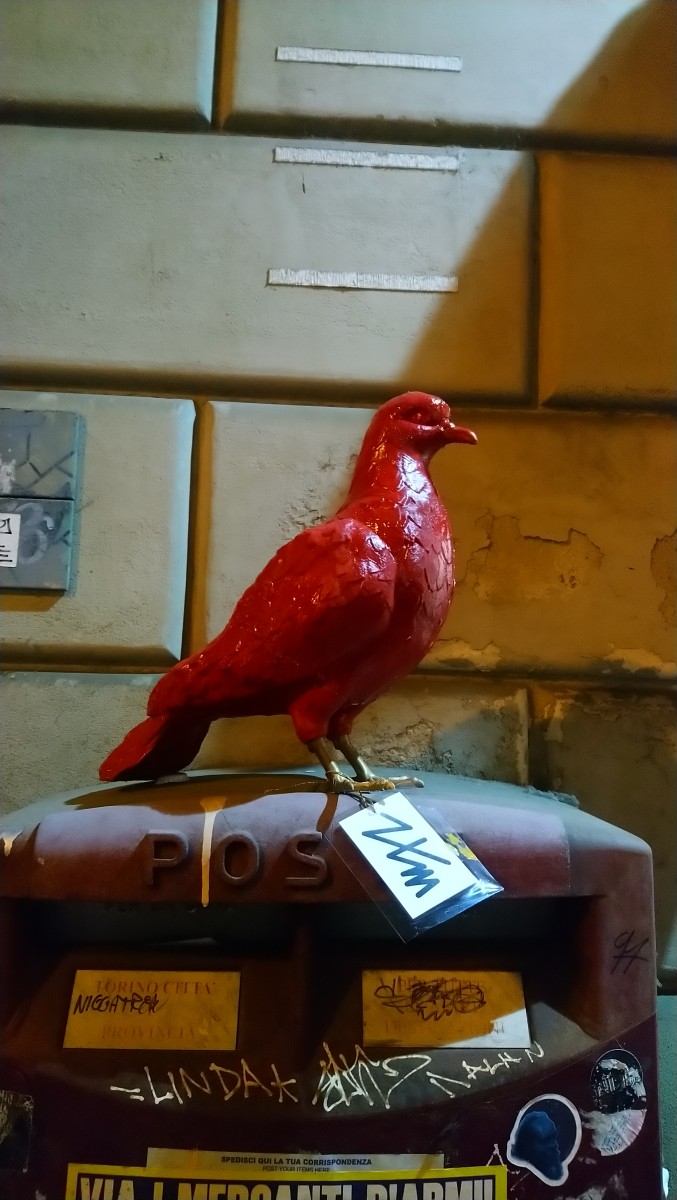
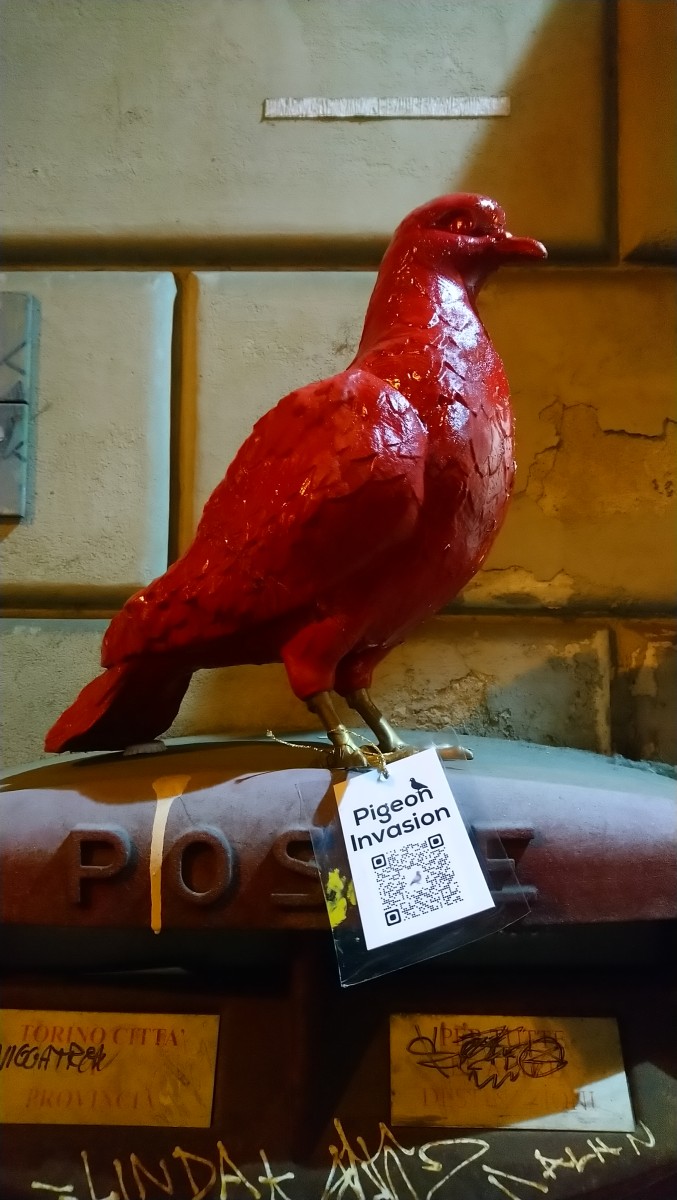
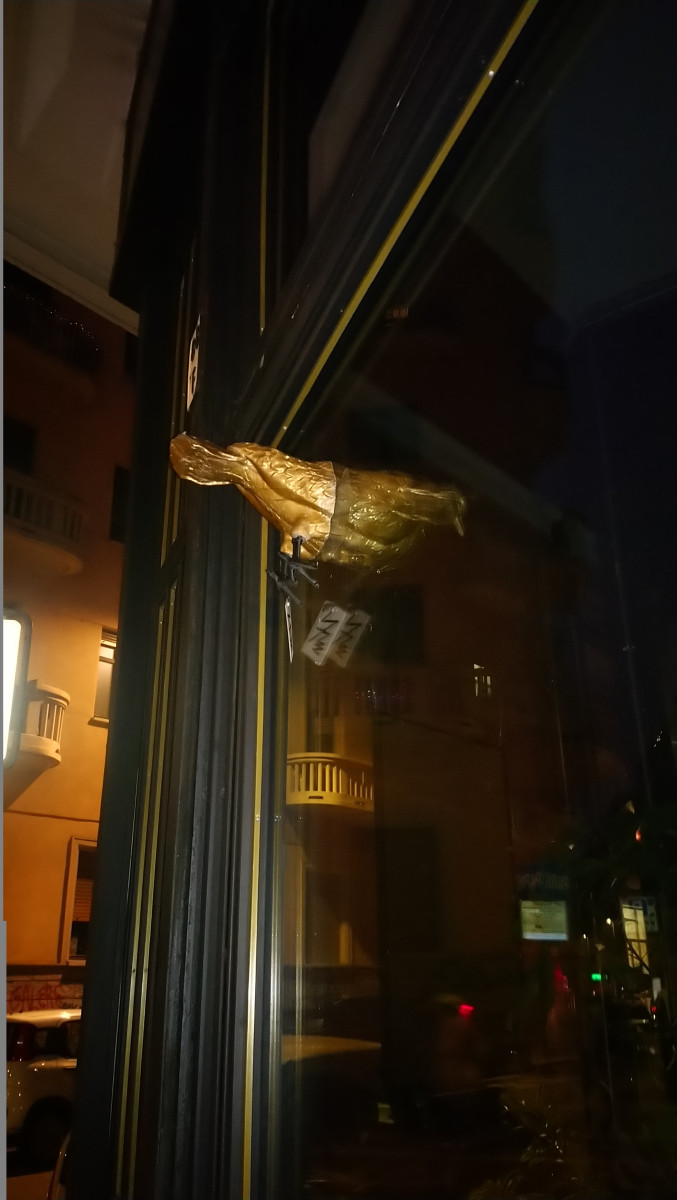
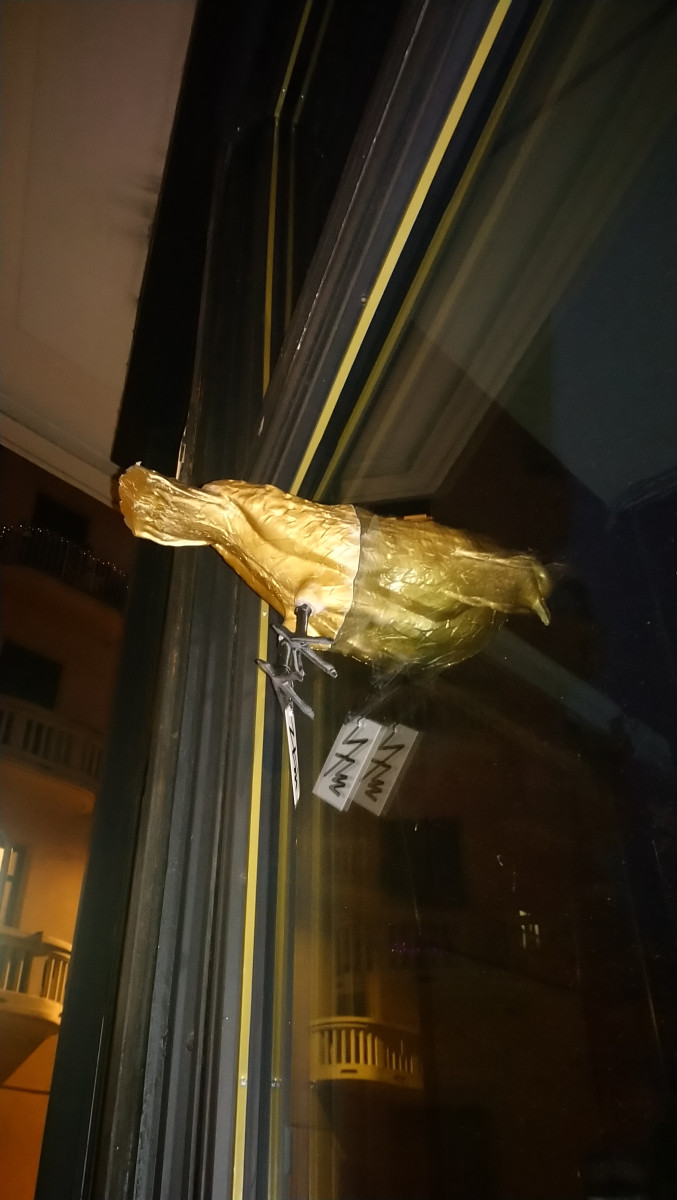
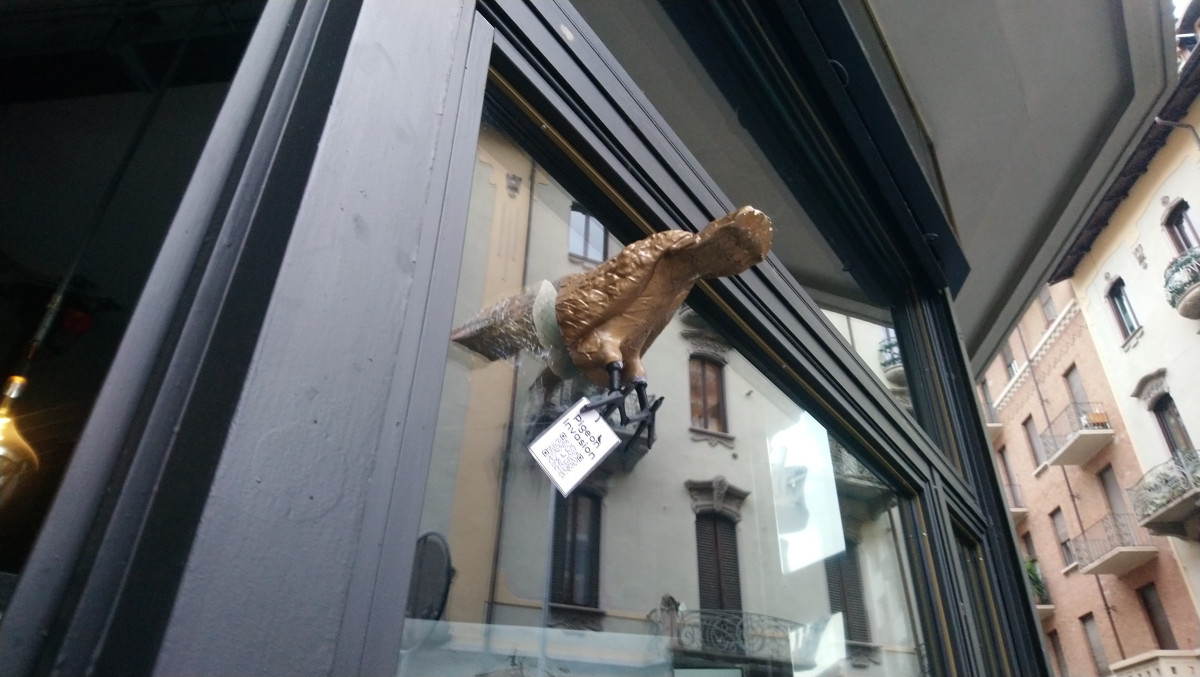
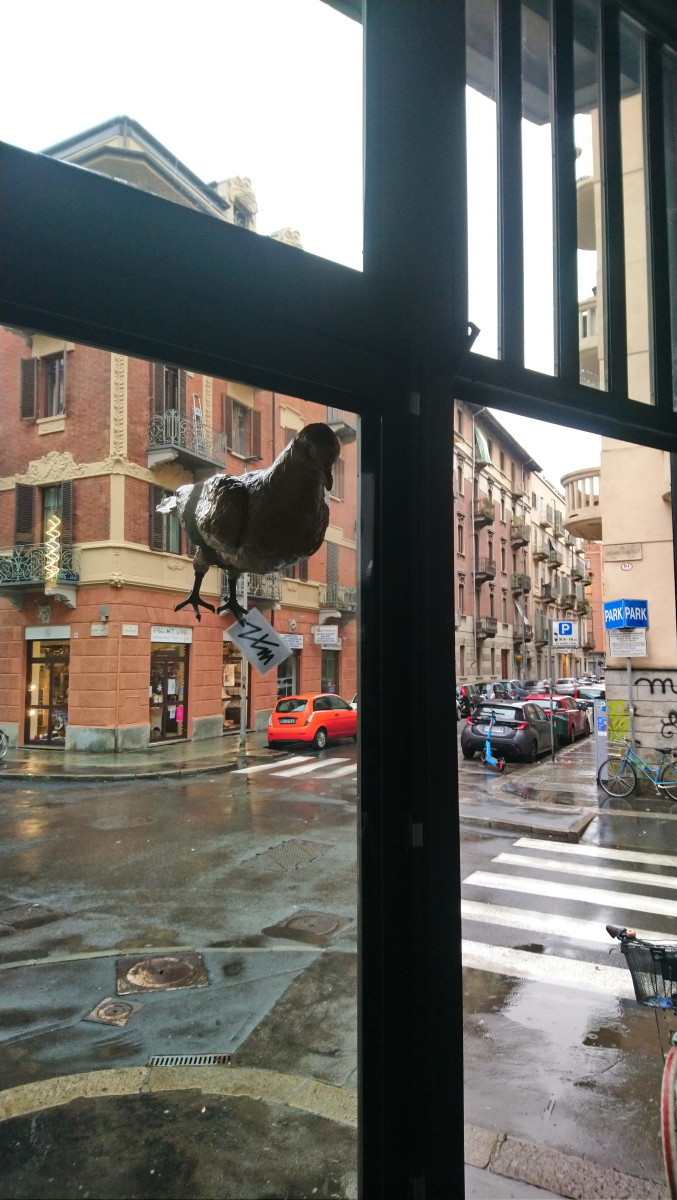
Confermi accesso da QR code?
Con il tuo consenso, registriamo la posizione GPS dello scan.
Six thousand years ago human beings regarded the elements of nature, and animals and insects in particular, as not unlike themselves, but as manifestations of the ancestors: totems endowed with special and in some cases magical properties.
After the invention of agriculture and herding, man began to consider himself above other beings. Over the centuries that followed, down to the present day, animals - pigeons included - have been used, exploited and put to work for all manner of purposes: for food (I even discover the existence of Carlo Giusti's pigeon ham), for company, for labour and for war. Consider the story of Cher Ami, the pigeon employed by the Signal Corps of the 77th US Infantry Division: an episode that somehow justifies, for many people and even for city dwellers, the very existence of pigeons, and explains their coming to earth - their purpose as multidimensional creatures, incorporeal spectres impossible to grasp, aliens able to reproduce through a kamikaze self-explosion that leaves the body of the old pigeon partly scattered and partly chewed up on the road, while a new young pigeon's body soars off across the city skies.
Note that in the city no one has ever seen a baby pigeon, and no one would ever eat a city pigeon - whereas city pigeons eat everything they find.
Perhaps for one of these many reasons, pigeons and other animals have lately begun to be seen behaving like humans, and vice versa.
A sort of zoolatry in reverse is gaining ever more followers, in which mutation towards the inhuman animal would represent a return to nature.
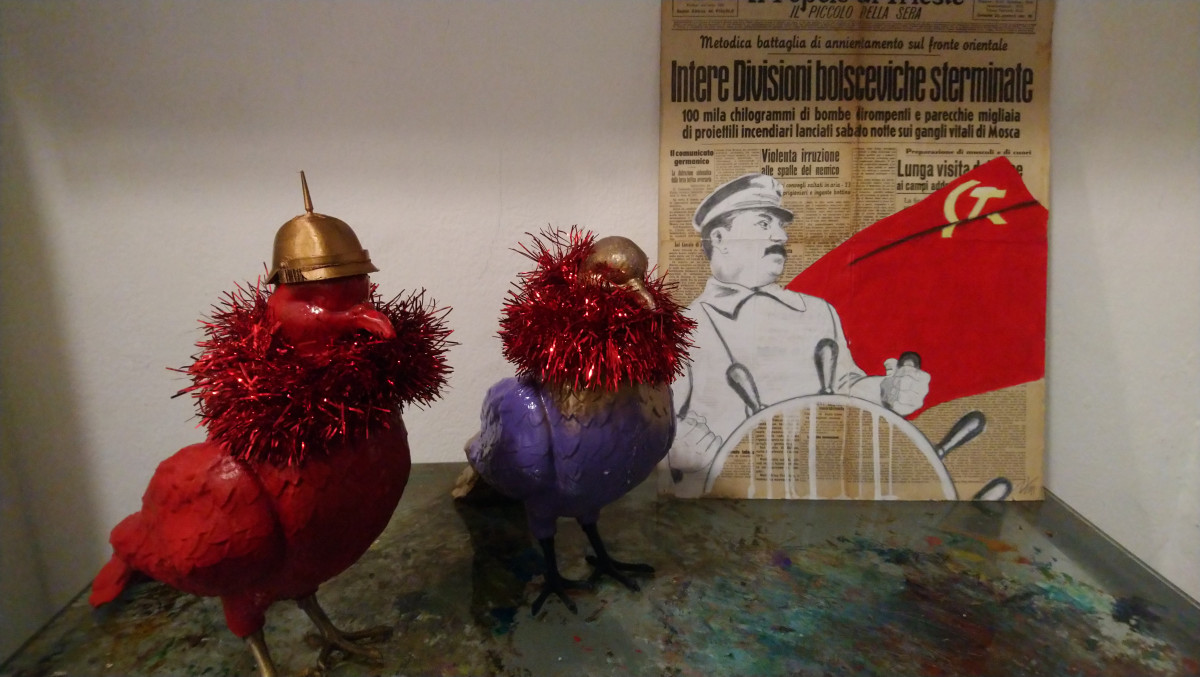
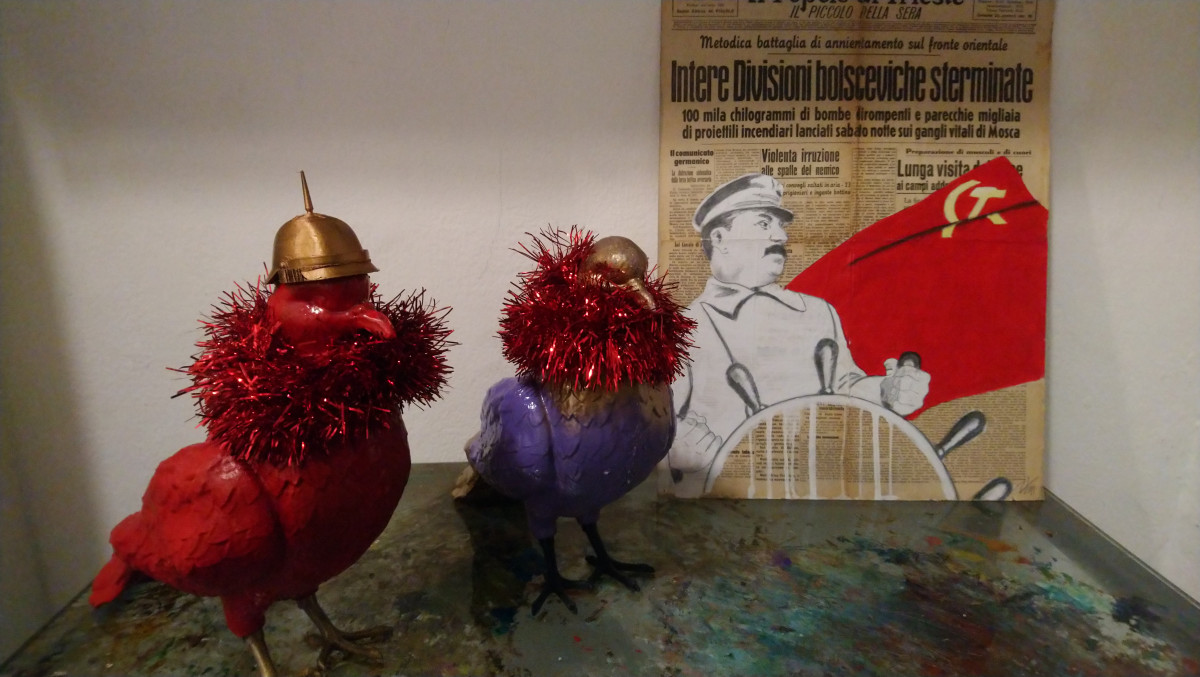
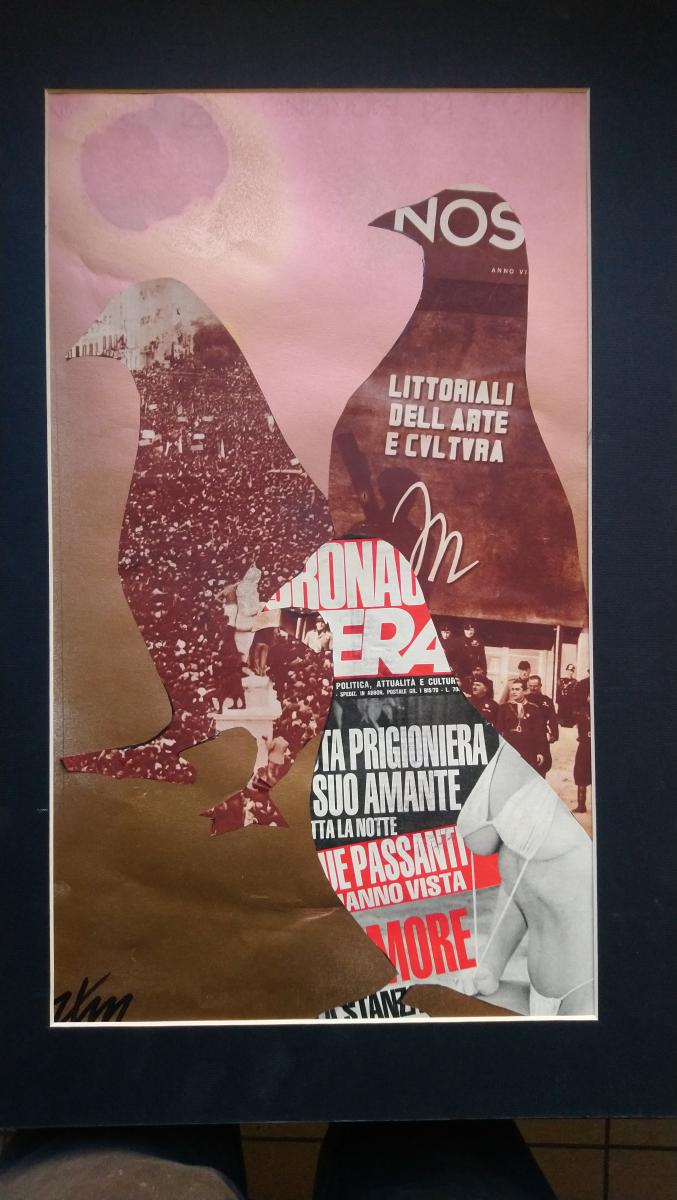
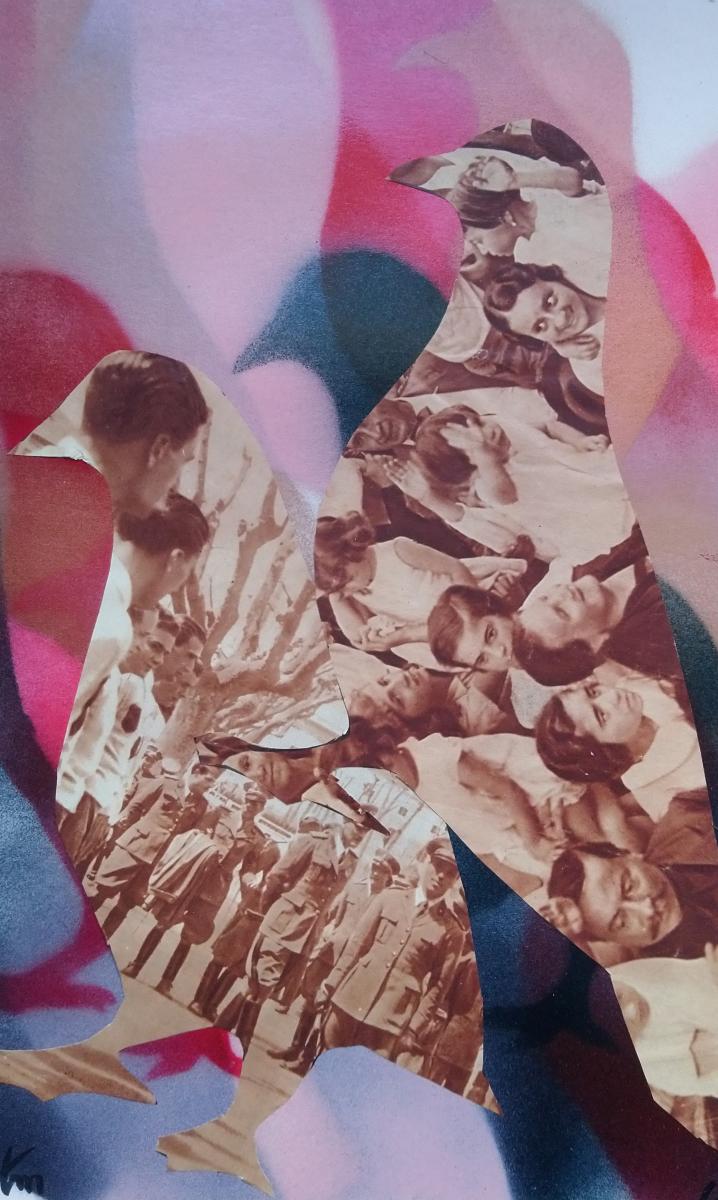
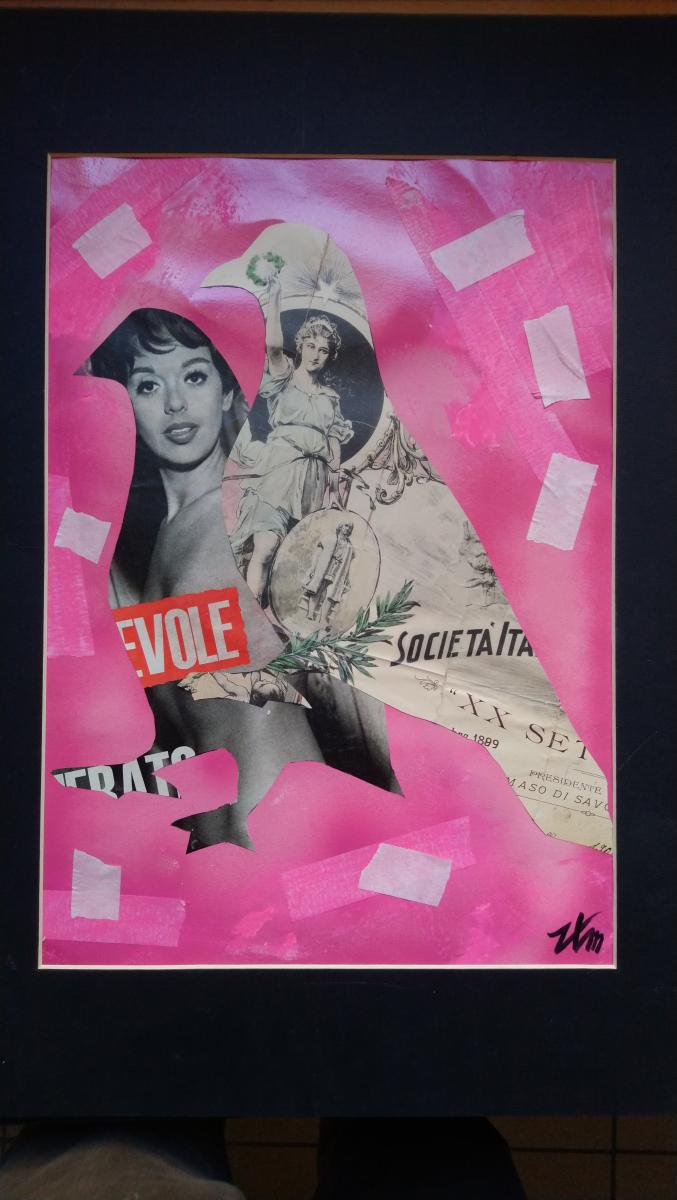
Bureaucrat pigeons dressed as functionaries of our decomposing system; orderly conformists quoting regulations they have only just read; zealous cogs unaware of the machine; beings whose sole purpose is to feed the system they have clung to in order to survive. They eat the crumbs of power and shit out litanies of complaint.
They are a terrible cross between Douglas Adams's Vogons and Dostoevsky's bureaucrats, in triplicate, forever intent on blocking everyone else's way.
They cheep, bleat, coo, grunt and shriek, all together in unison, trying to defend the honour of the past of their departed ancestors.
Meanwhile, thanks to them, it rains shit from the sky.
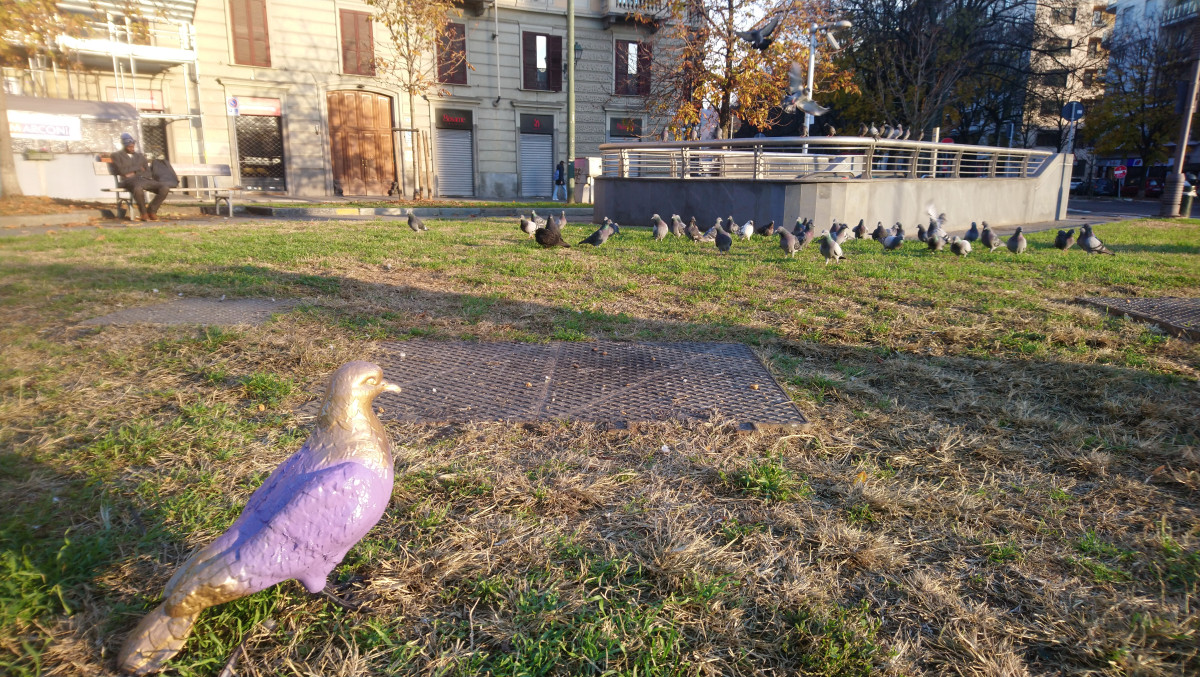
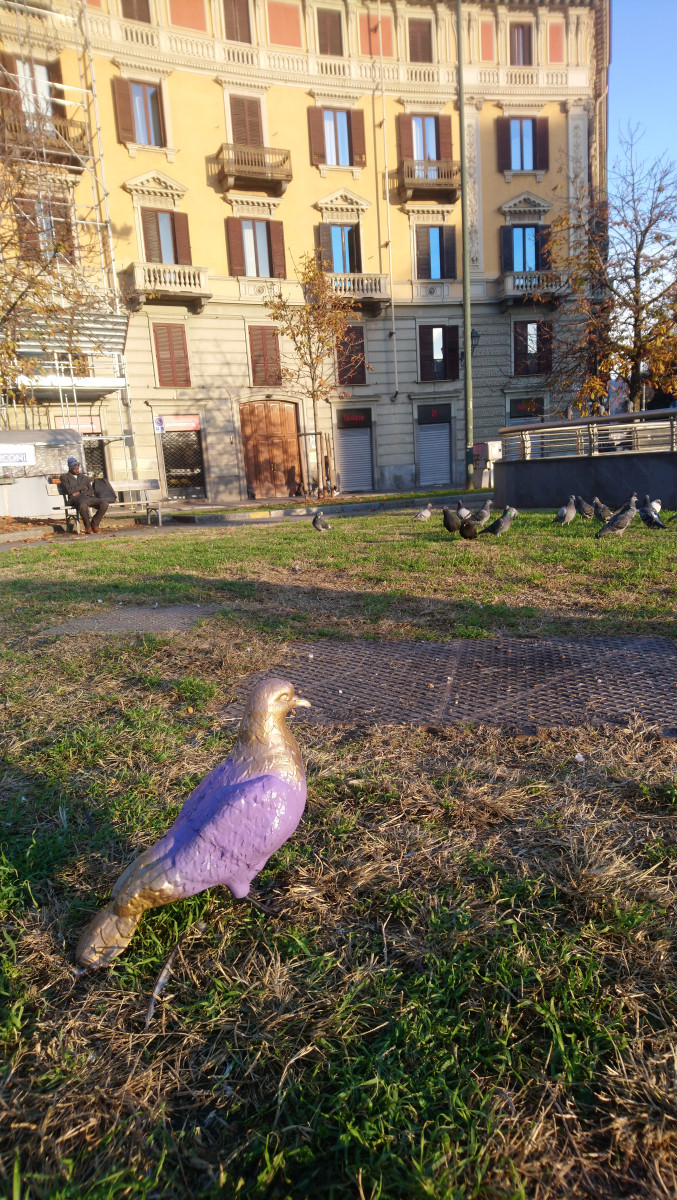
Pigeons - "i piciu" in Piedmontese dialect, "i pirla" in Lombard, epithets that also describe fools, dimwits and the male genitals, as birds generally do - are a metaphor for today's unthinking human race. But they are also magical animals that coo lovingly and look at us questioningly: perhaps simply our ancestors, silent defecating flying observers.
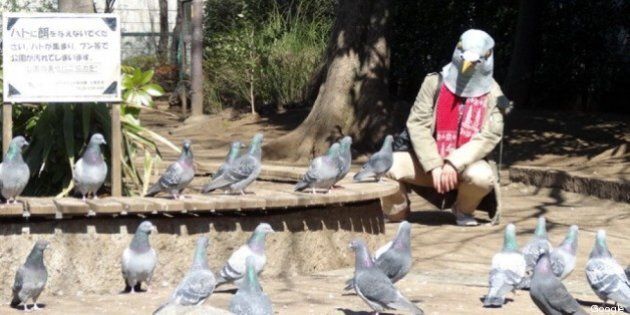
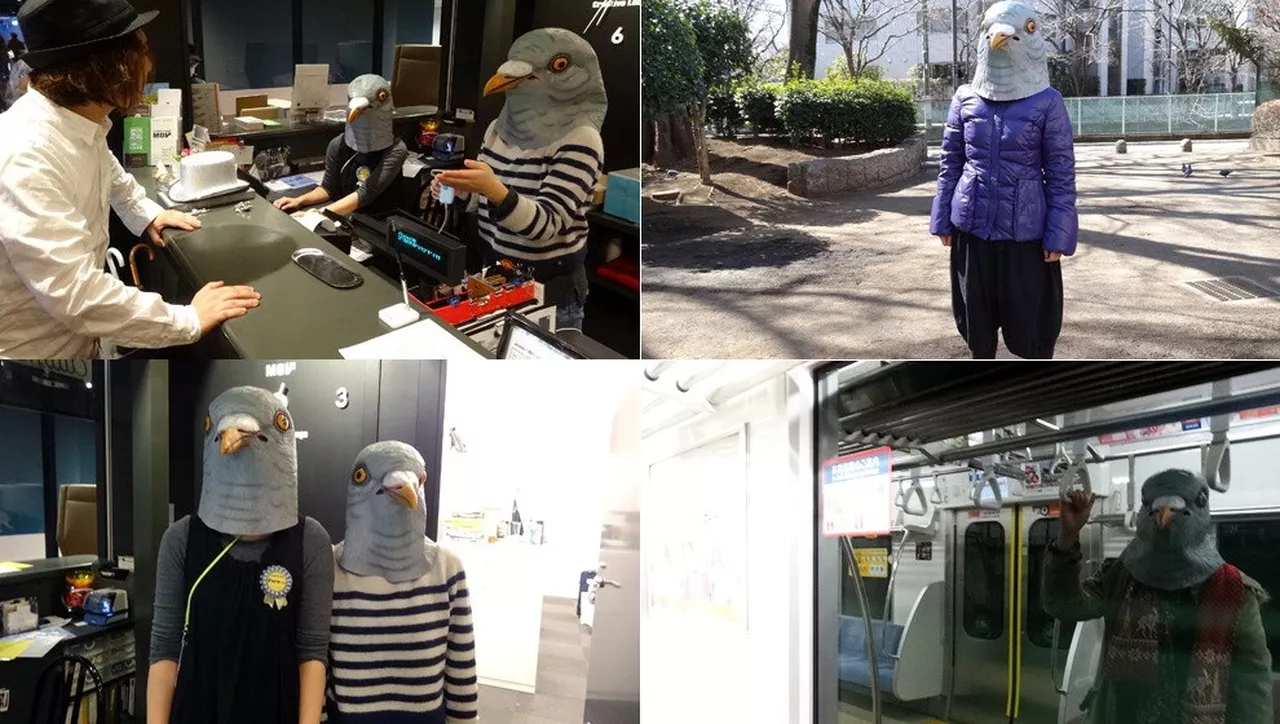
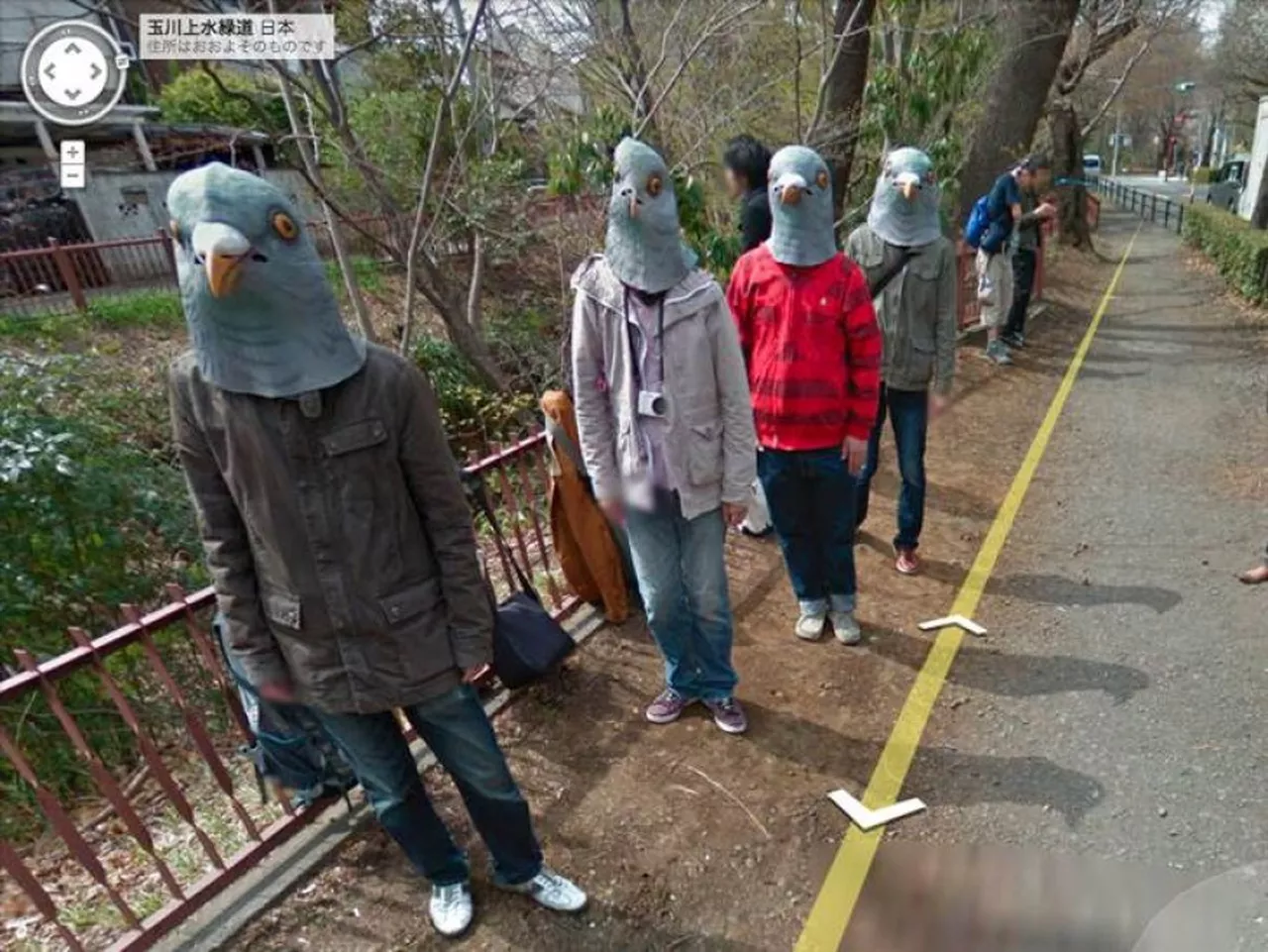
Pigeon men in Tokyo (in Italian)
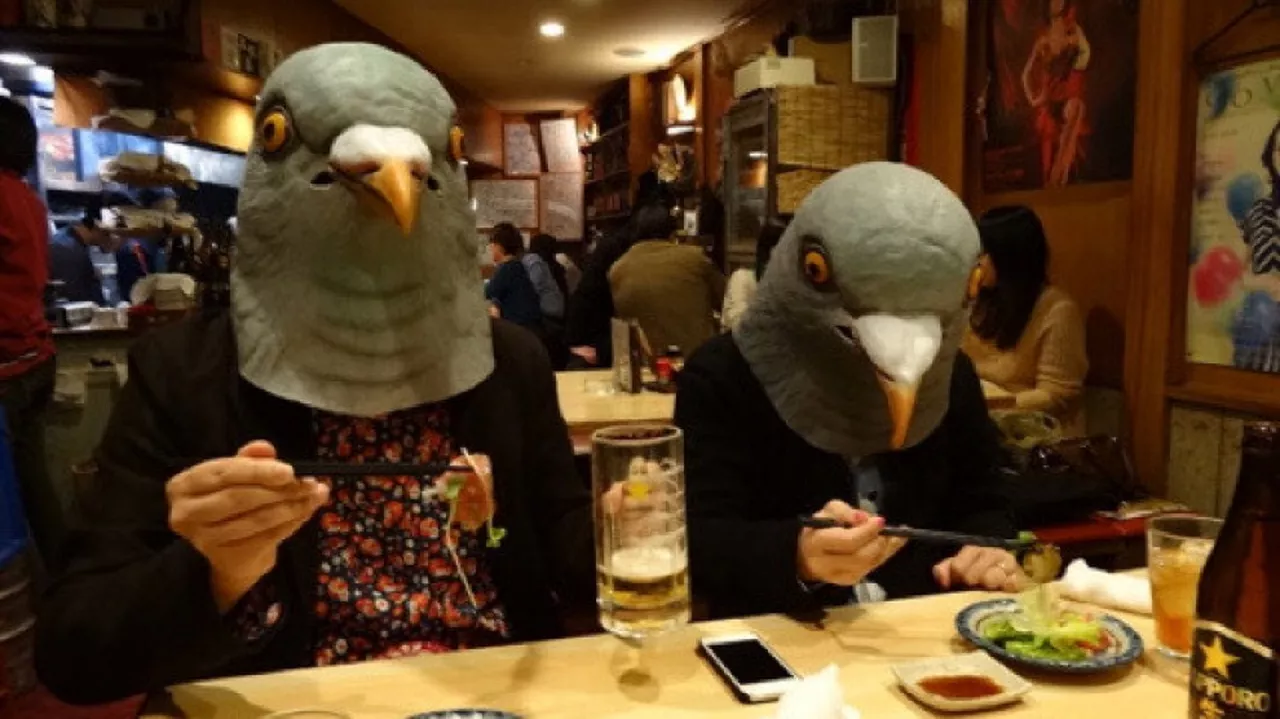
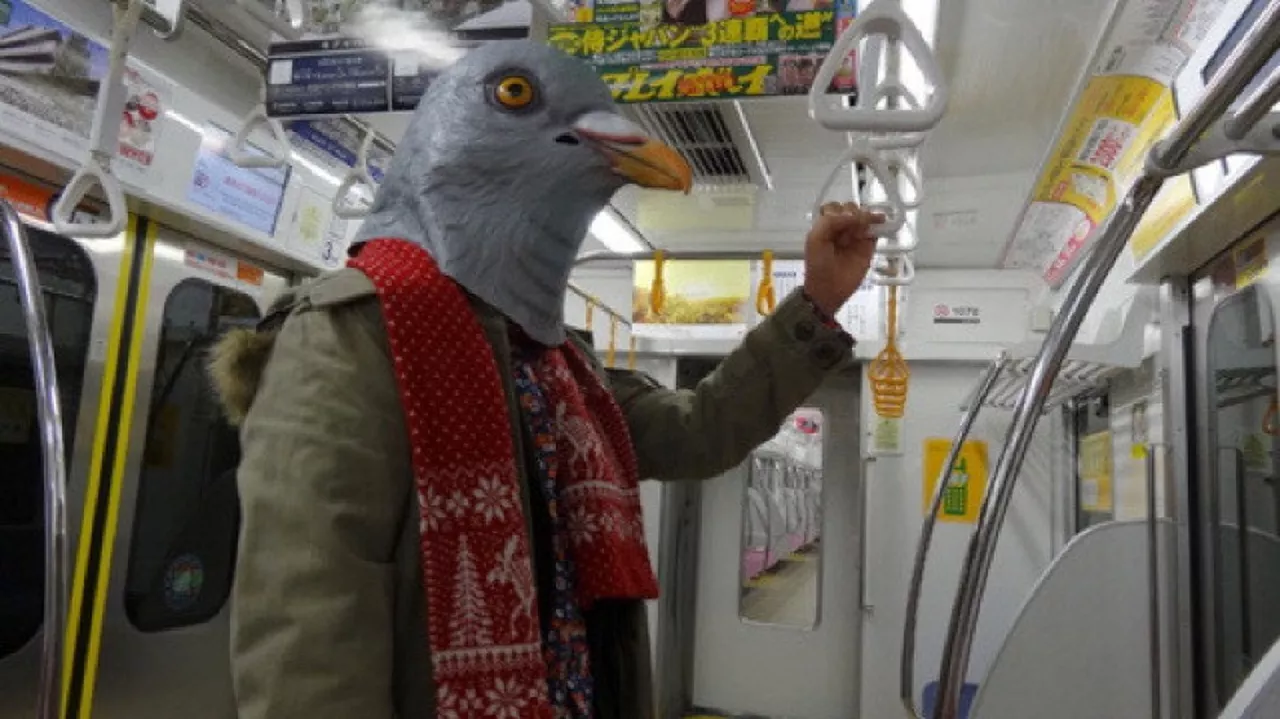
More pigeon men in Tokyo (in Italian)
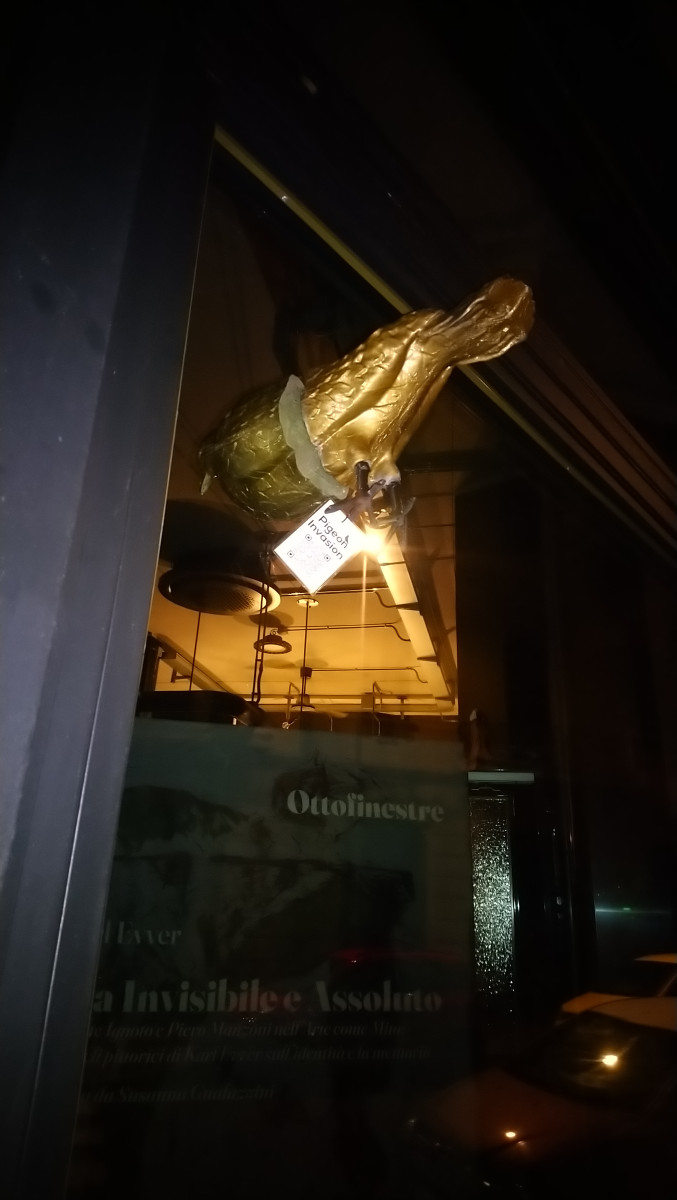
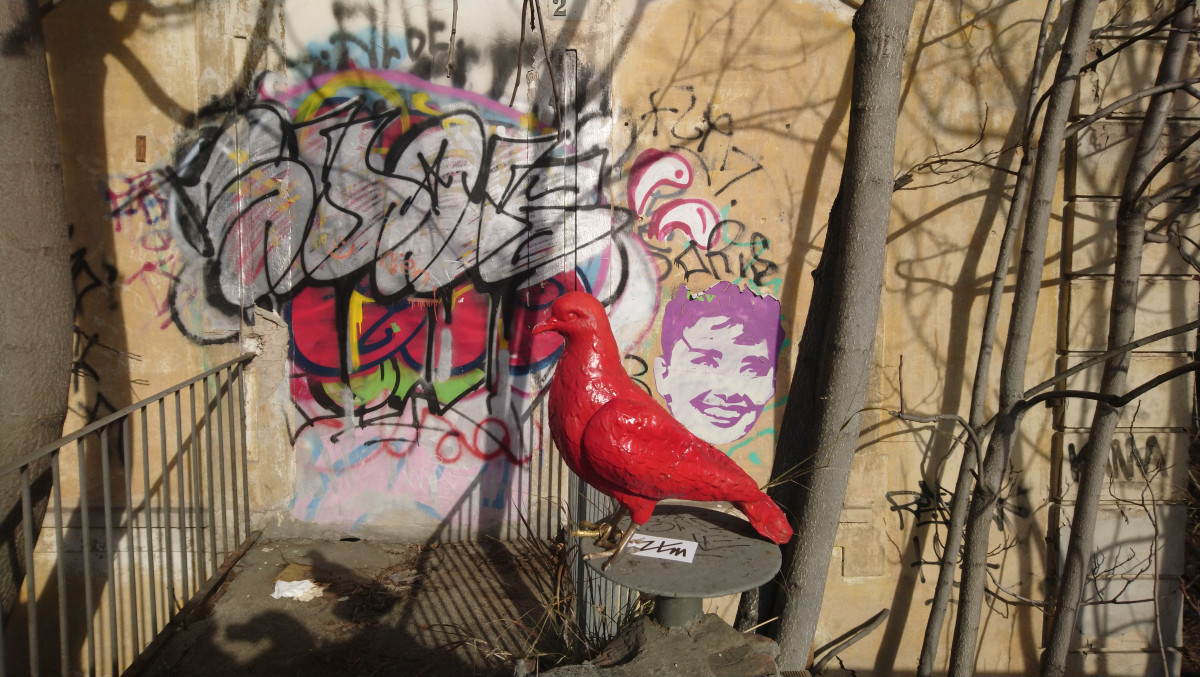
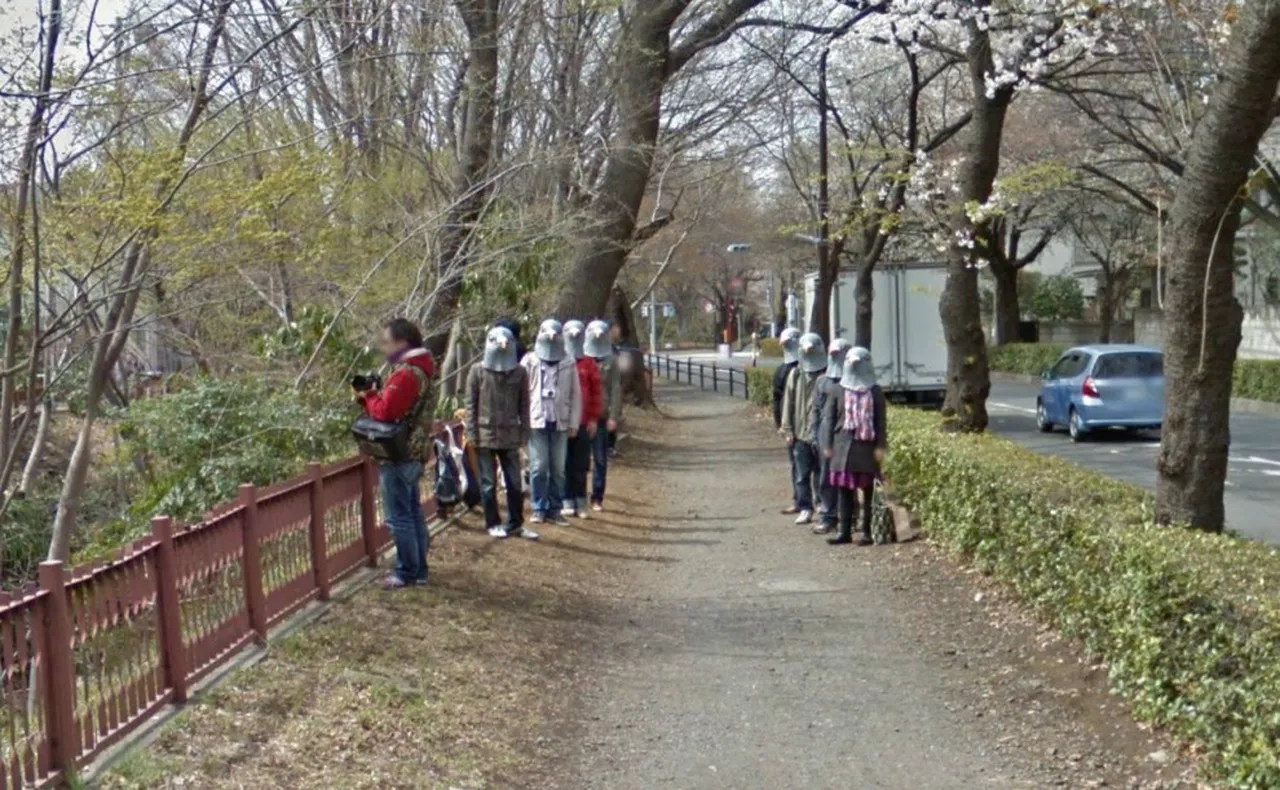
The invasion of the pigeon men (in Italian)
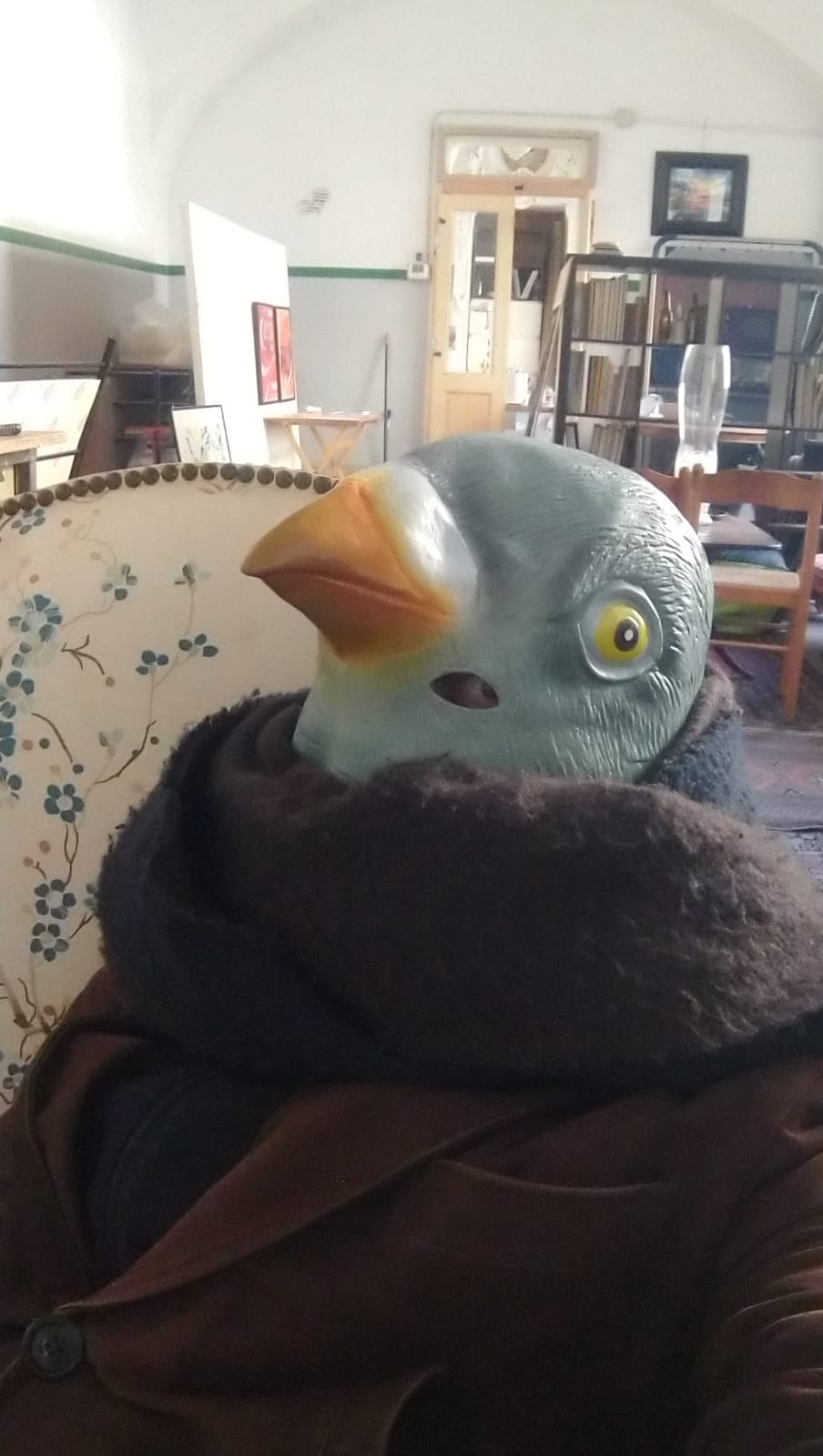
Pigeon costume, Museo del Risorgimento, Turin (in Italian)
Giuseppe Belvedere, Monsieur Pigeon (in Italian)
Pigeon ham (in Italian)

Before closing your eyes you called me pirla
a slang word
untranslatable
Since then
I carry it upon me
like a brand that withstands the pumice
There are other pirla in the world too
but how to recognize them?
Pirla do not know that they are
And even if they were told
they would try to scrape off
with their nails
that stigma.
Eugenio Montale
 ALL
ALL
 PREVIOUS PIGEONS
 VIDEO PIGEON
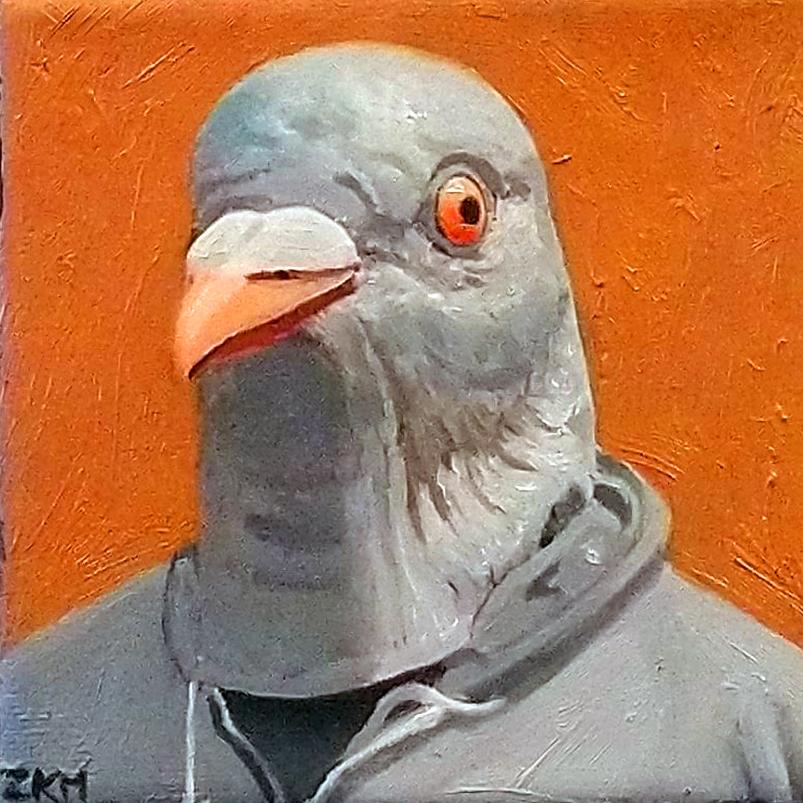
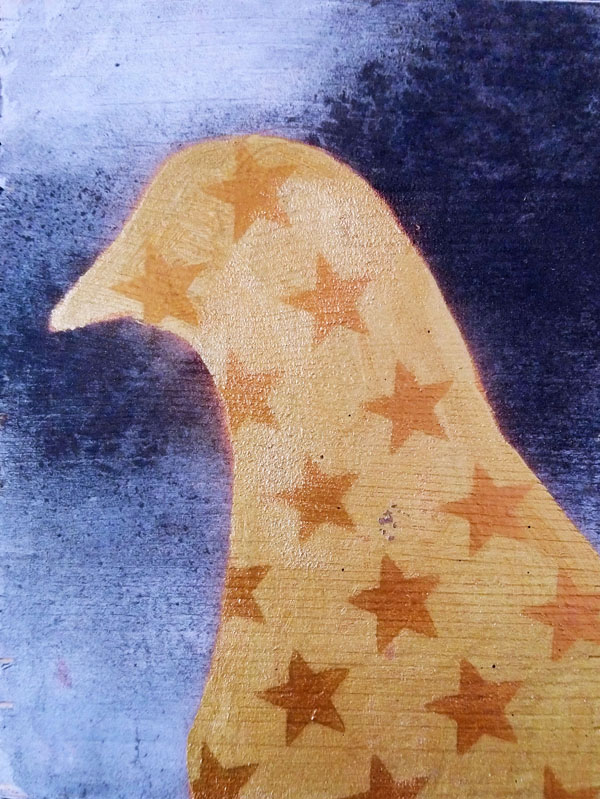
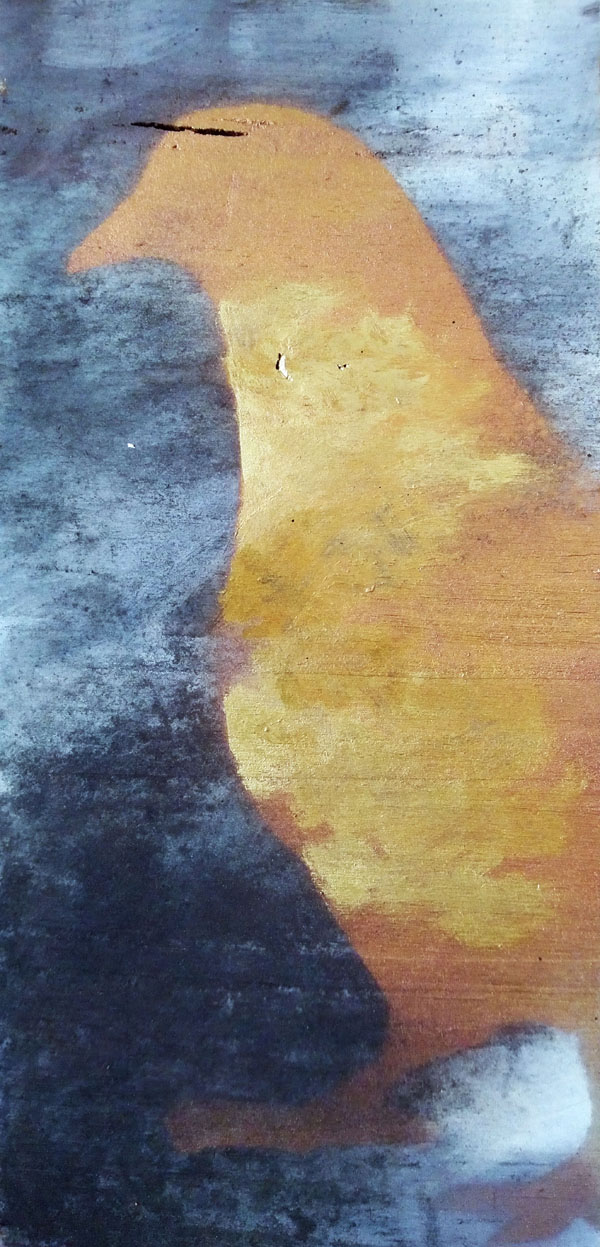
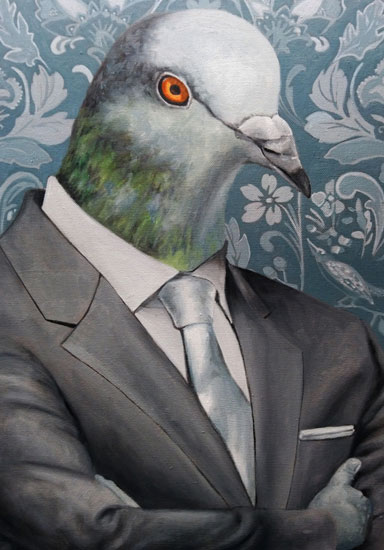
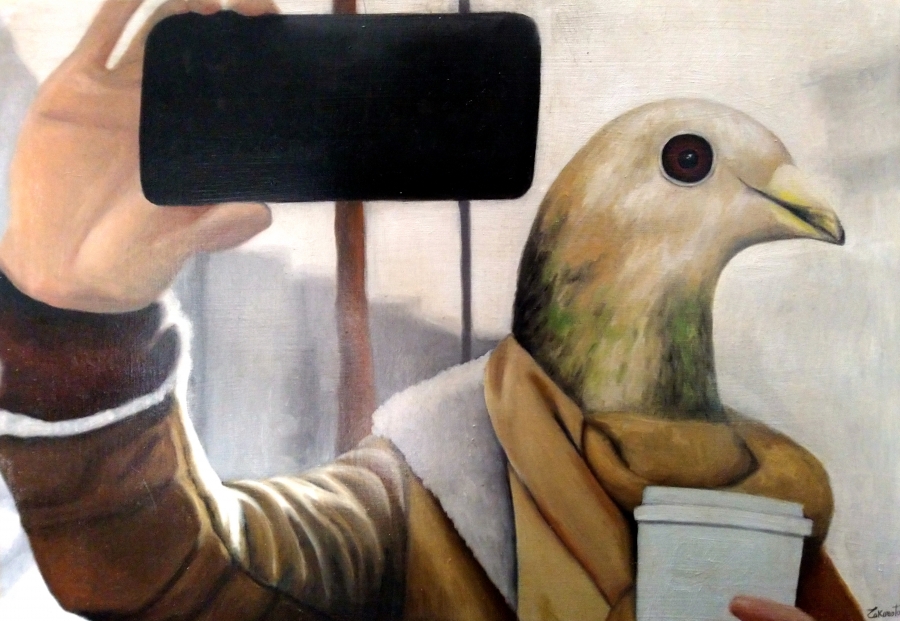 PICCIONA - Oil on canvas 50 x 35 cm. A. Zakamoto
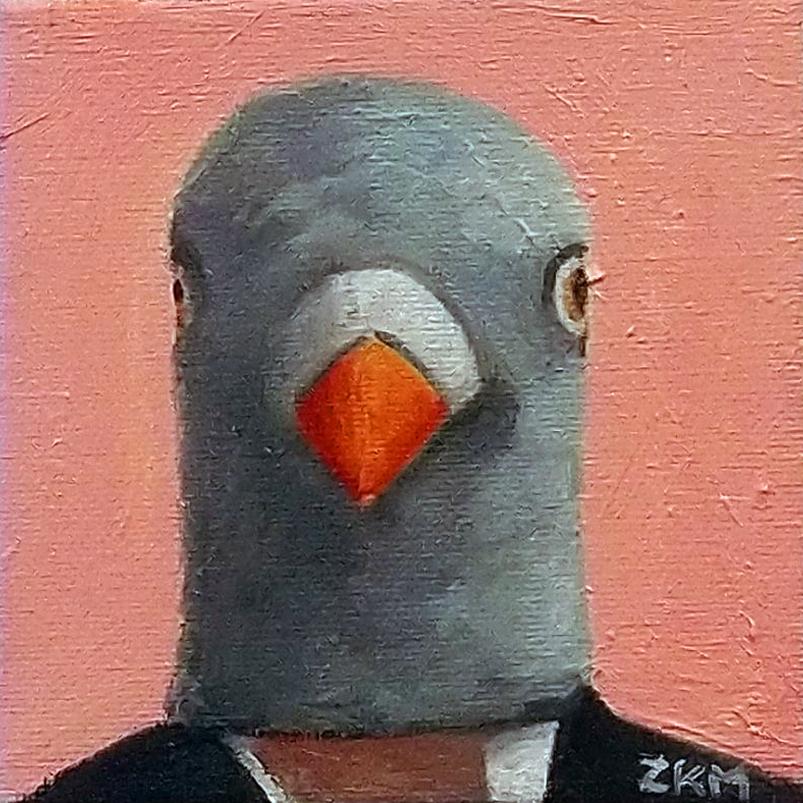
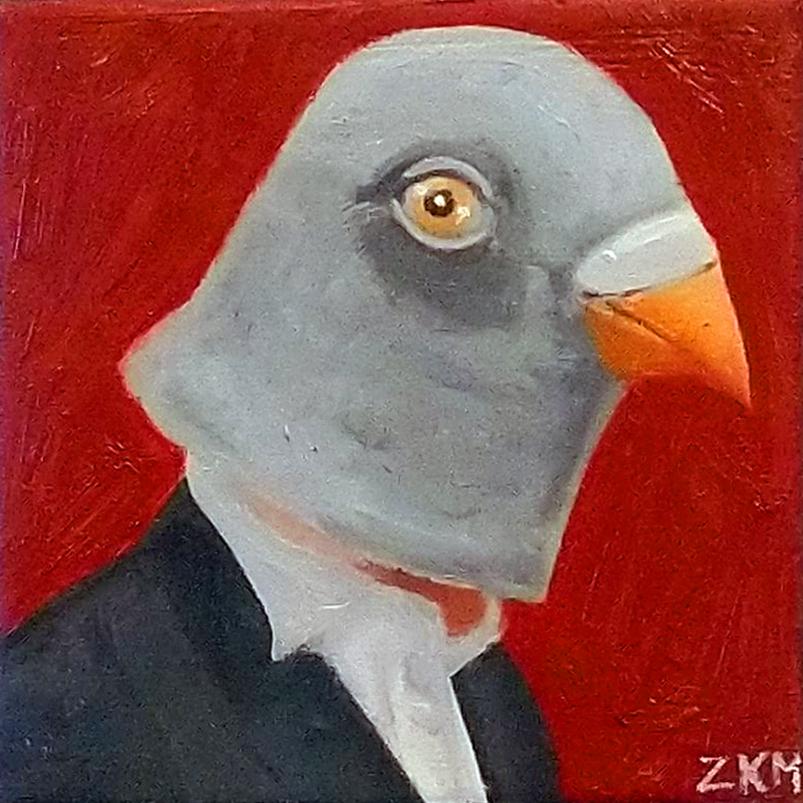
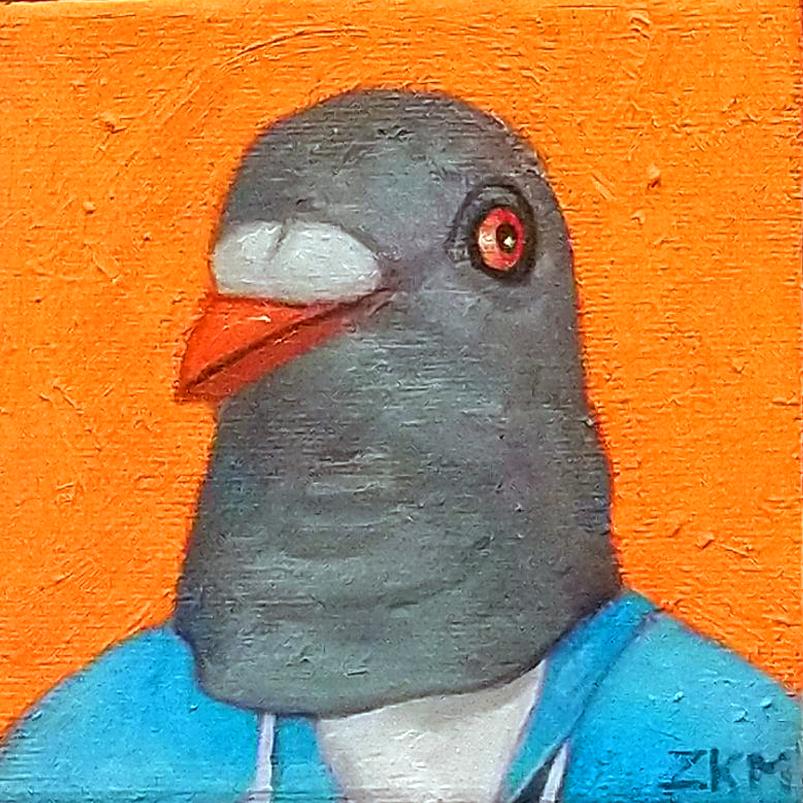
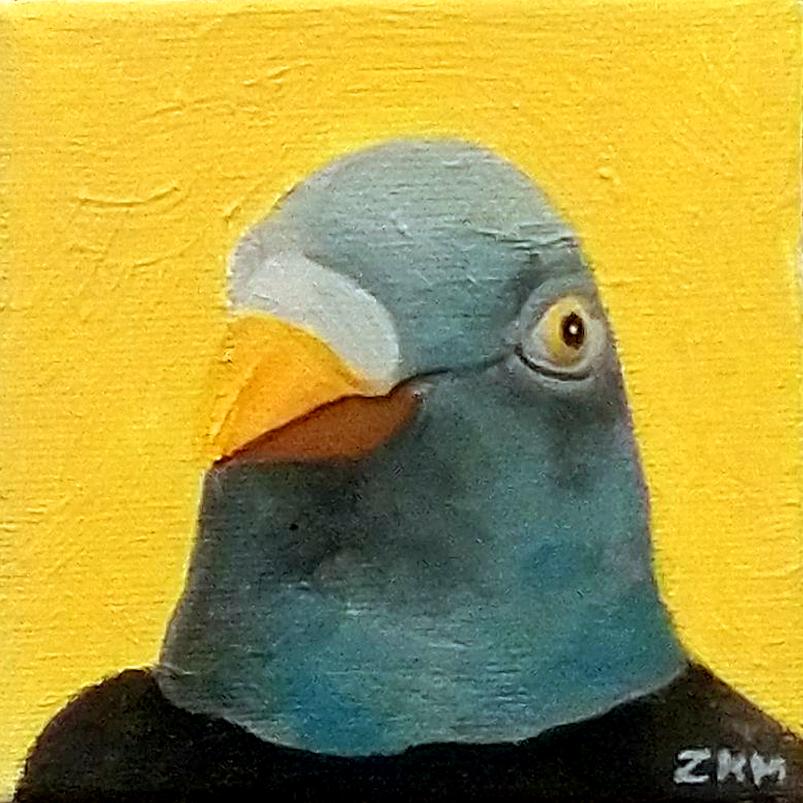
 The pigeons are us, when we make do with the crumbs of existence, when we think "better than nothing" and bow to the power of the bigger, uglier birds.
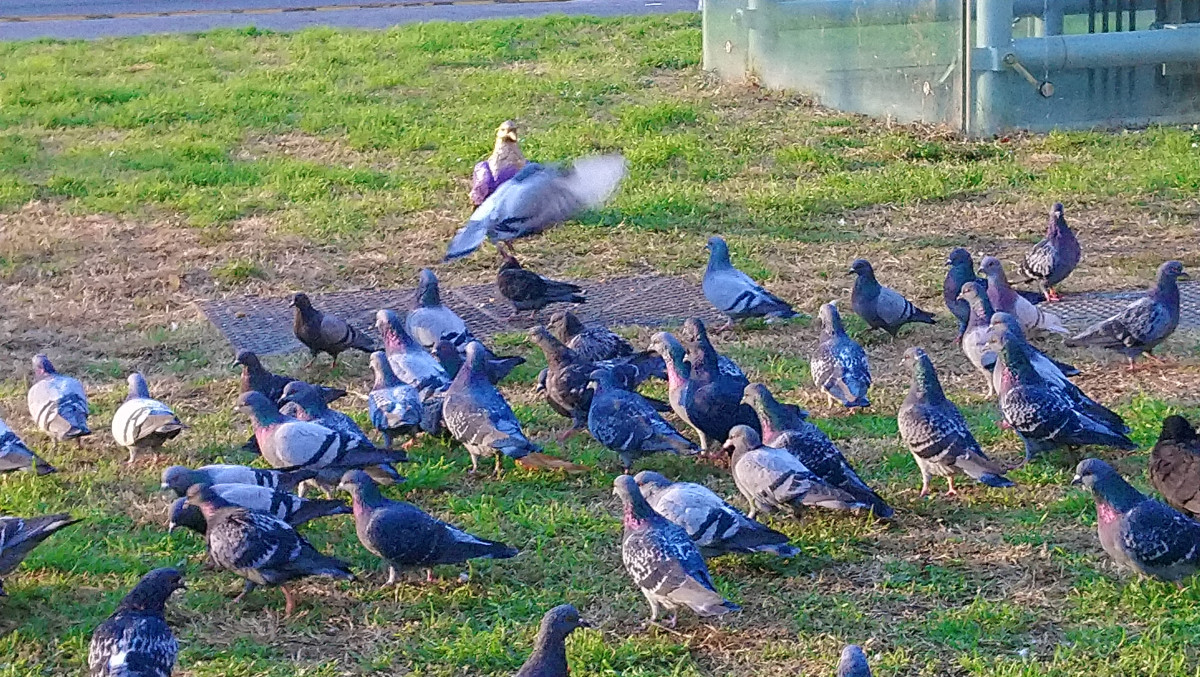
Every pigeon is born a white, ethereal dove; the social contrivance and the city environment turn it into a nest pigeon, then a nursery one, a primary-school one, a middle-school one, a high-school one, a university one, and finally a filthy adult city pigeon.
Every pigeon lives its whole life inside its own head - a quarantine of the brain - fleeing the world by flying above its own daydreams: an apparently enviable condition, and yet they seem to be praying plaintively.
At night they dream of the desirable holiday of some overblown television commercial, of great love, of universal peace, of eternal peace.
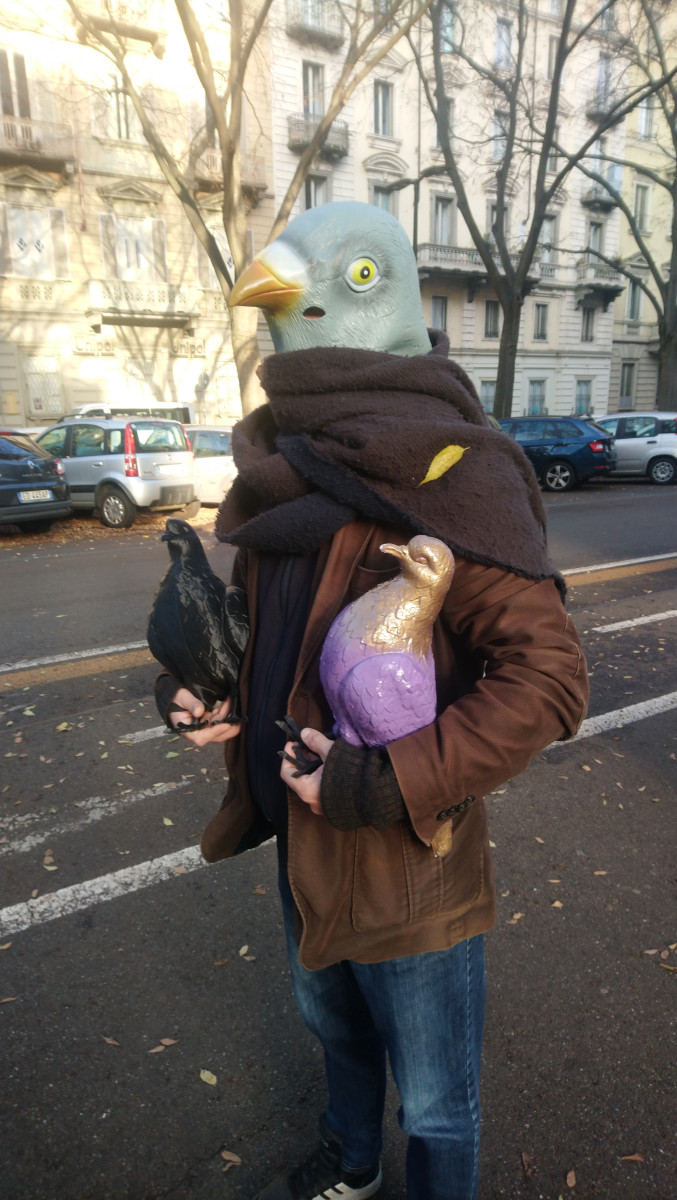
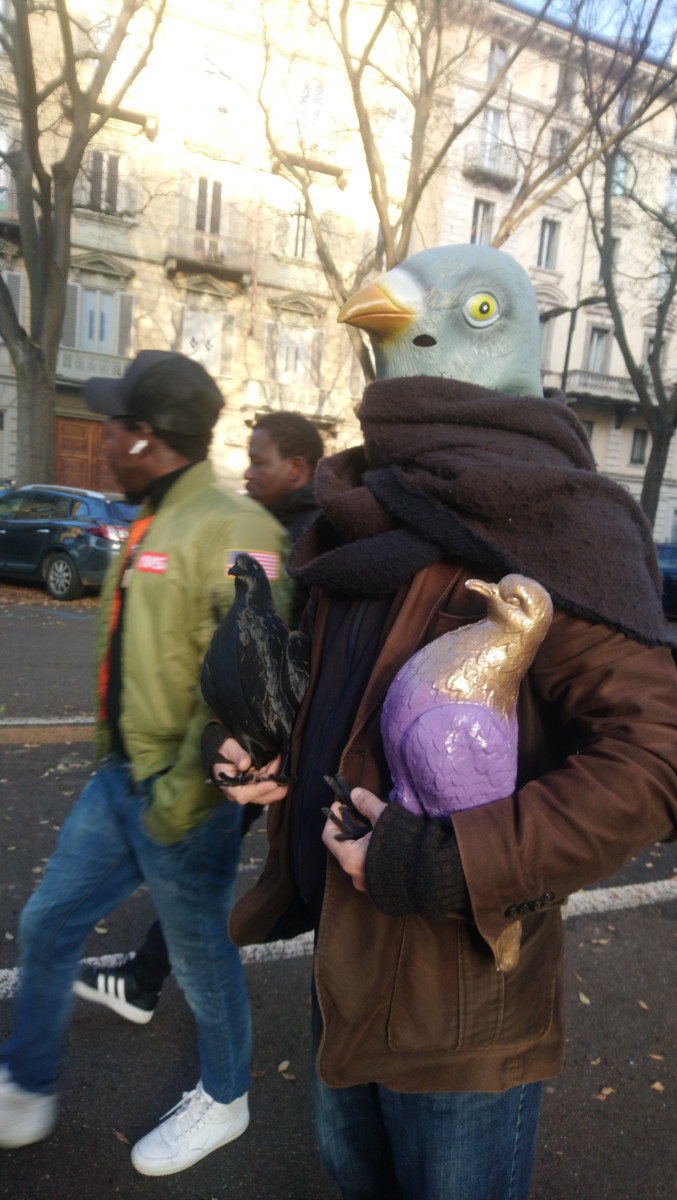
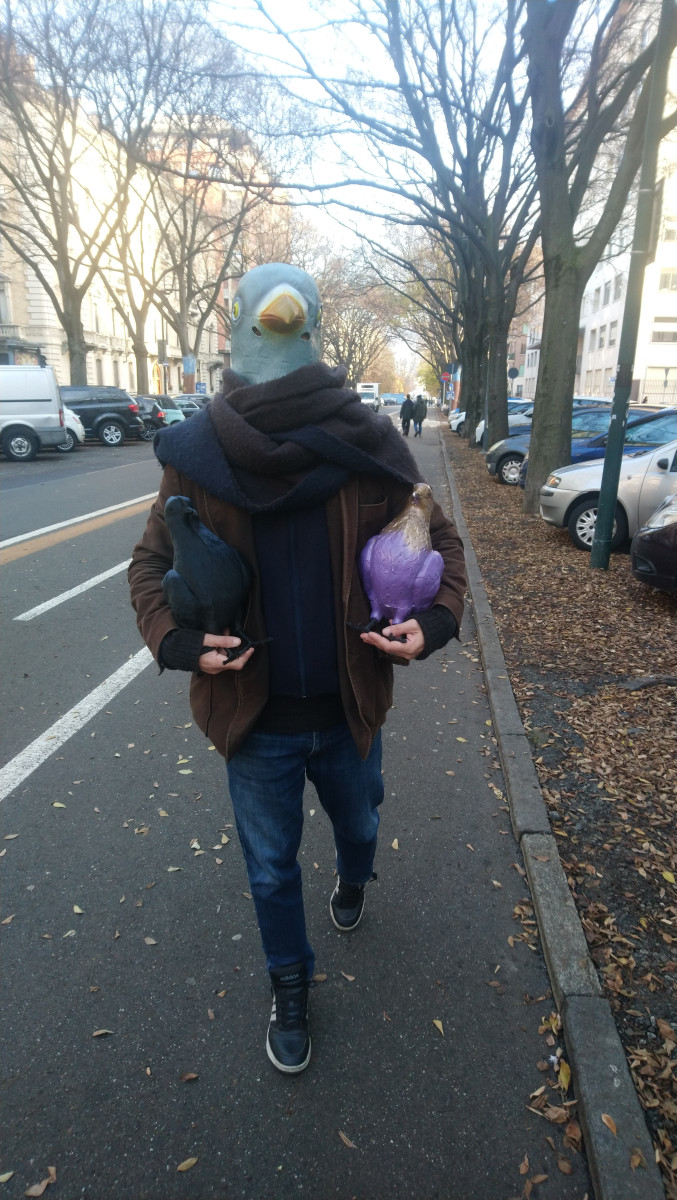
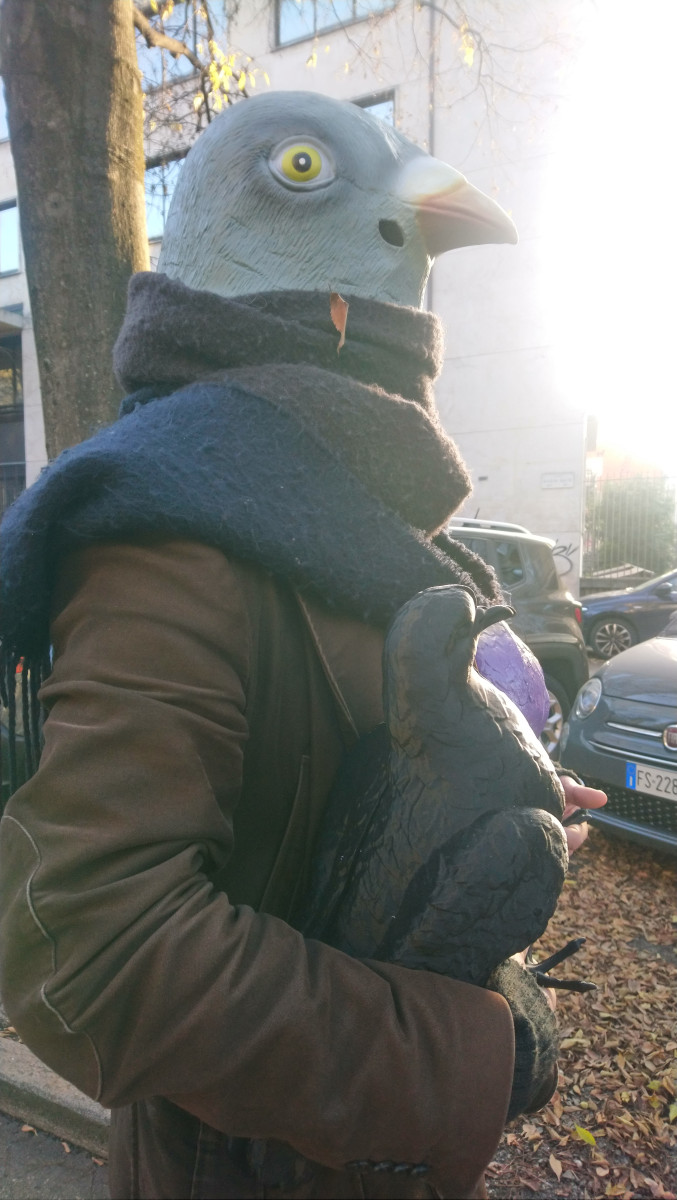
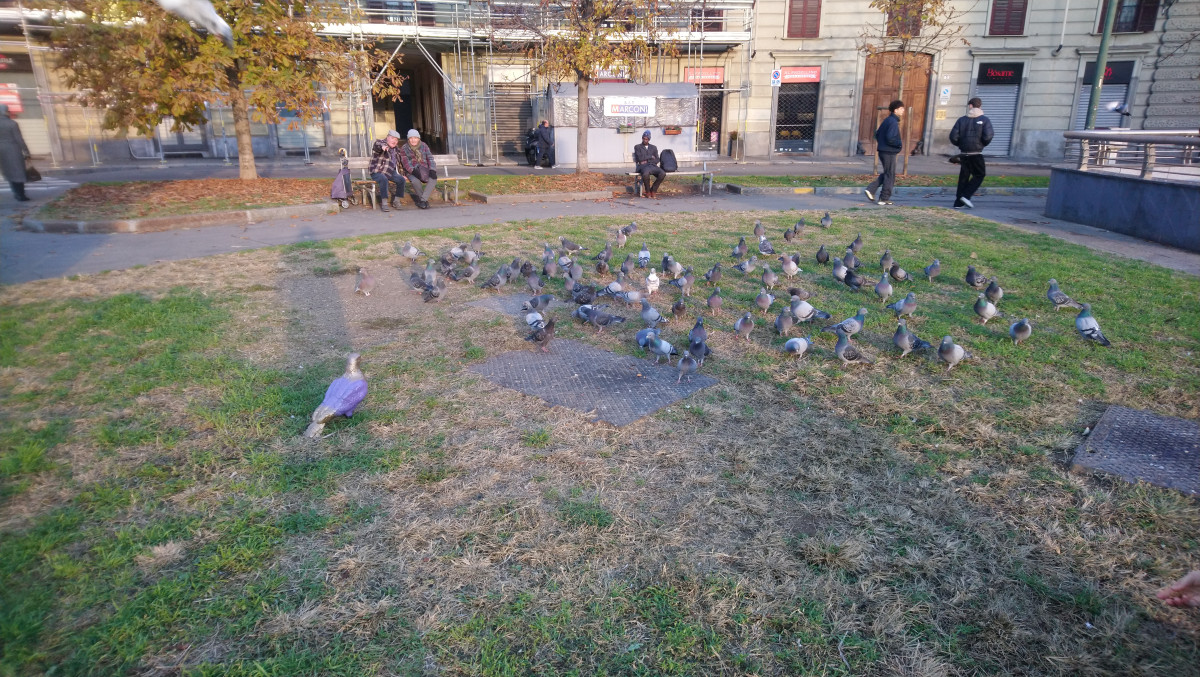
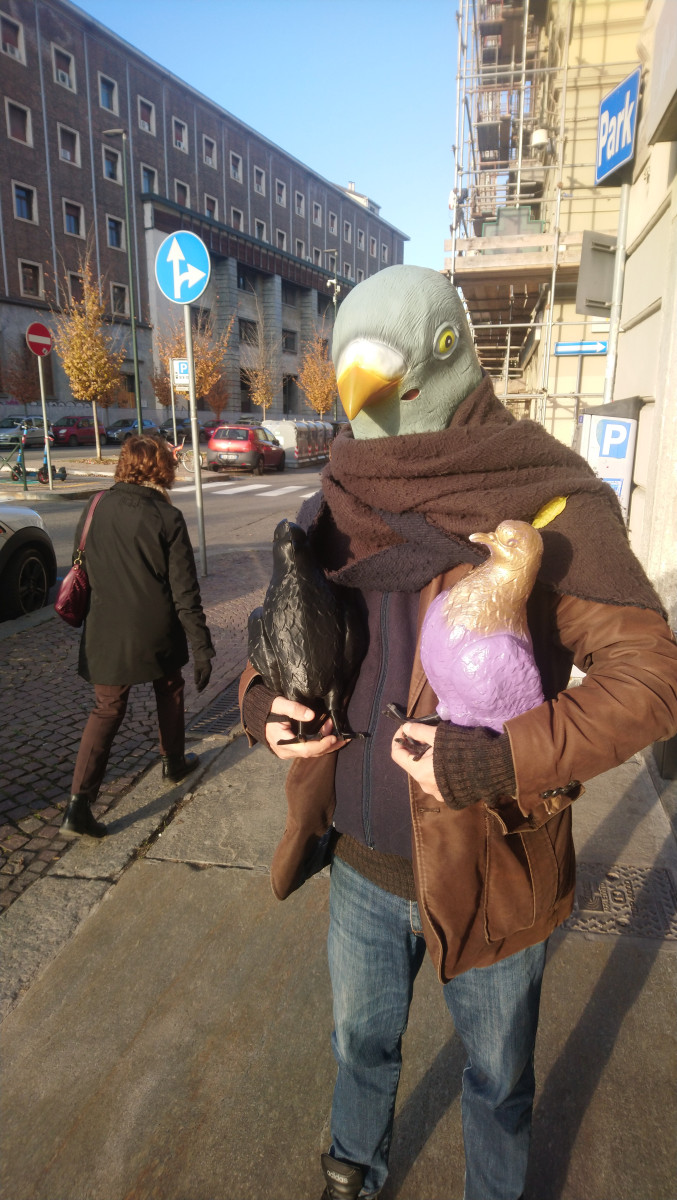
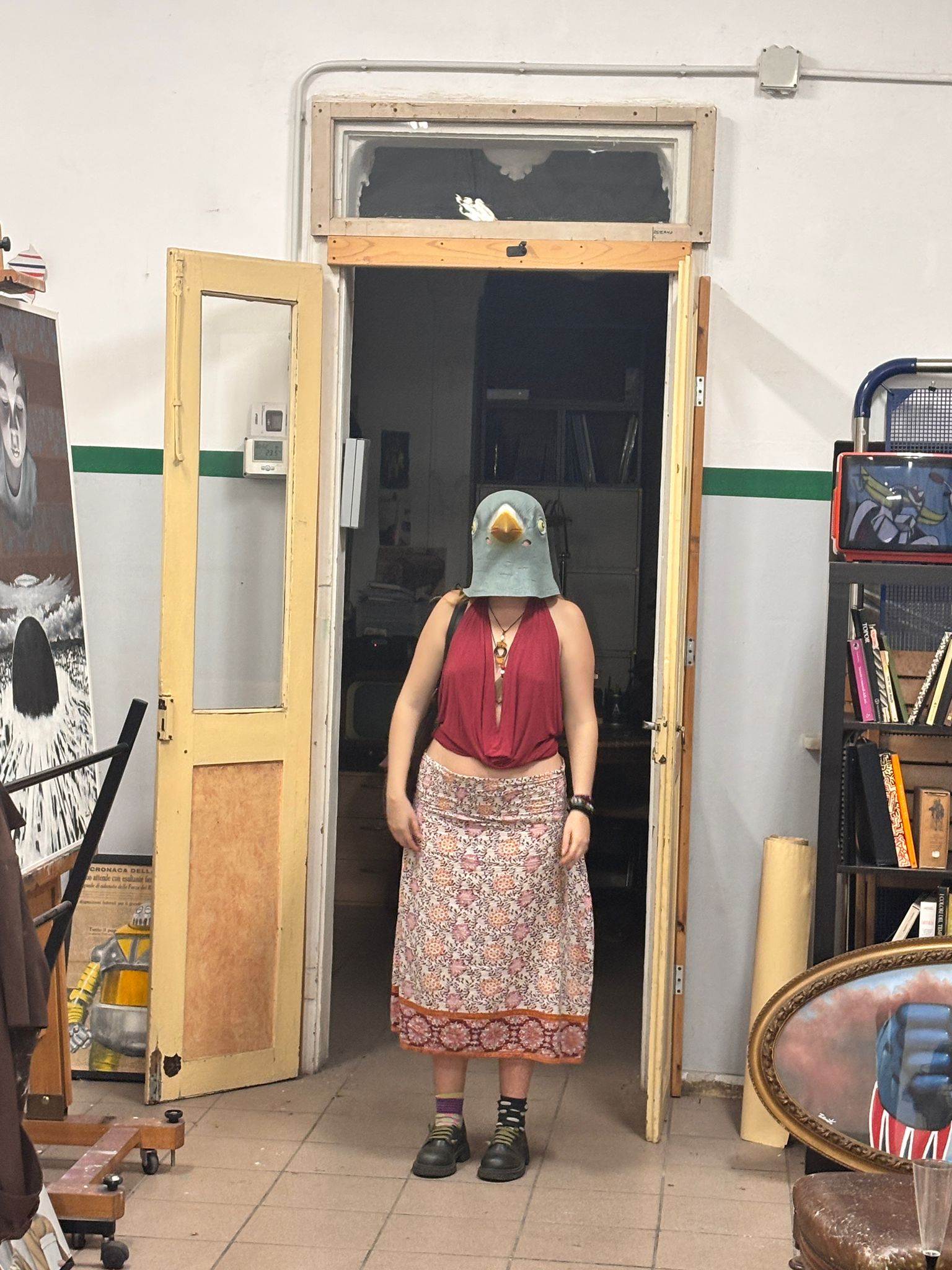
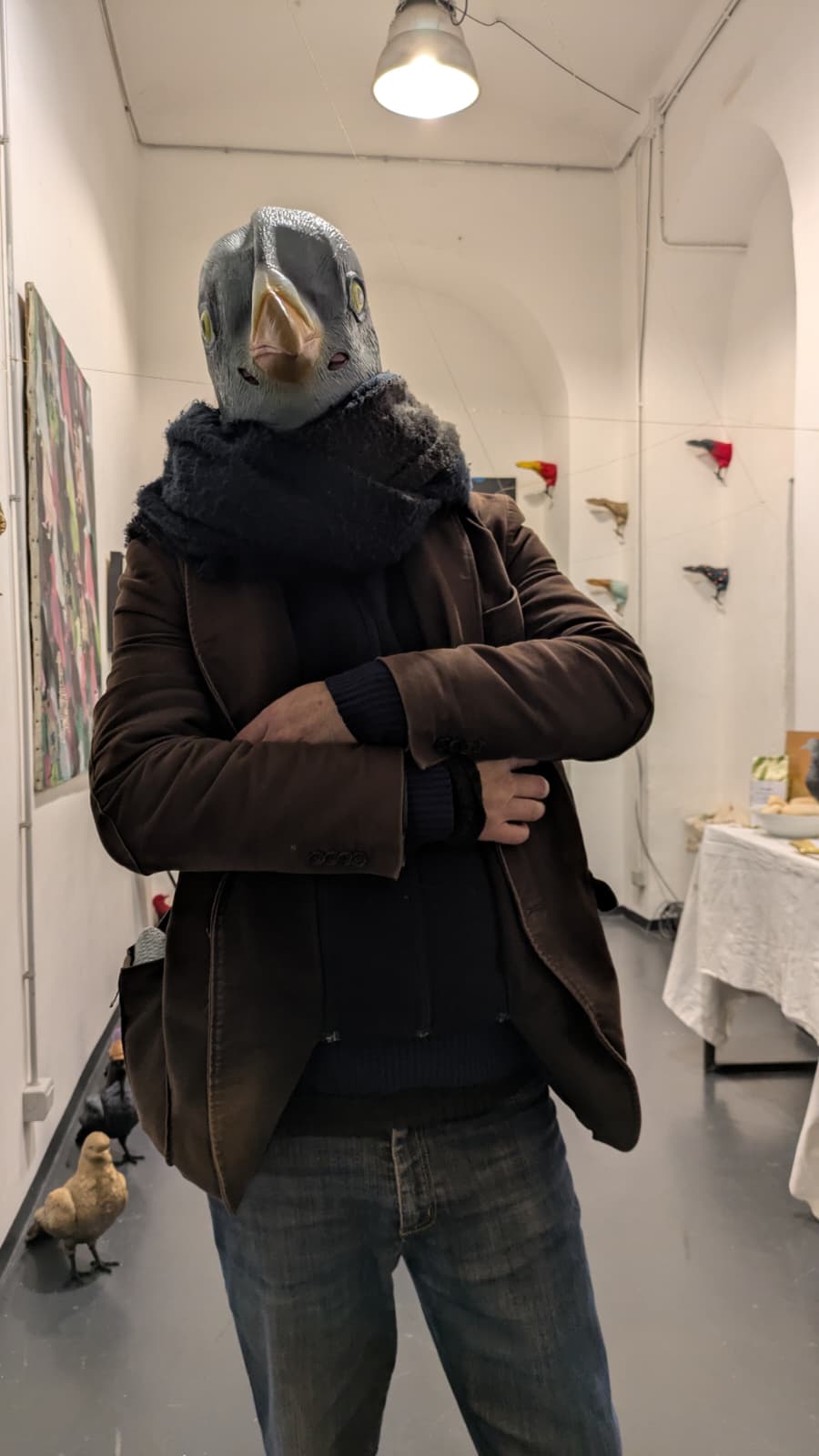
Some men have transformed themselves, so that pigeon heads have invaded the great cities;
others, like Giuseppe Belvedere (Monsieur Pigeon), take care of pigeons in order to embrace their own most human part.
Either way, we are all unstoppable pigeons.
The pigeon is, when all is said and done, a singular animal: a pleasant bird in the countryside, useful for communications and appreciated for its tasty meat, which turns into a filthy aesthetic error in the great urban agglomerations. It is a glitch in the system, an idiot artist who, like me, busies himself with useless things and produces useless works; it lives in the interstices, it flies and teleports itself, it expels its excrement onto the heads of passers-by indiscriminately - but with particular pleasure onto the statues of the powerful and in the squares of power.
Le Canard Digérateur, designed by Jacques de Vaucanson in 1739, was a mechanical automaton.
The machine, made up of a multitude of moving parts, was apparently able - by means of a trick - to digest.
"The duck stretches out its neck to take the corn from your hand; it swallows it, digests it, and discharges it digested by the usual passage. You see all the actions of a duck that swallows greedily and doubles the speed of the movement of its neck and throat in order to drive the food into its stomach, copied from nature… The matter digested in the stomach is conducted by pipes down to the anus, where there is a sphincter that lets it out."
The "robotic" automaton (although the invention of the word robot by the Czech writer Karel Čapek came much later, in 1920) -
Vaucanson's "shitting duck", as it was nicknamed in England - remained enormously popular, probably because of the deception it produced: the idea that non-human living beings were like automata, machines, stupid birds useful at best for eating.
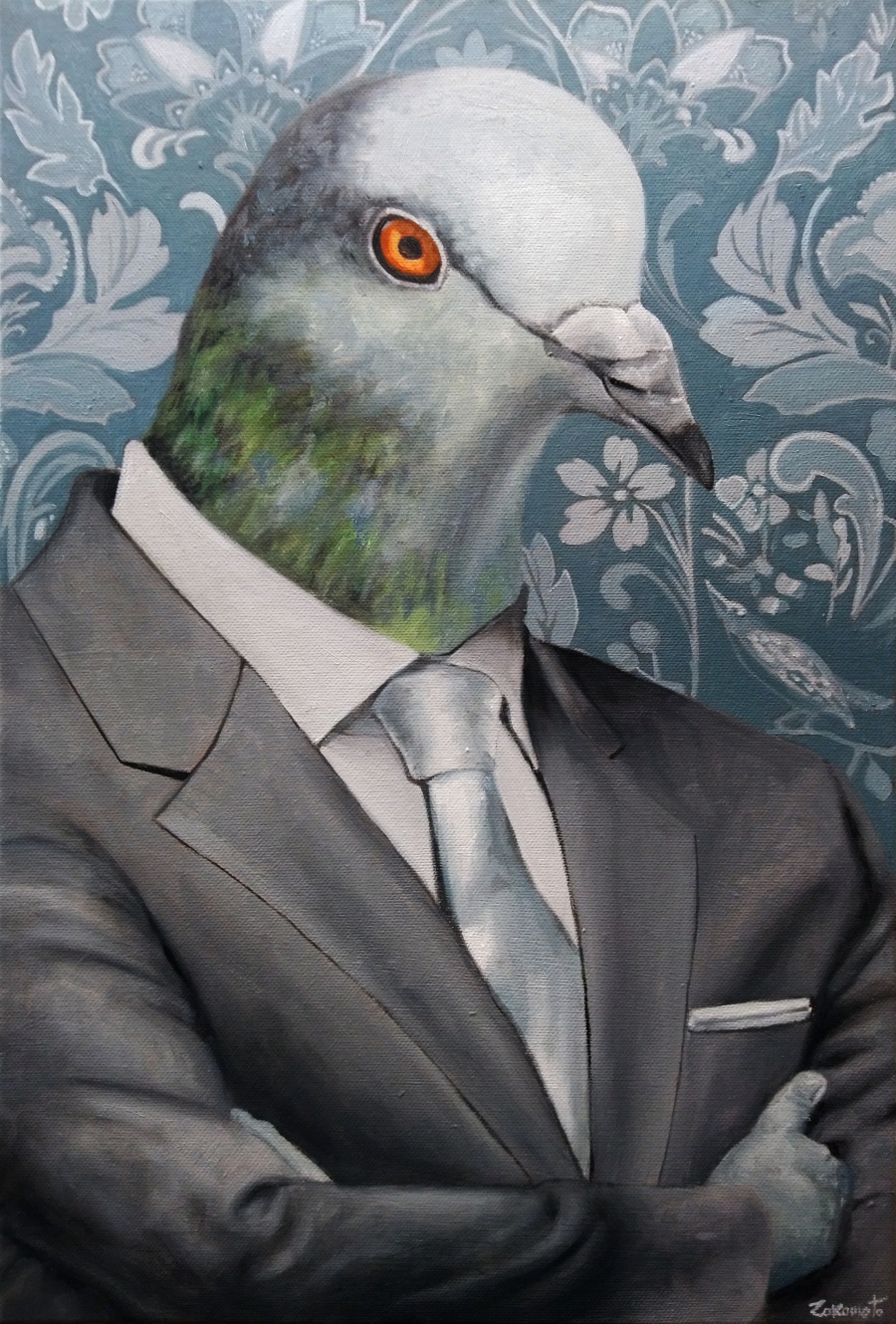 DIRIGENTE Oil on canvas 30x45 cm. Akira Zakamoto
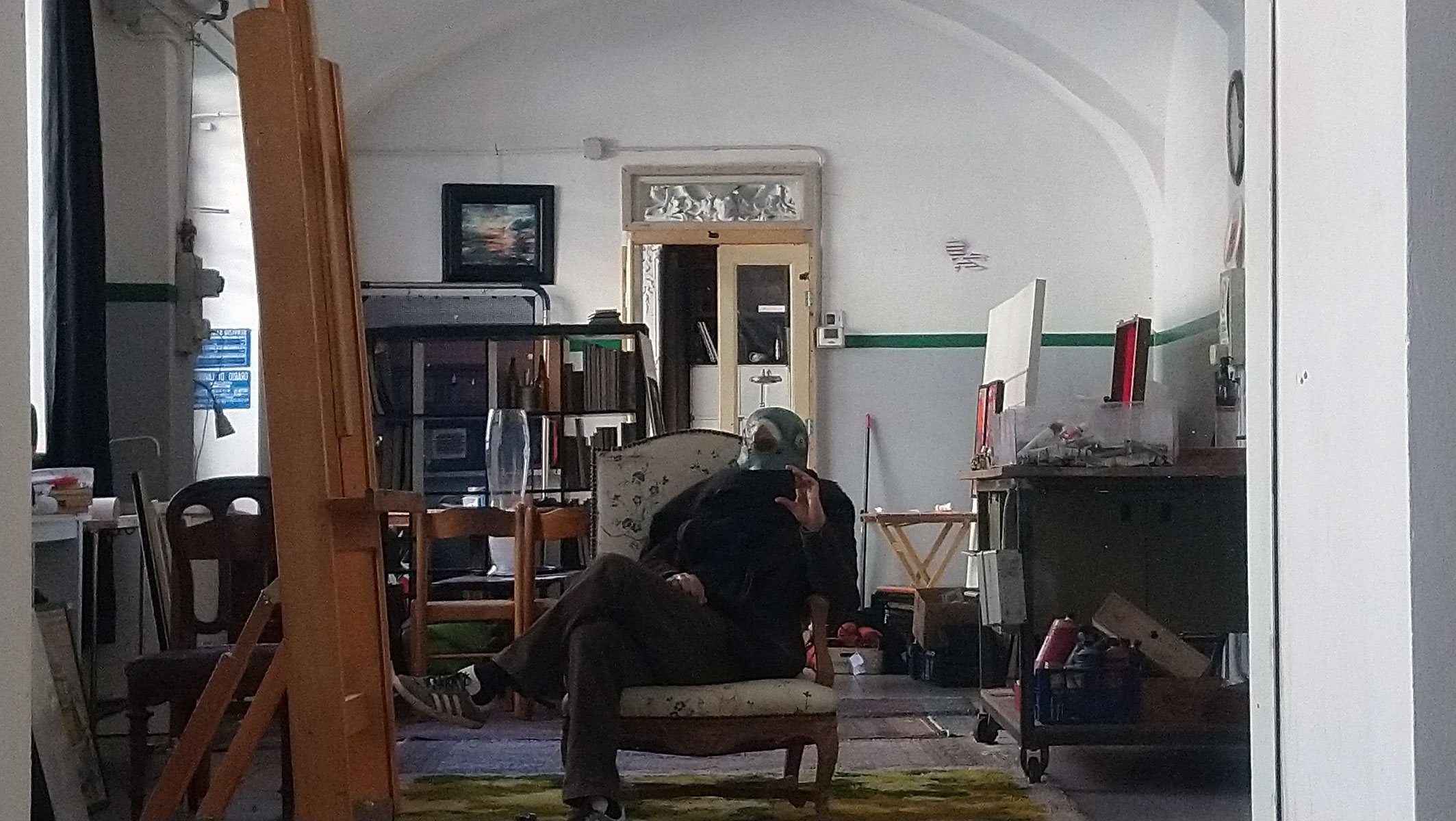
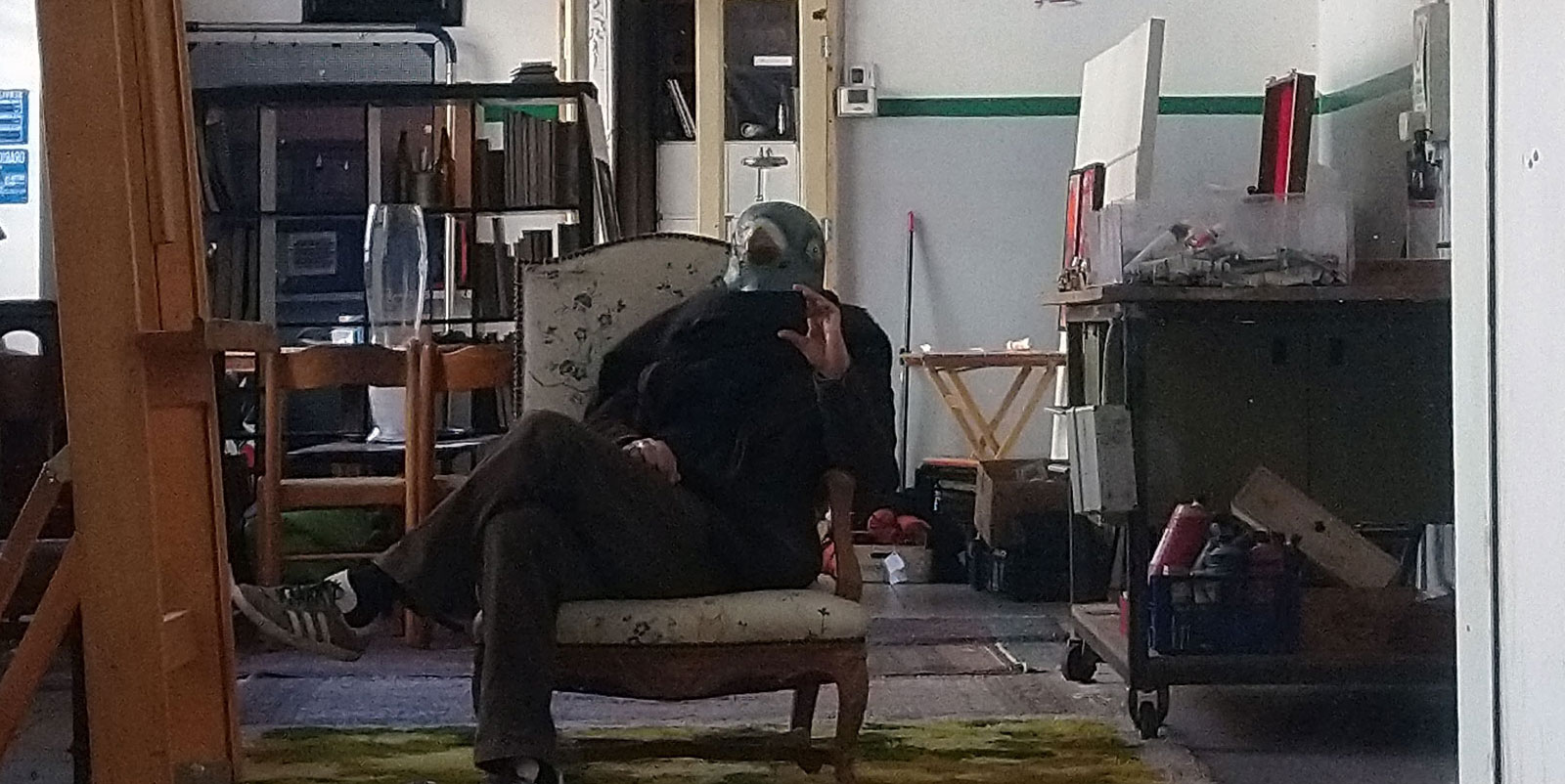
 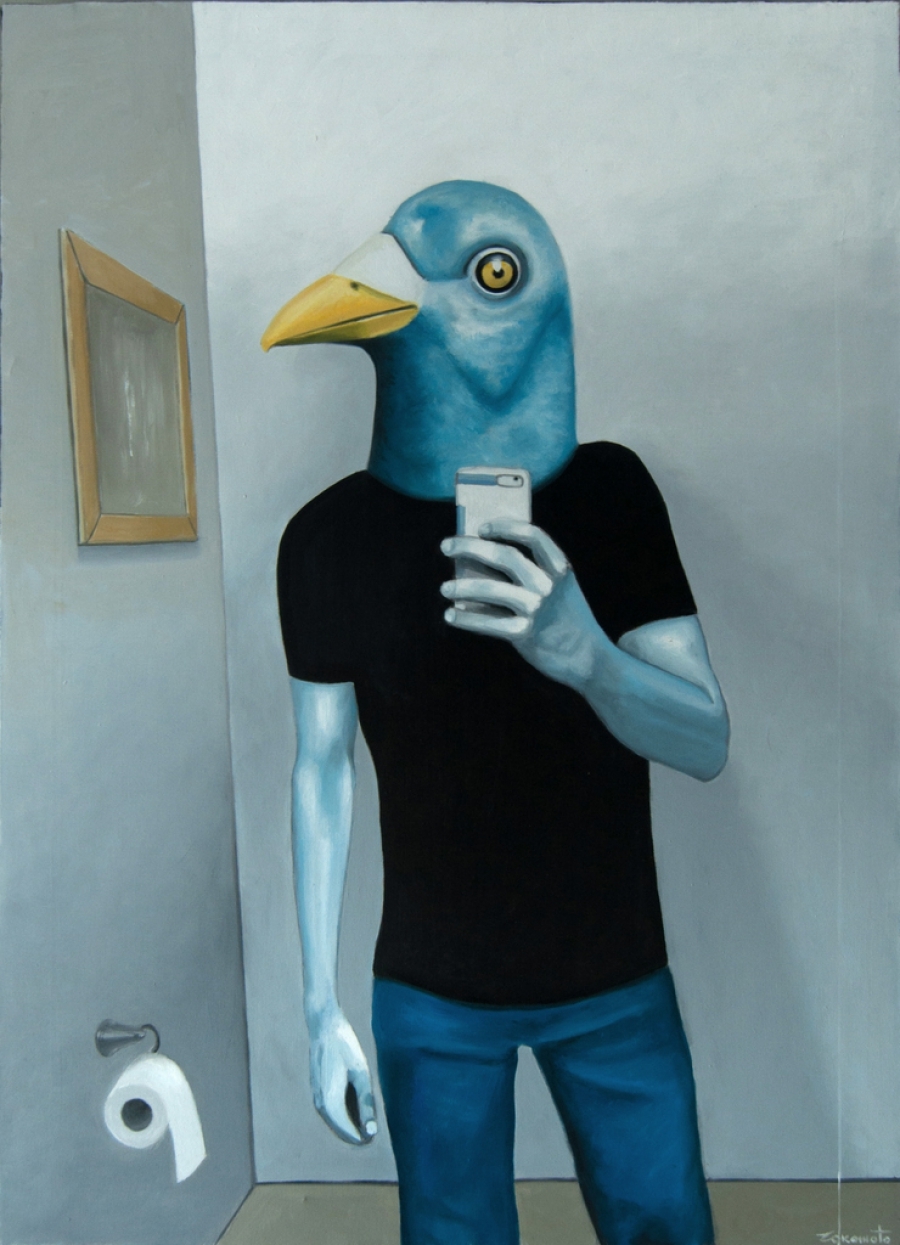 SELFIE 650x70 cm. Akira Zakamoto
 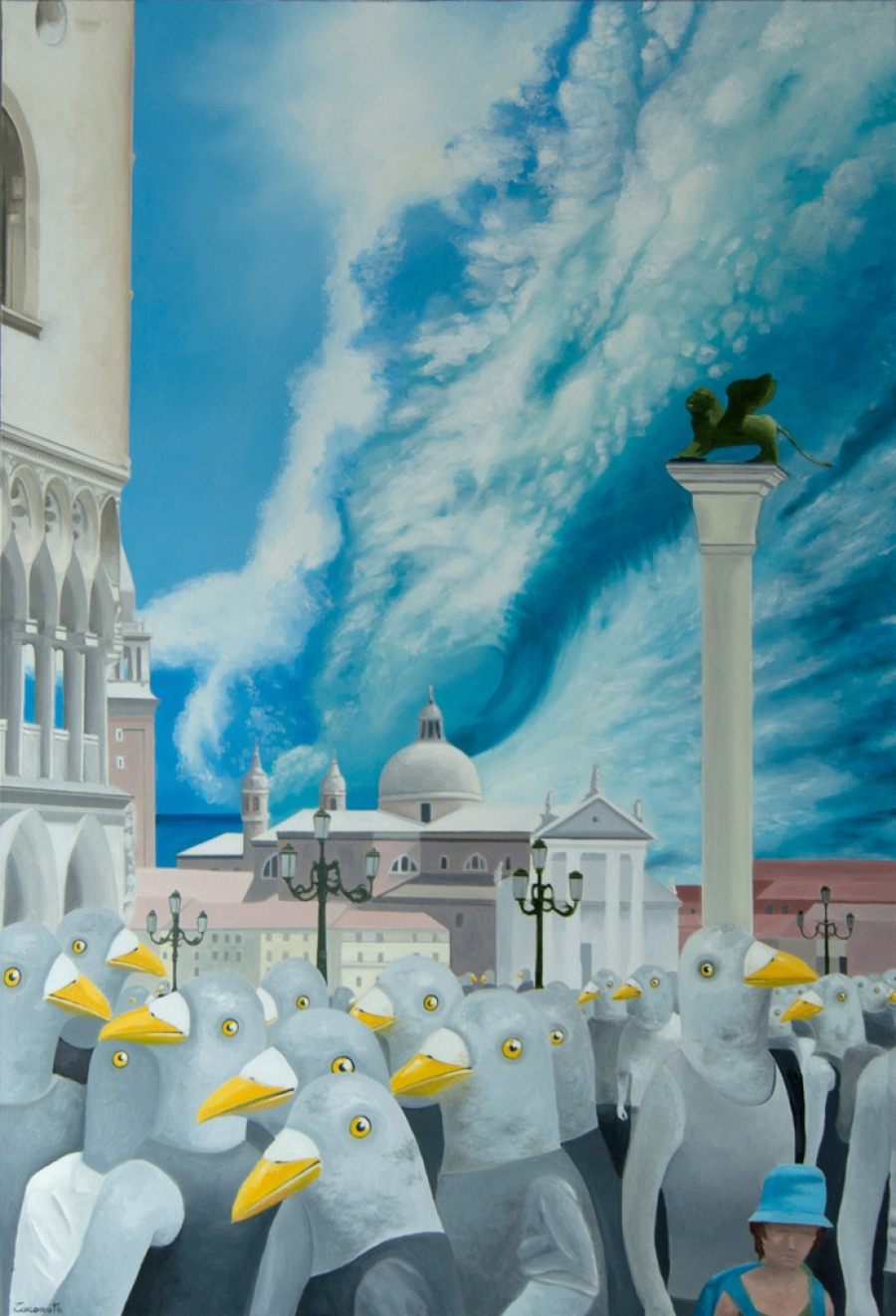 TOURISTS Oil on canvas 100x70 cm. A. Zakamoto
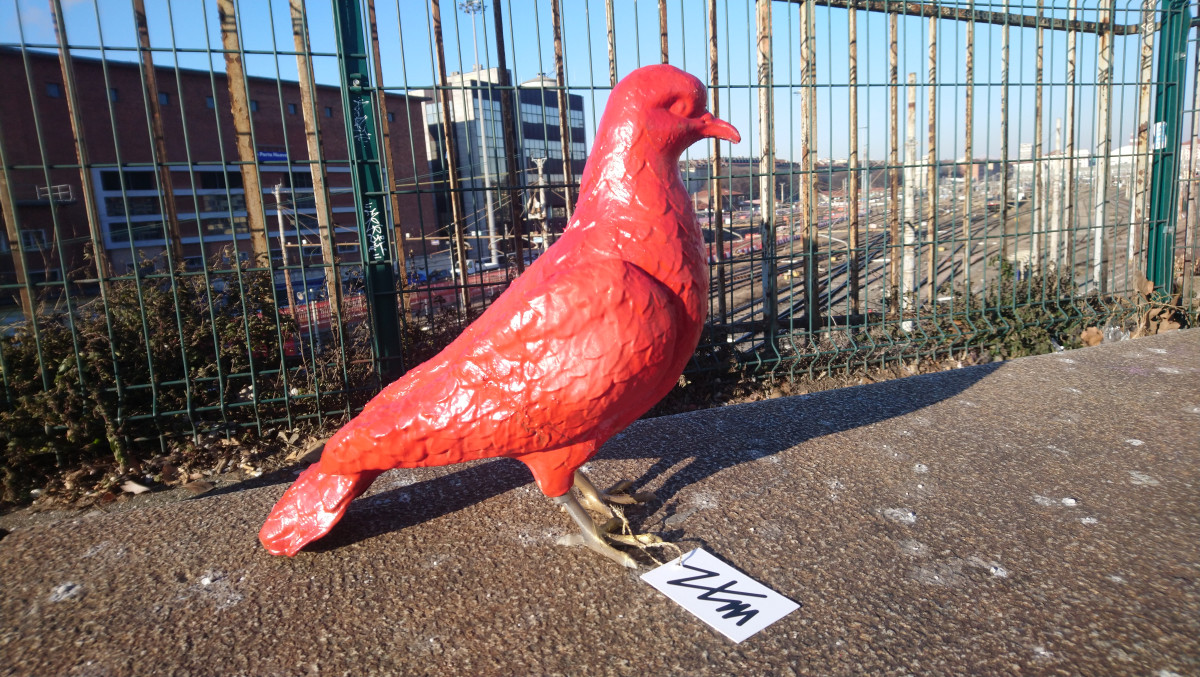
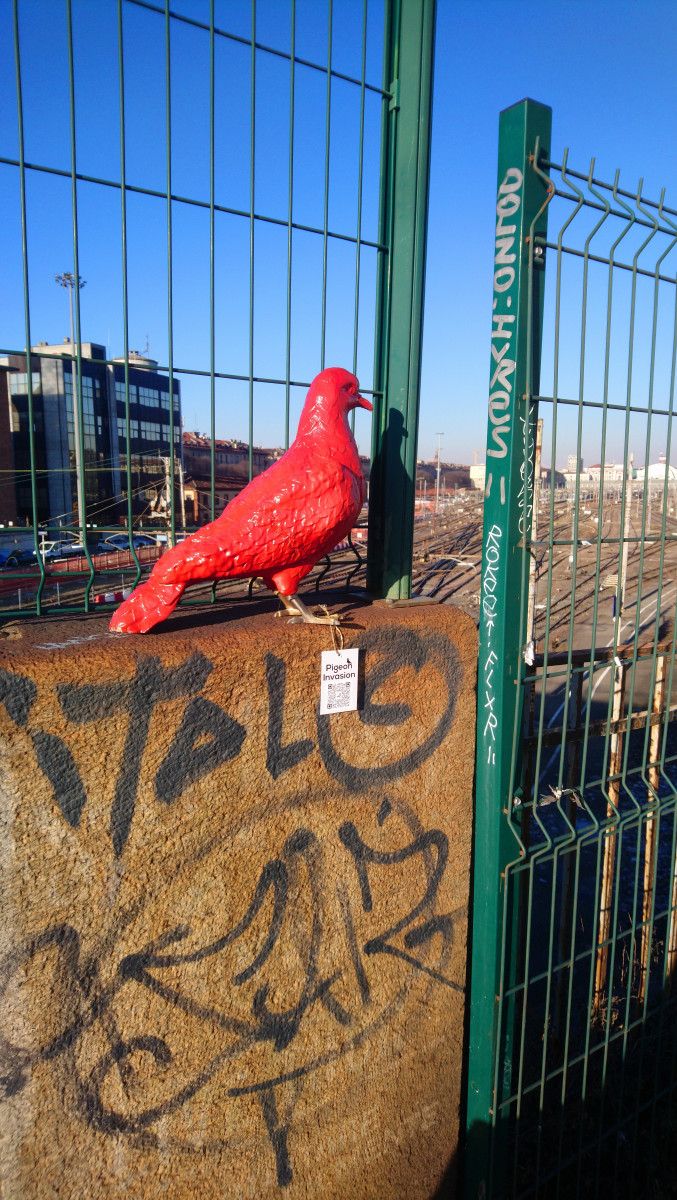
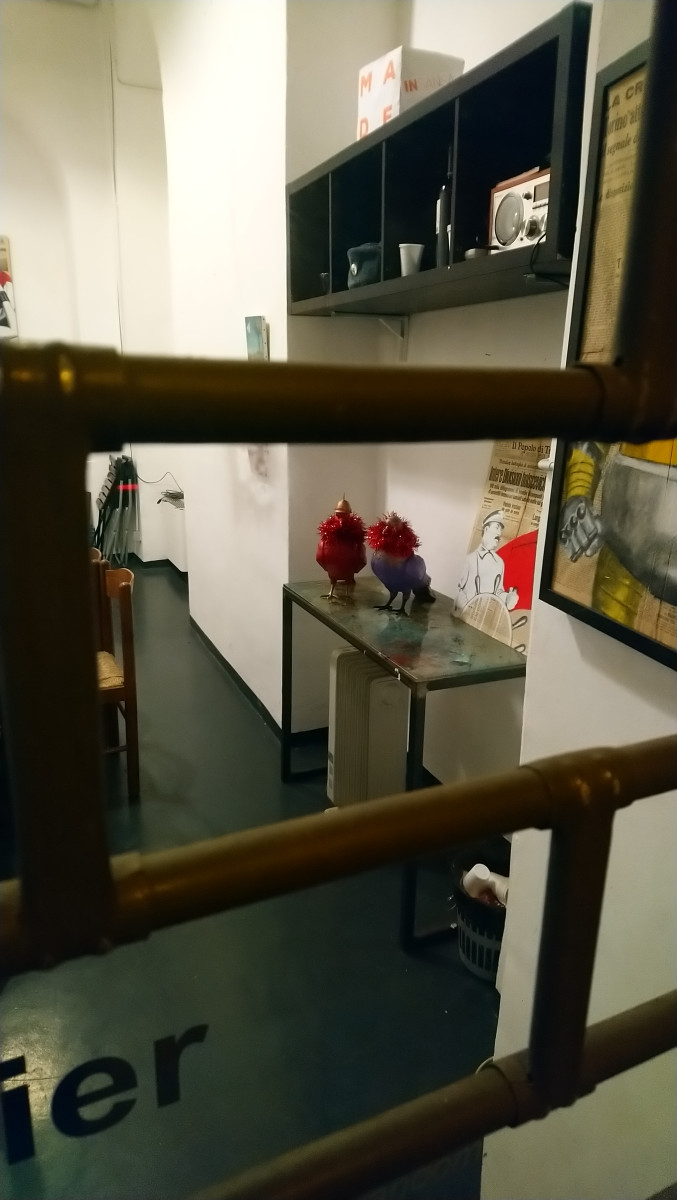
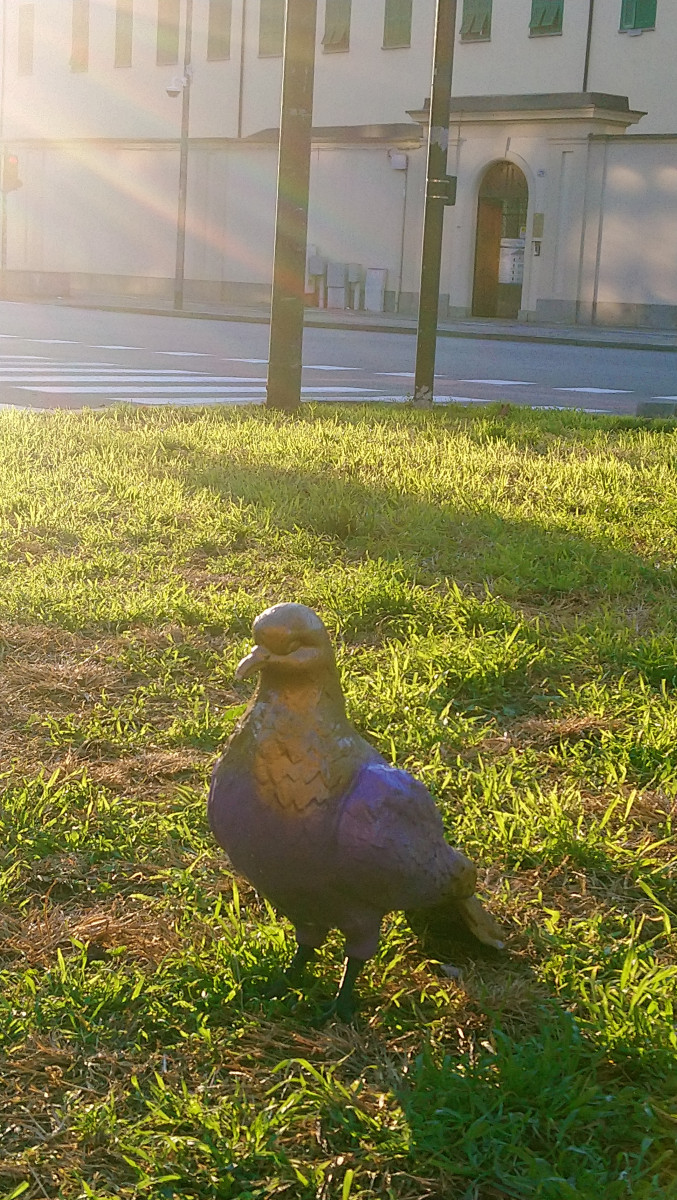
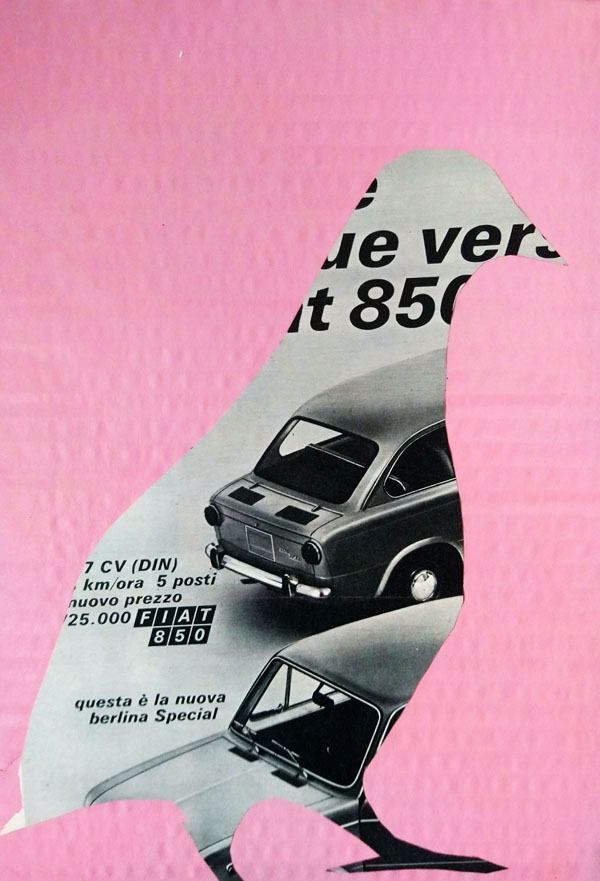
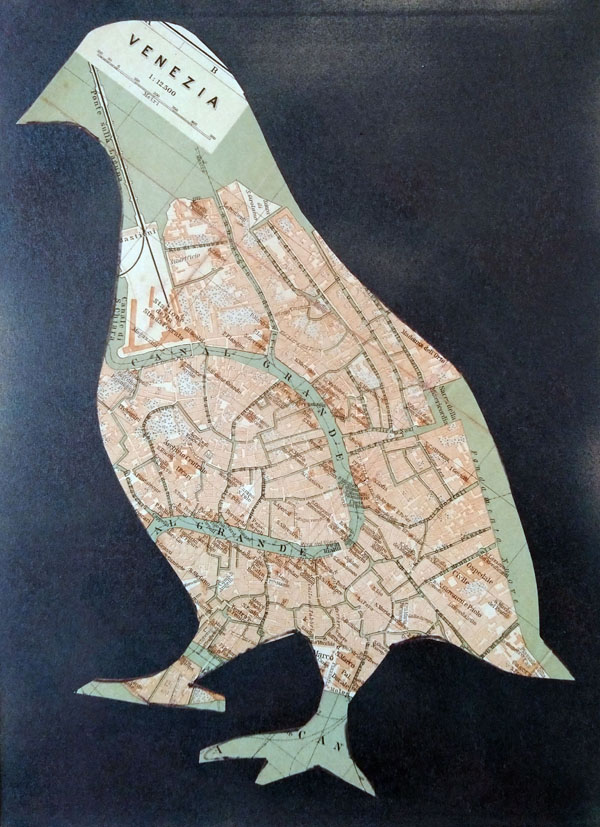
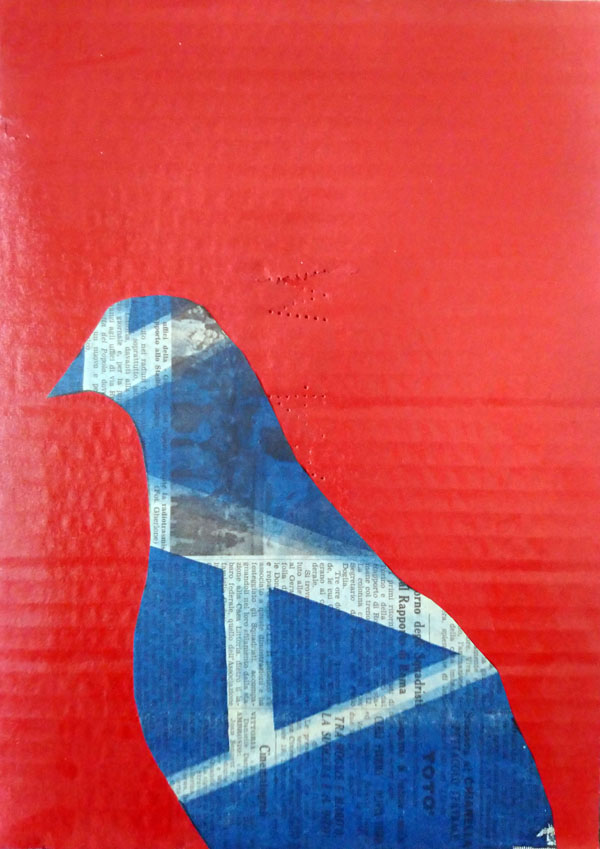
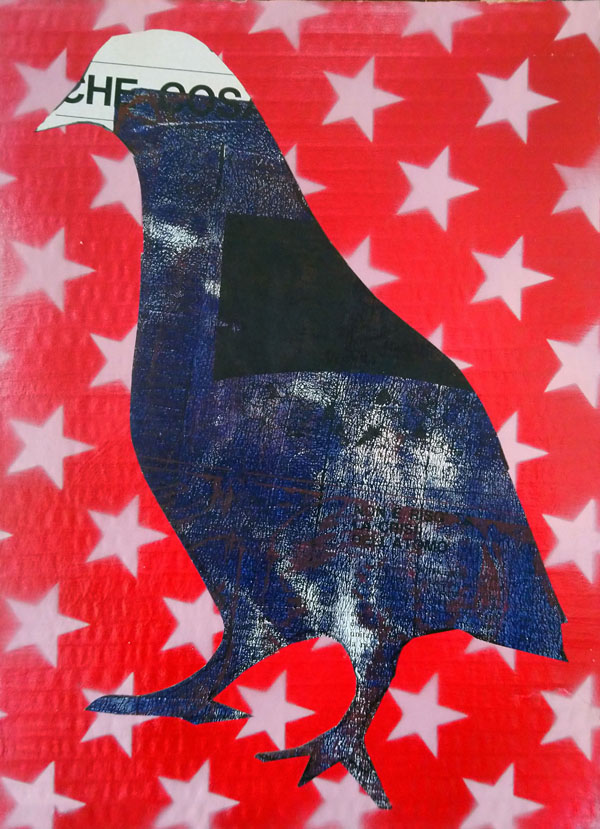
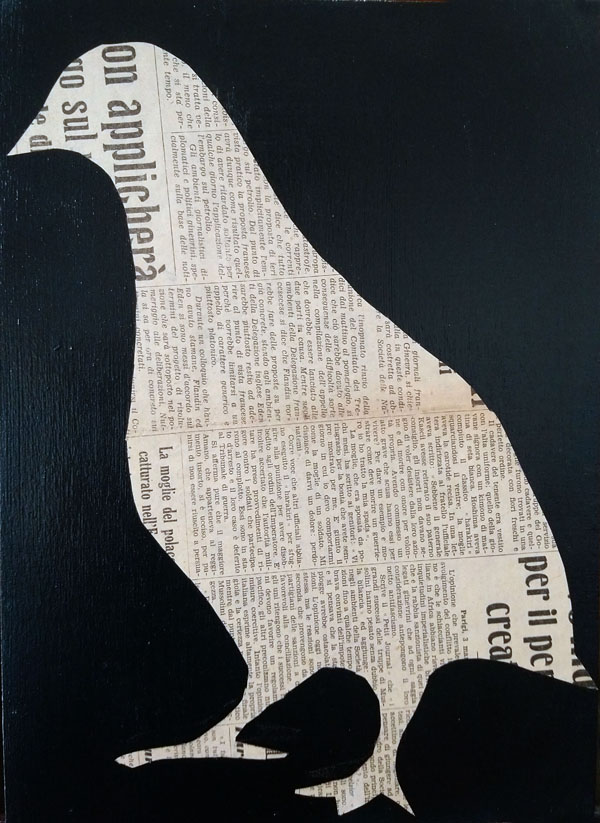
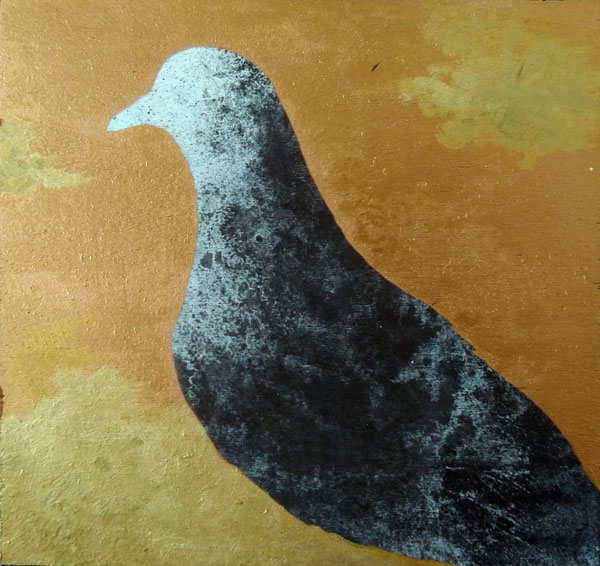
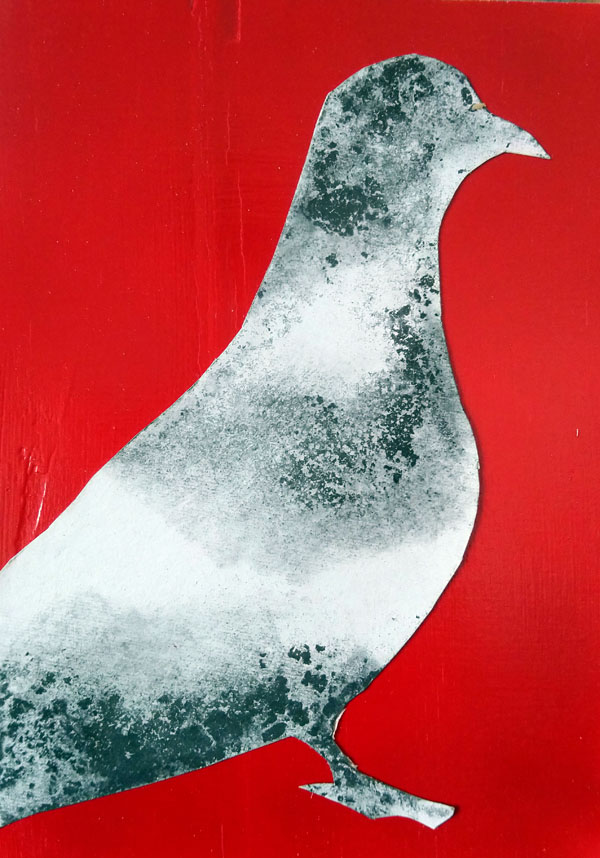
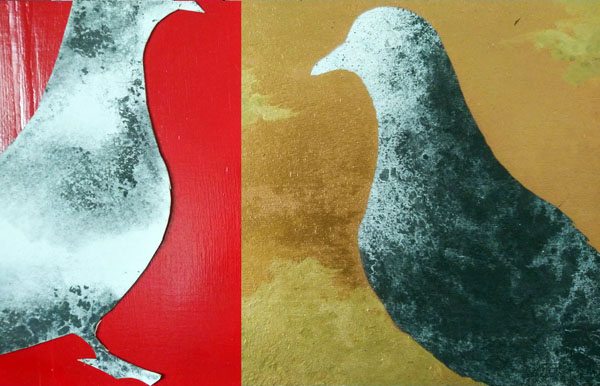
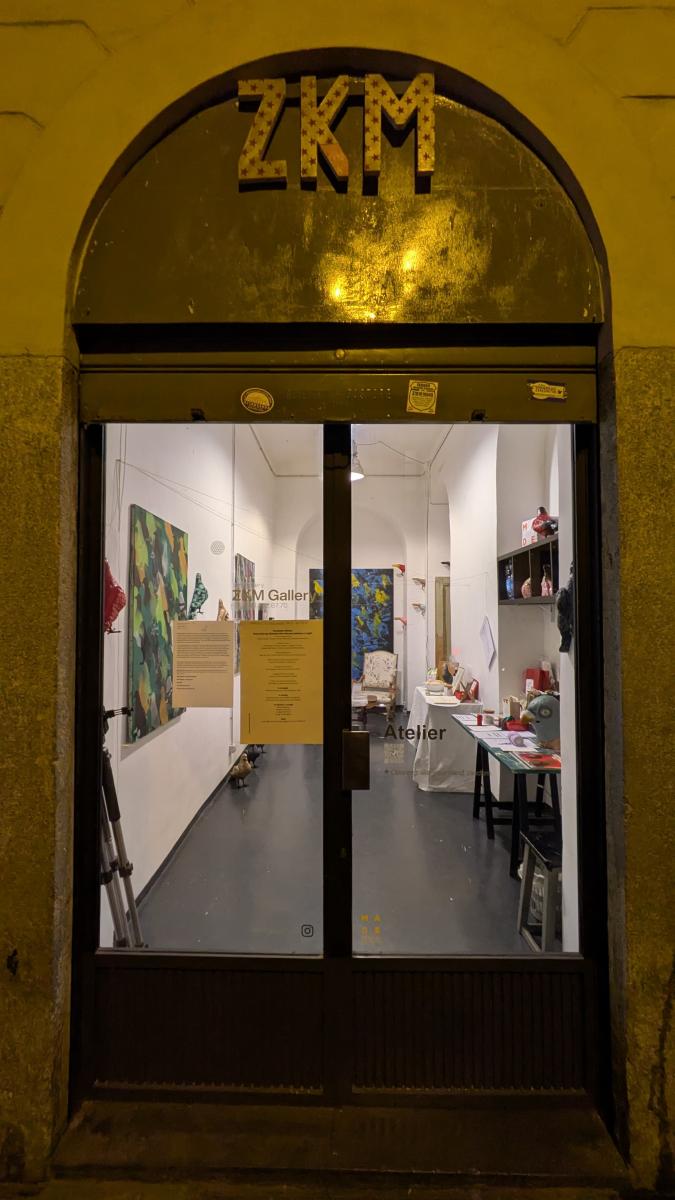
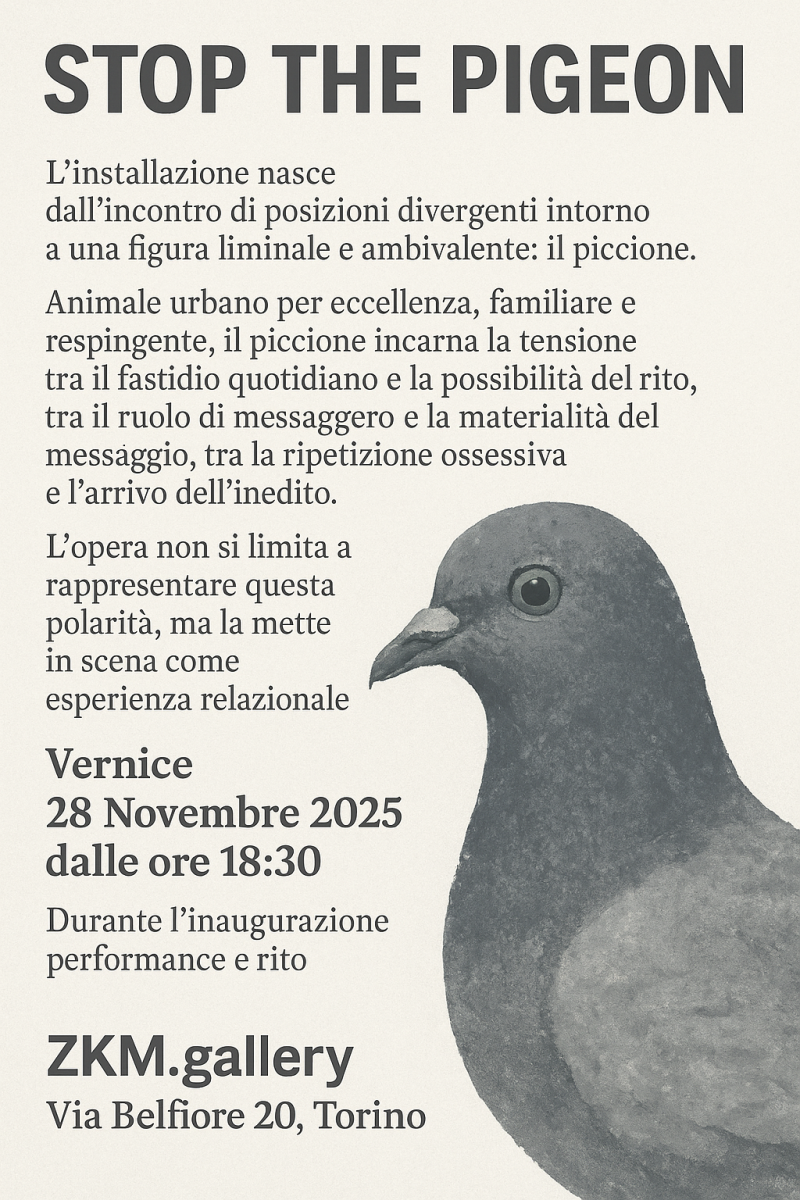
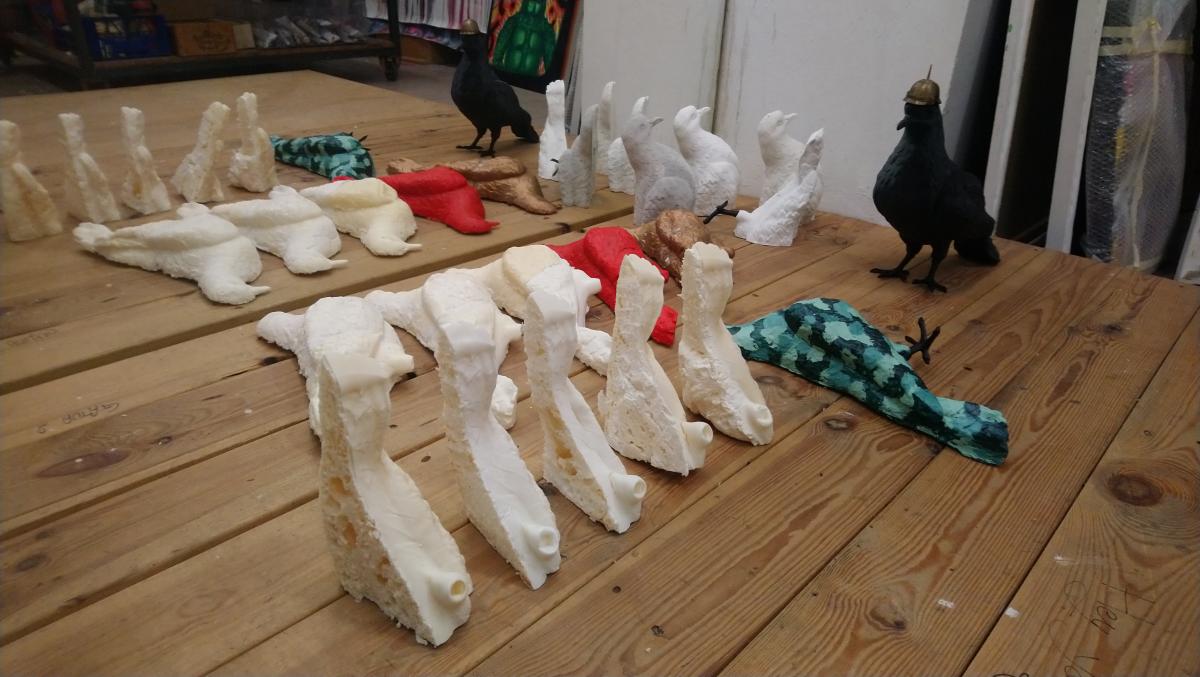
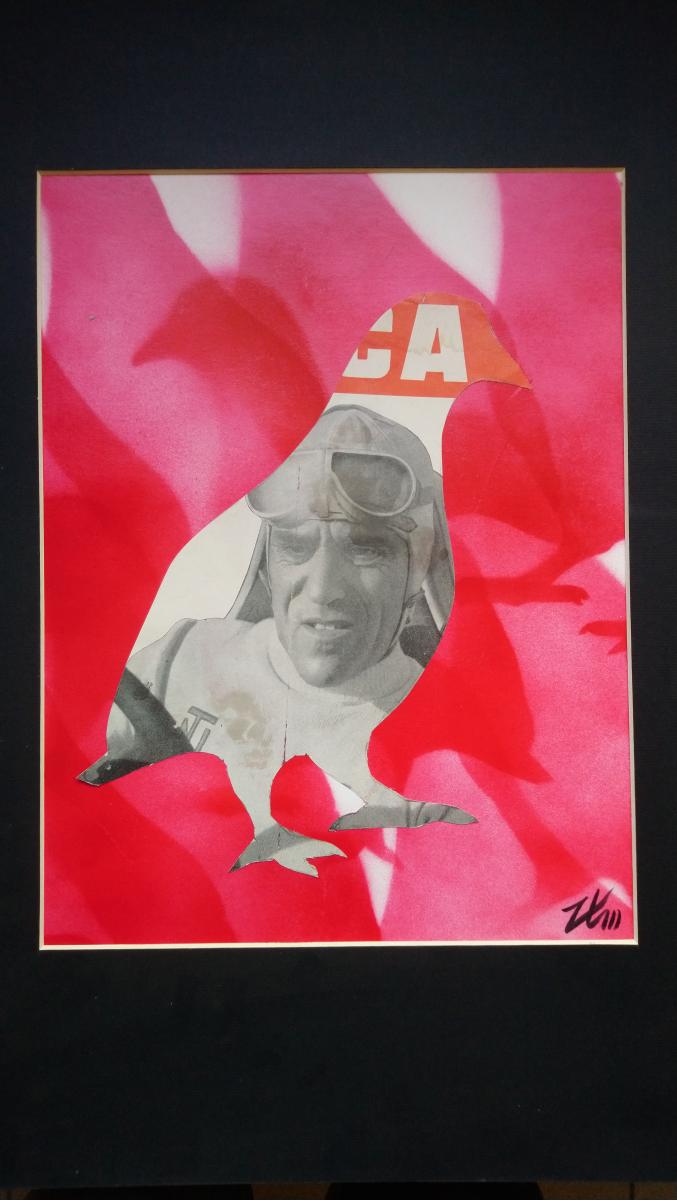
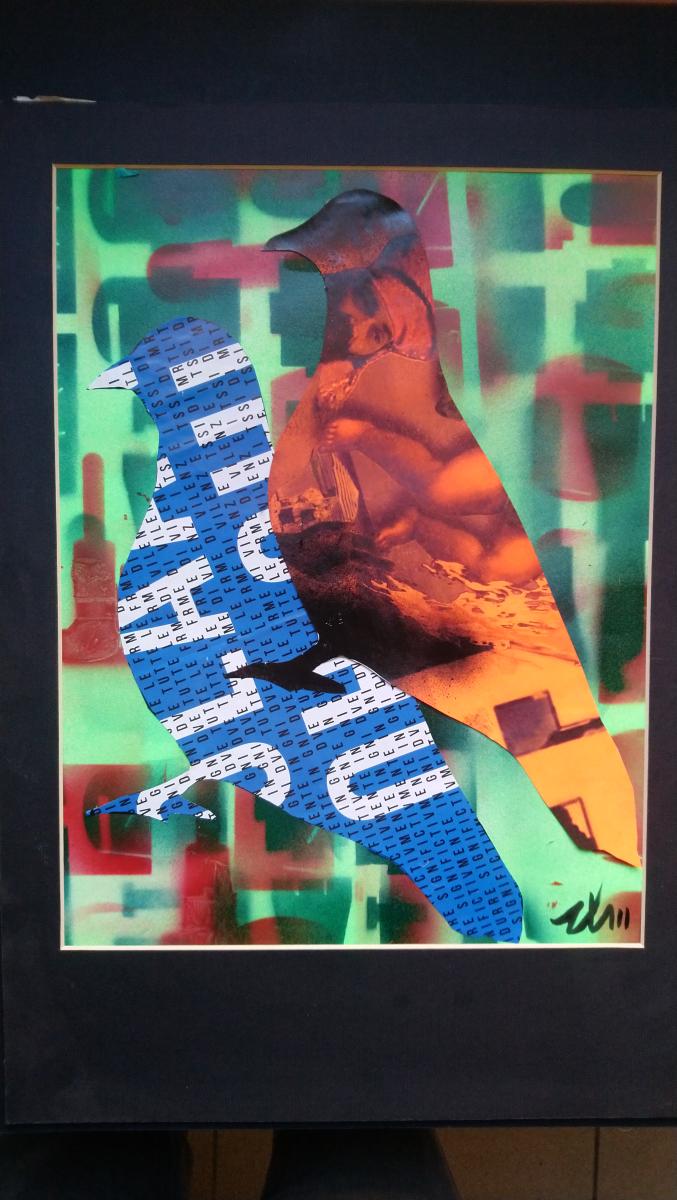
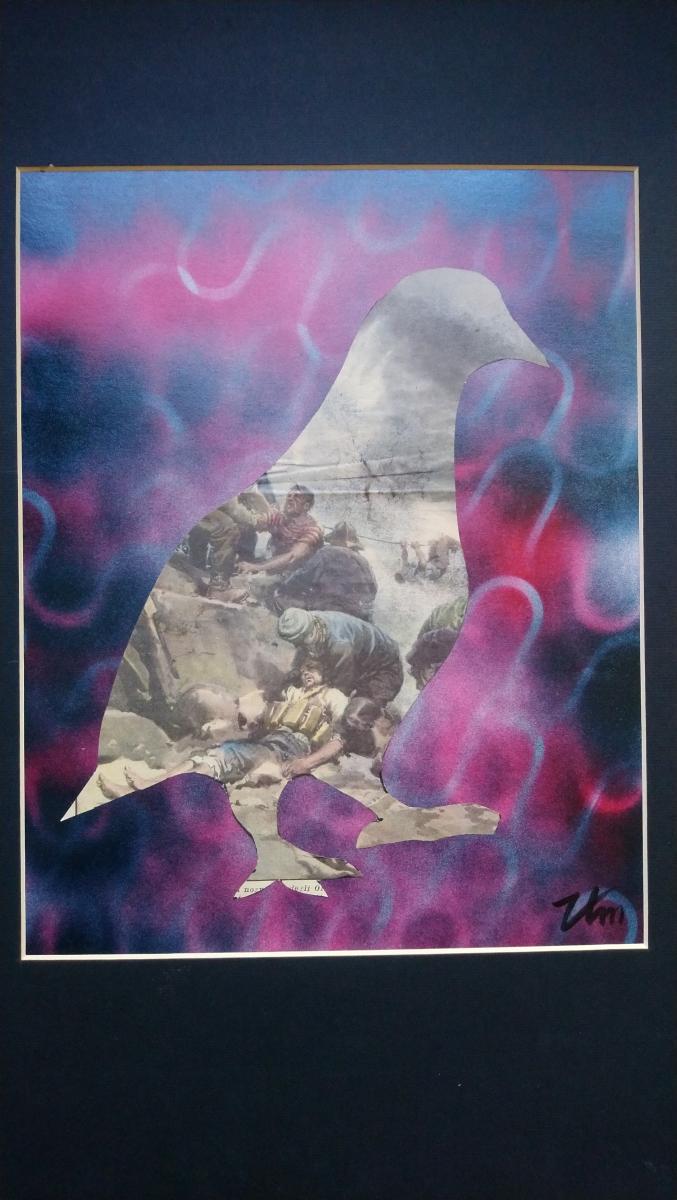
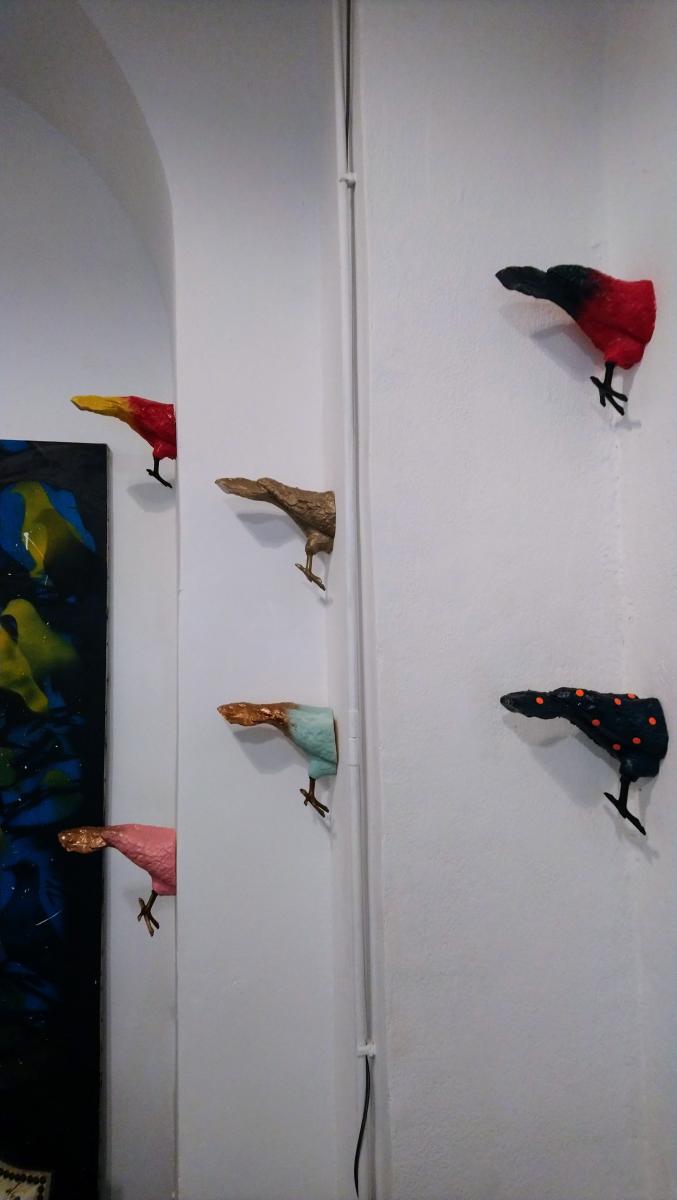
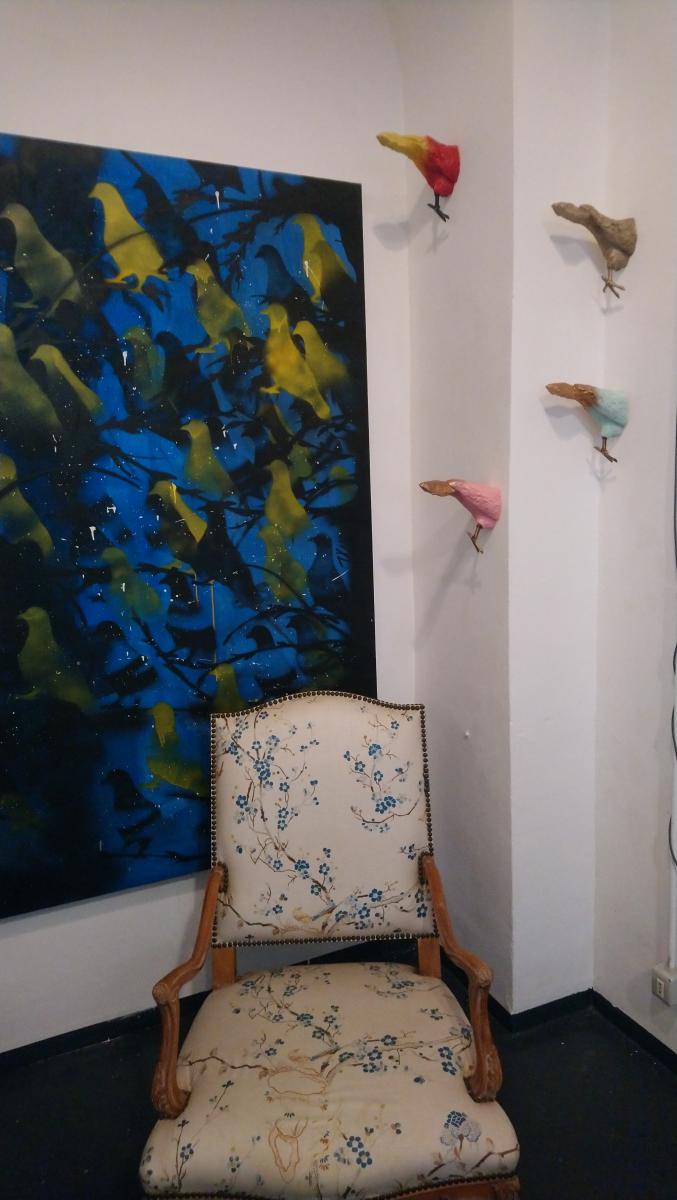
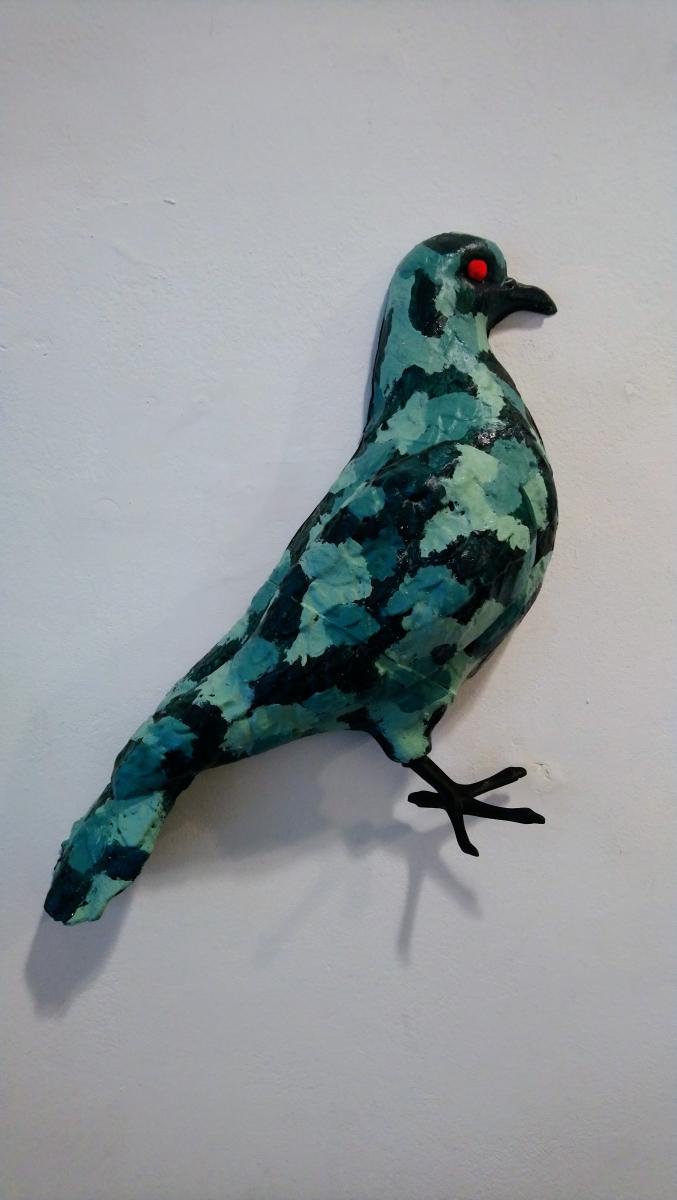
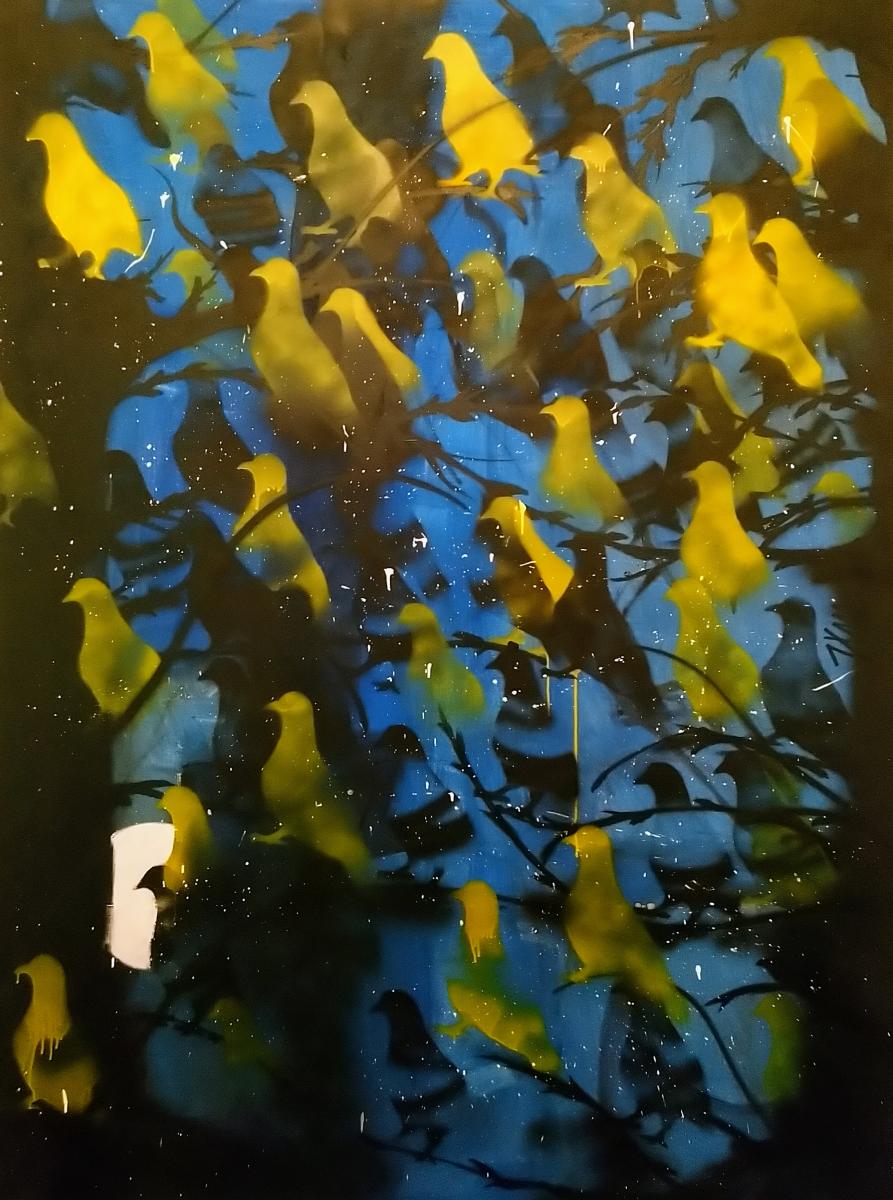
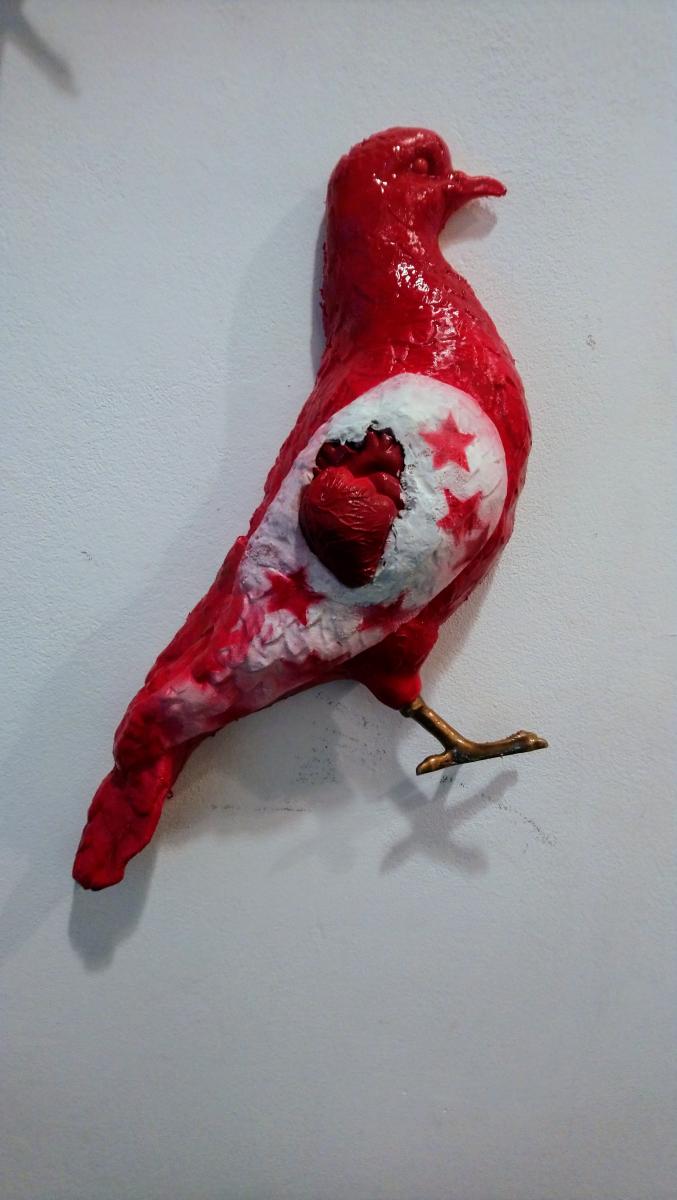
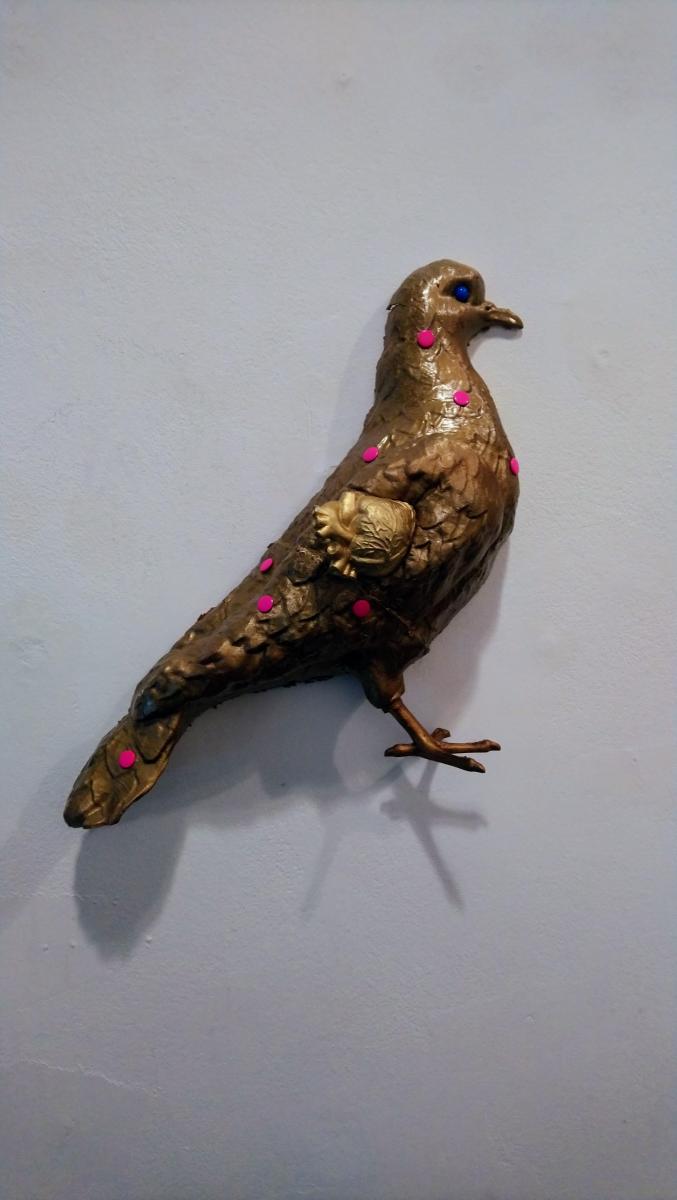
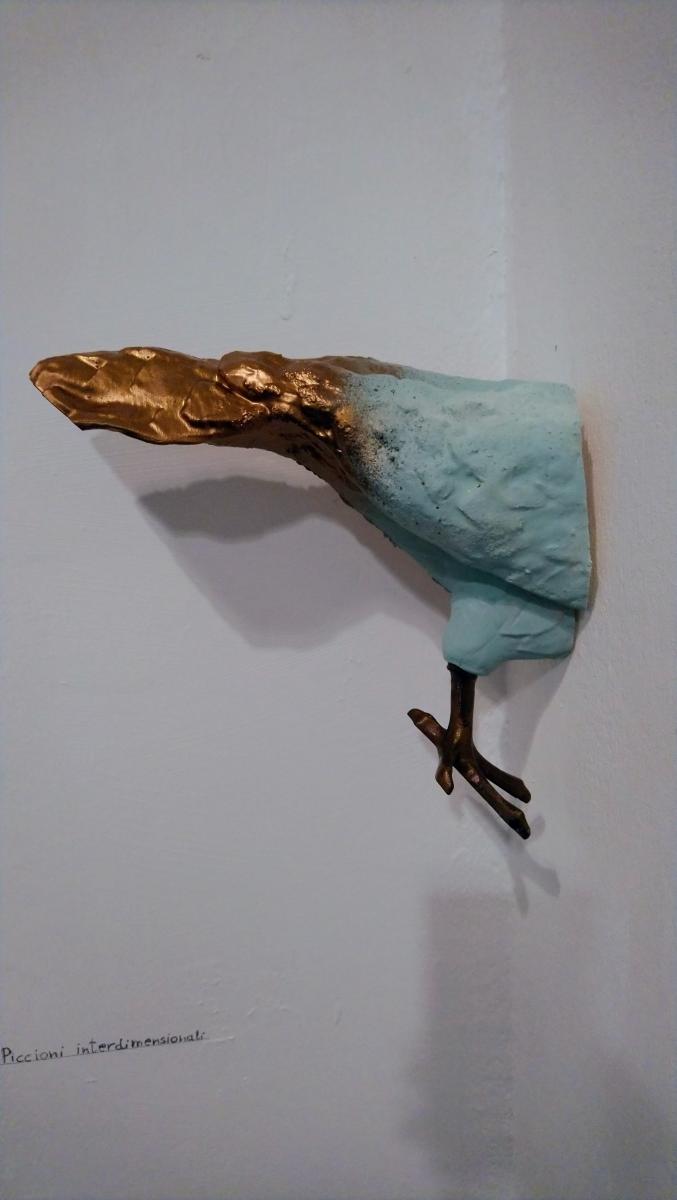
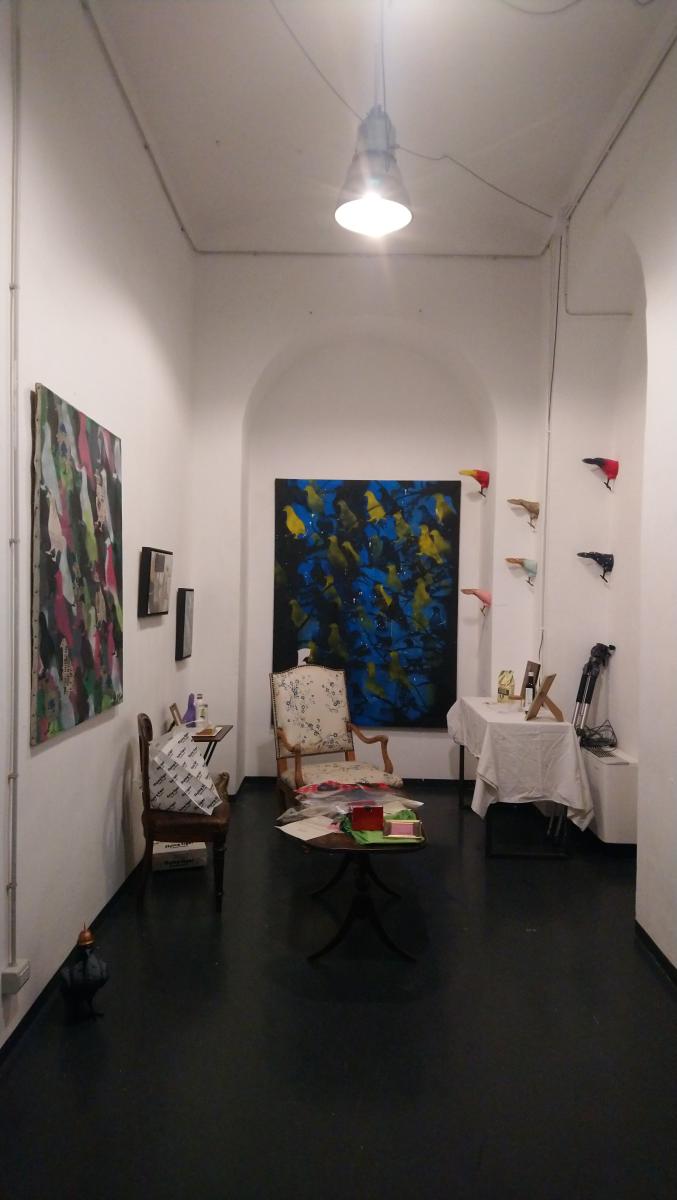
 Stop the Pigeon marks the debut of the duo El Bergamotto (Ambra Bergamasco and Akira Zakamoto). The installation was born from the meeting of divergent positions around a liminal and ambivalent figure: the pigeon. The urban animal par excellence, familiar and repellent, the pigeon embodies the tension between everyday nuisance and the possibility of ritual, between the role of messenger and the materiality of the message, between obsessive repetition and the arrival of the unforeseen.
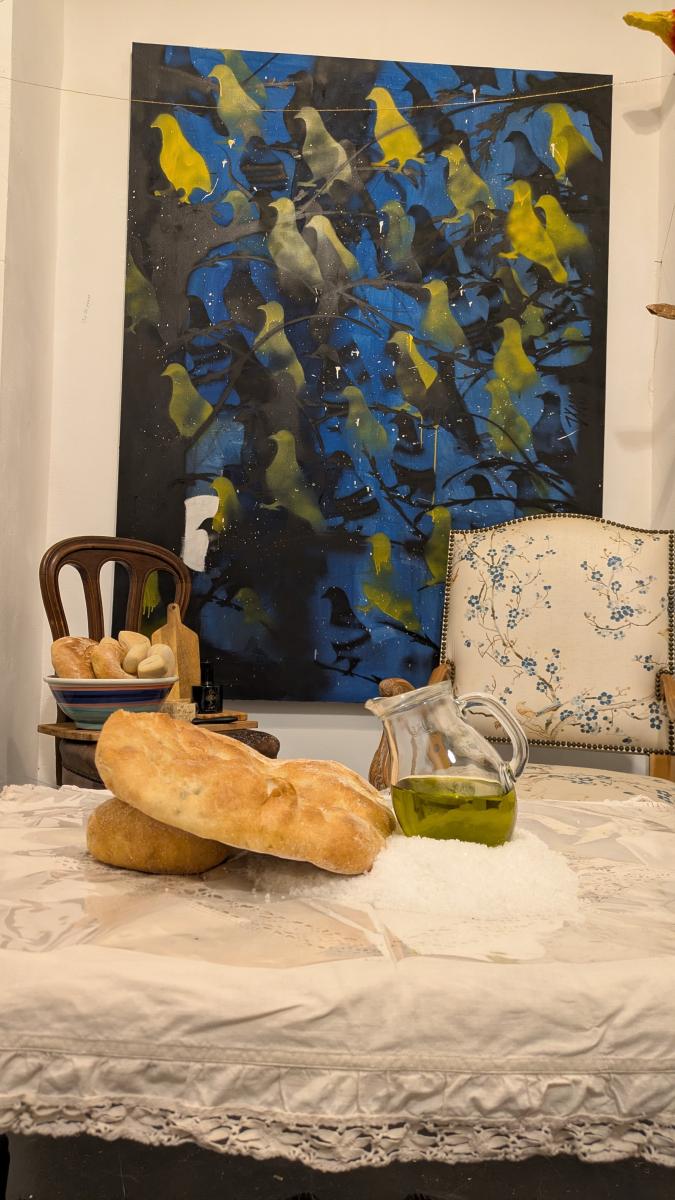
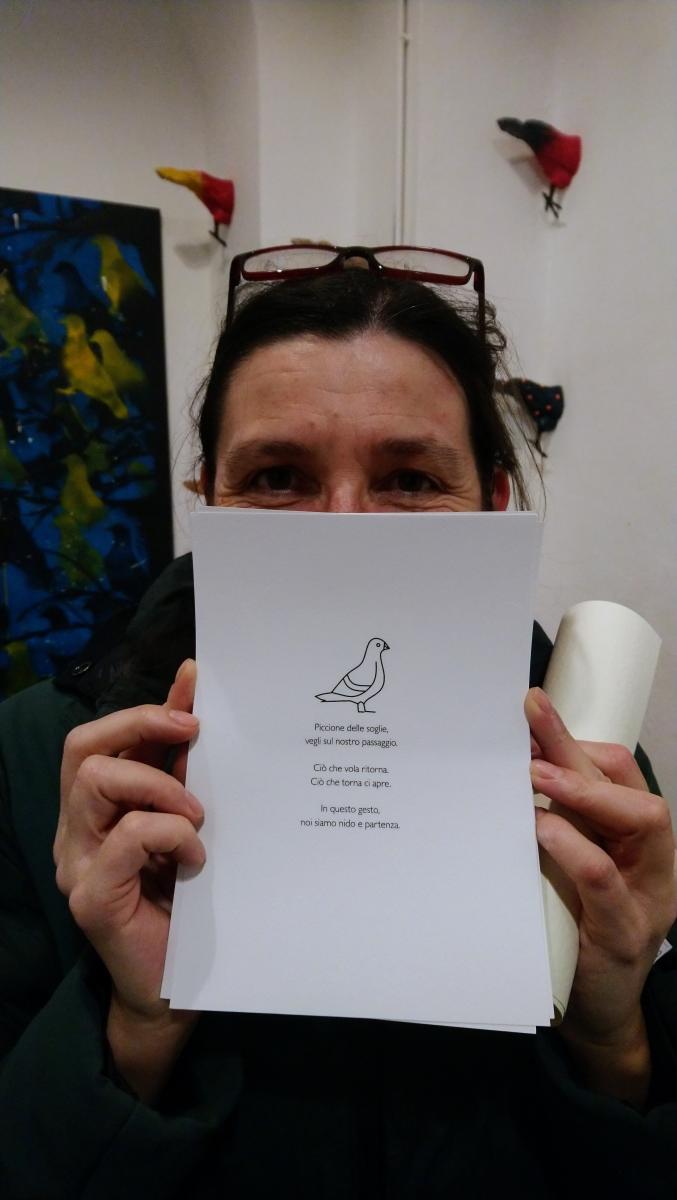
The work does not merely represent this polarity: it stages it as a relational experience. Access to the installation is mediated by a ritual of welcome made of bread, salt and oil - three symbolic elements of the Mediterranean that evoke hospitality, memory and light. In this gesture the visitor is transformed from spectator into participant, intimately invited to share a simple and sacred act before setting eyes on the canvas of the pigeons. In their own time, following instructions left somewhere.
In doing so, Stop the Pigeon sets a double movement in motion: welcoming what the urban gaze normally expels and, at the same time, giving back to daily life its ceremonial dimension. The work brings bodies, gazes and symbols into dialogue, proposing a reflection on art as a practice of radical hospitality and on the transformative power of ritual in the encounter with the ordinary.
.JPG)
.jpg)