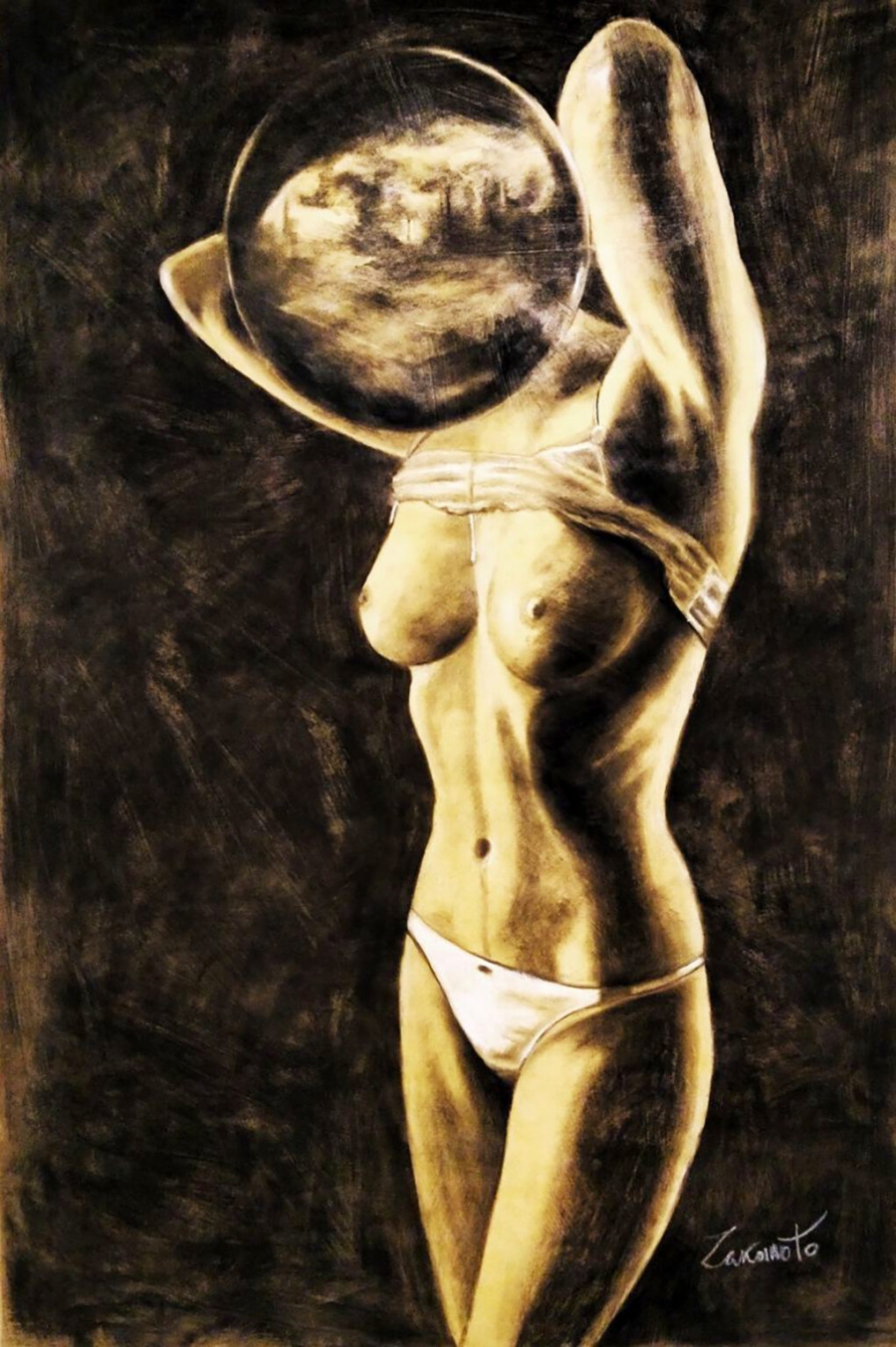
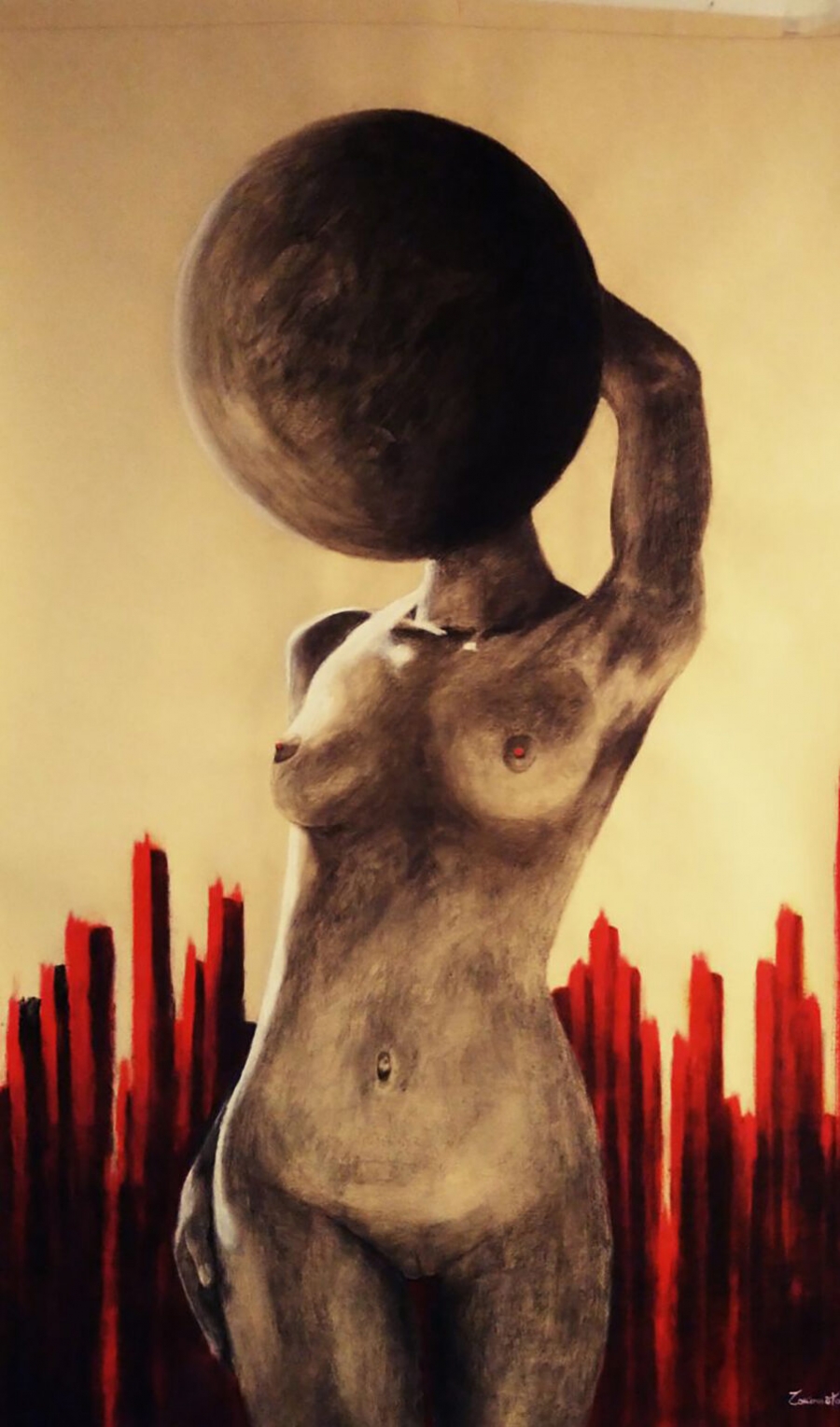
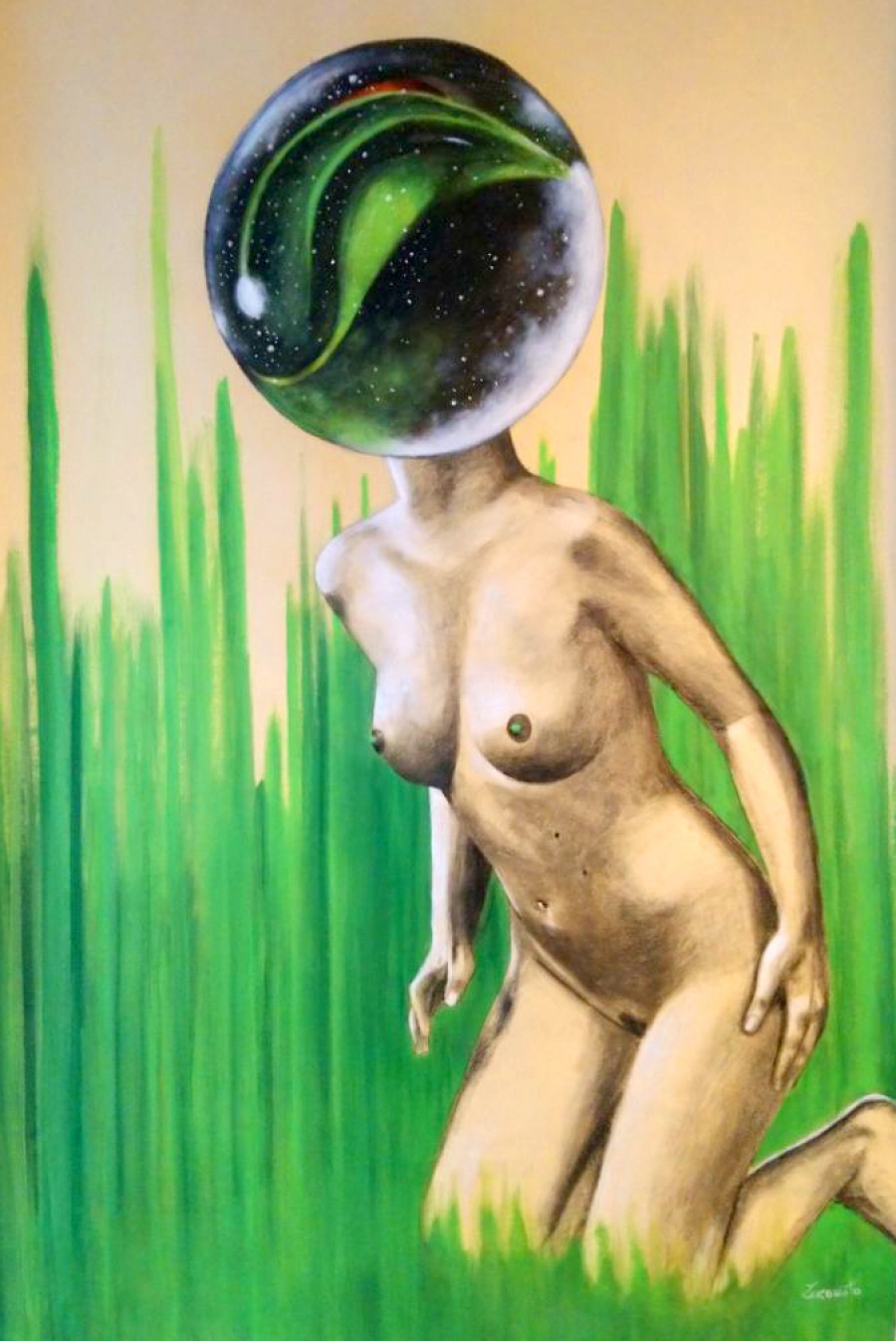
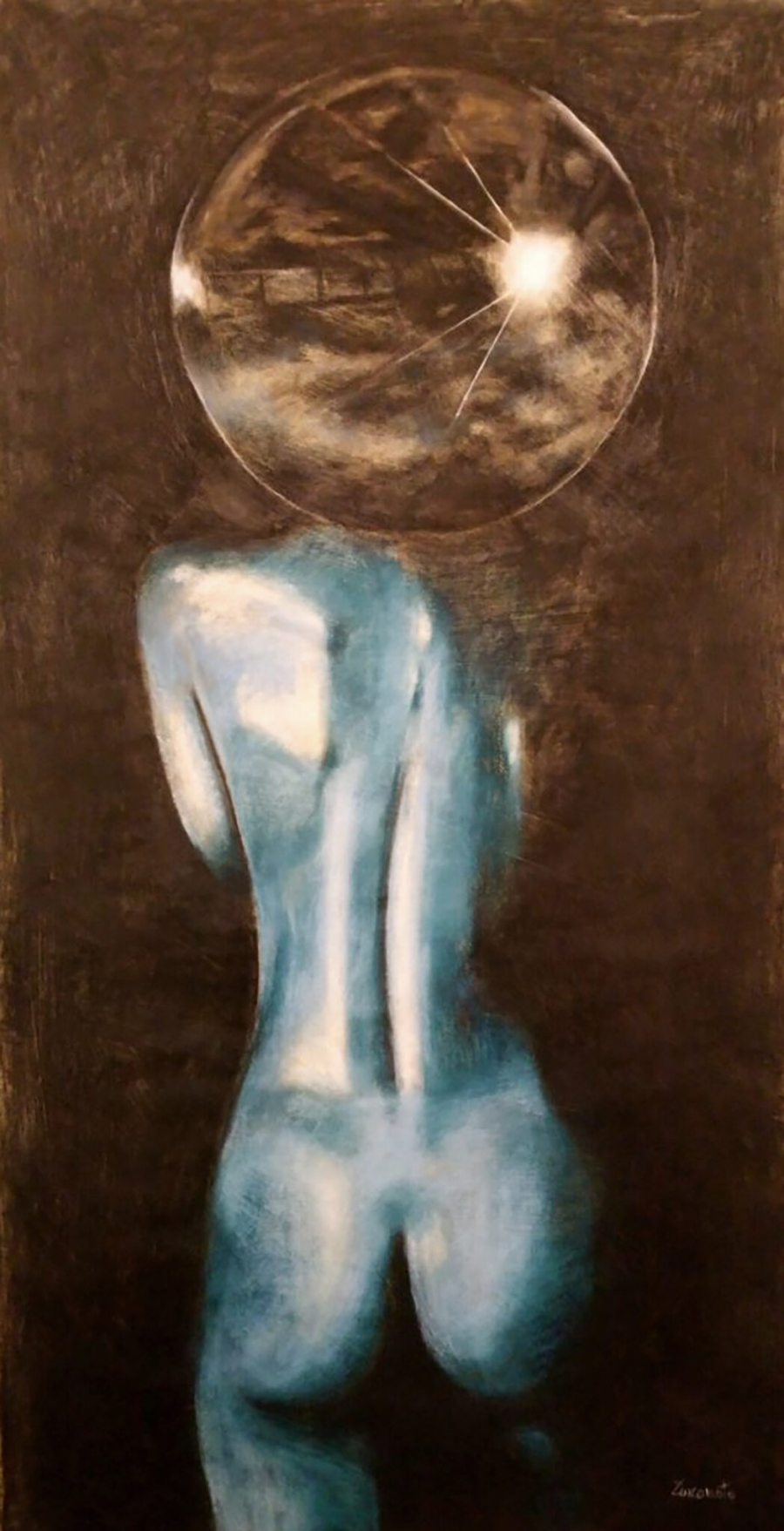
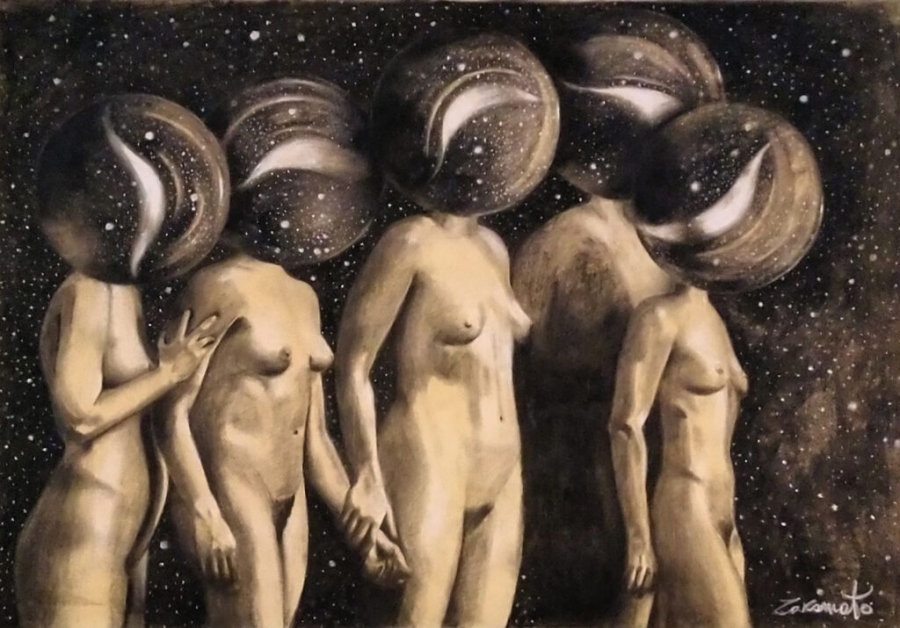
Quarantine, as a state of isolation and precautionary exclusion, is the basic mental state of Western societies.
From the spread of AIDS (1981) to the attacks on the Twin Towers (2001) and on to Covid-19, people have gradually but inexorably excluded themselves from social life, in order to run no risks to their own survival.
Human beings, in this part of the world, have chosen to live inside their houses, inside their gates, behind their walls, inside their own brains, working up extraordinary fantasies of what should magically happen in the future, trusting in the vain possibility that technology might fill the void of meaning and of warmth in their hearts.
The Quarantine series centres on a vision of the contemporary human being in the opulent civilisation of the West:
a being who, for fear of dying or of not living long enough, prefers to imagine living,
surrounding himself with reassuring, safe surrogates for real life.
This mental state excludes the body as an instrument of movement and pleasure;
the body becomes first and foremost a vehicle for transmitting deadly viruses.
The experience of life becomes virtual, displaced, addressed mainly to the sense of sight and to the brain alone.
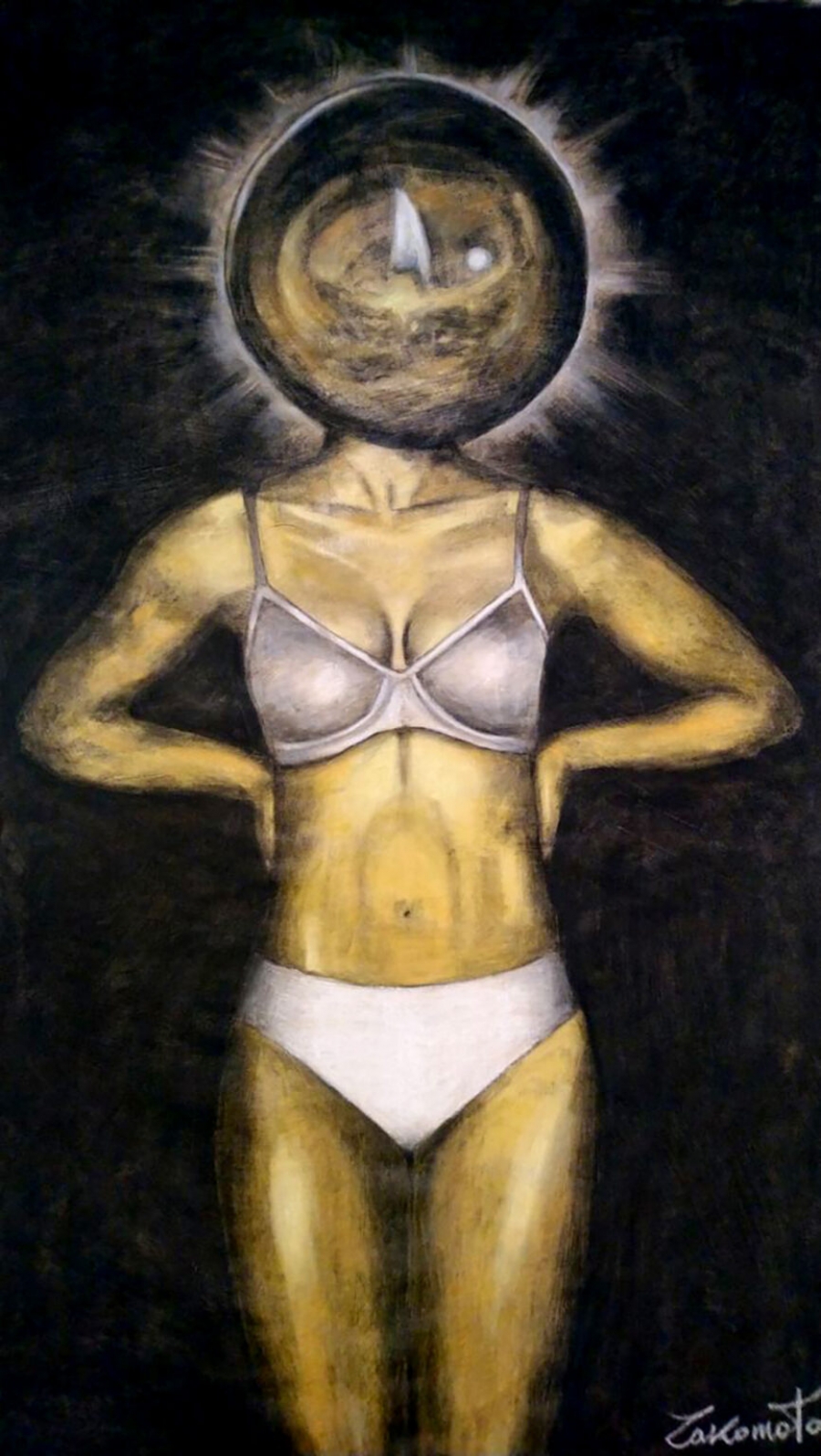
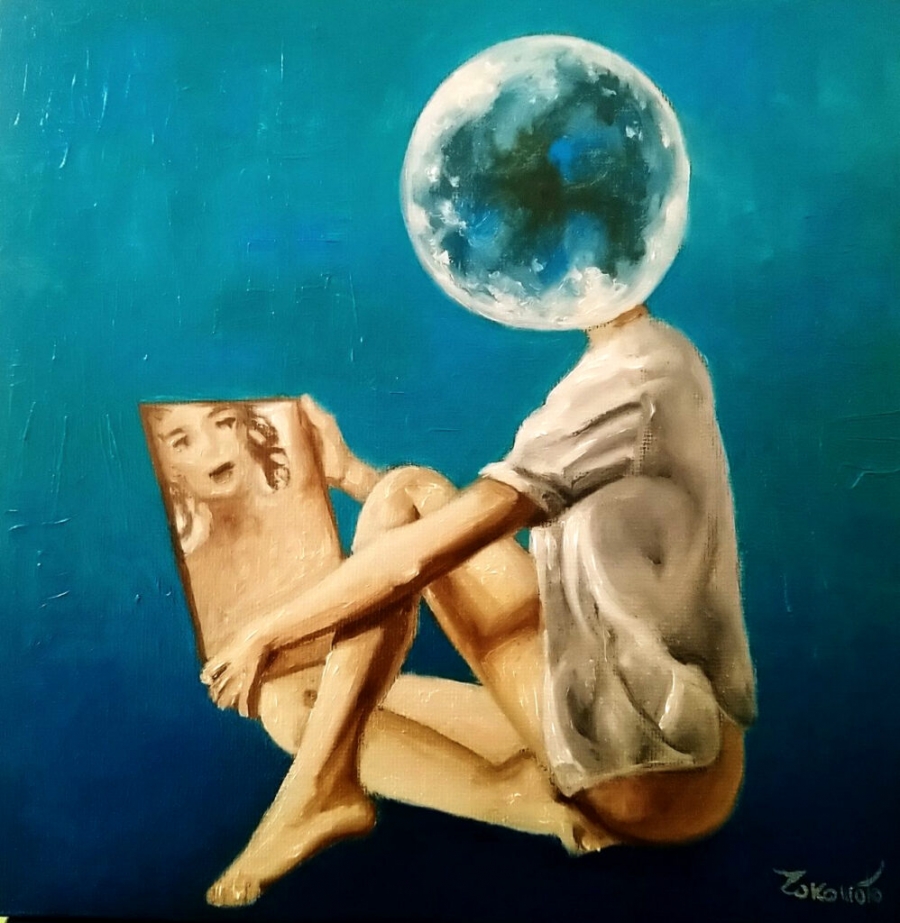
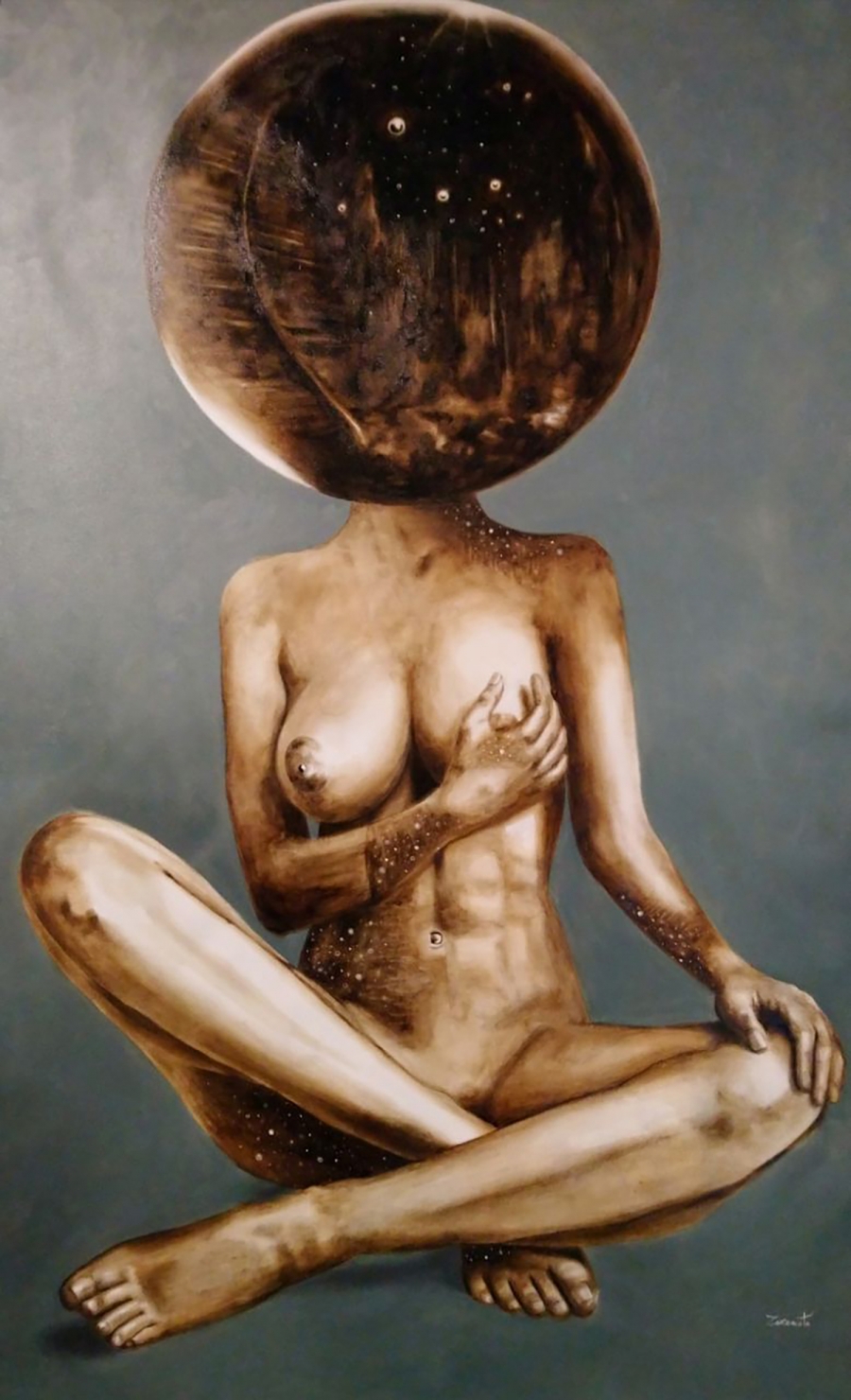
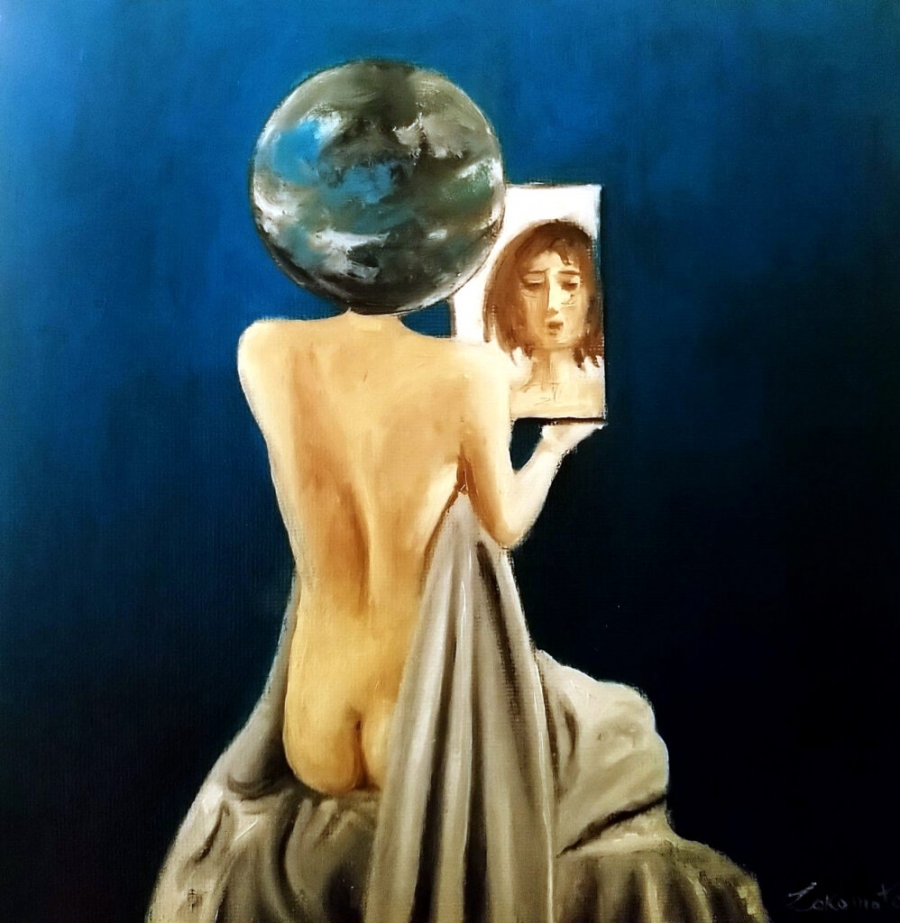
I portray my models headless, with a great sphere in place of the head - a sphere crammed with unspeakable and unrealisable desires,
with fears and hopes placed in a wonderful future in which it will once again be possible truly to live.
In a condition close to confinement, in a situation where our freedom of movement is restricted,
whatever the reason, our mind has only one way left to travel: through the imagination,
towards new worlds, so as to remain in its natural state of freedom.
Art and culture certainly did not die under fascism, under Stalinism or under the other dictatorships;
what dies is only the minds of the people who stop dreaming.
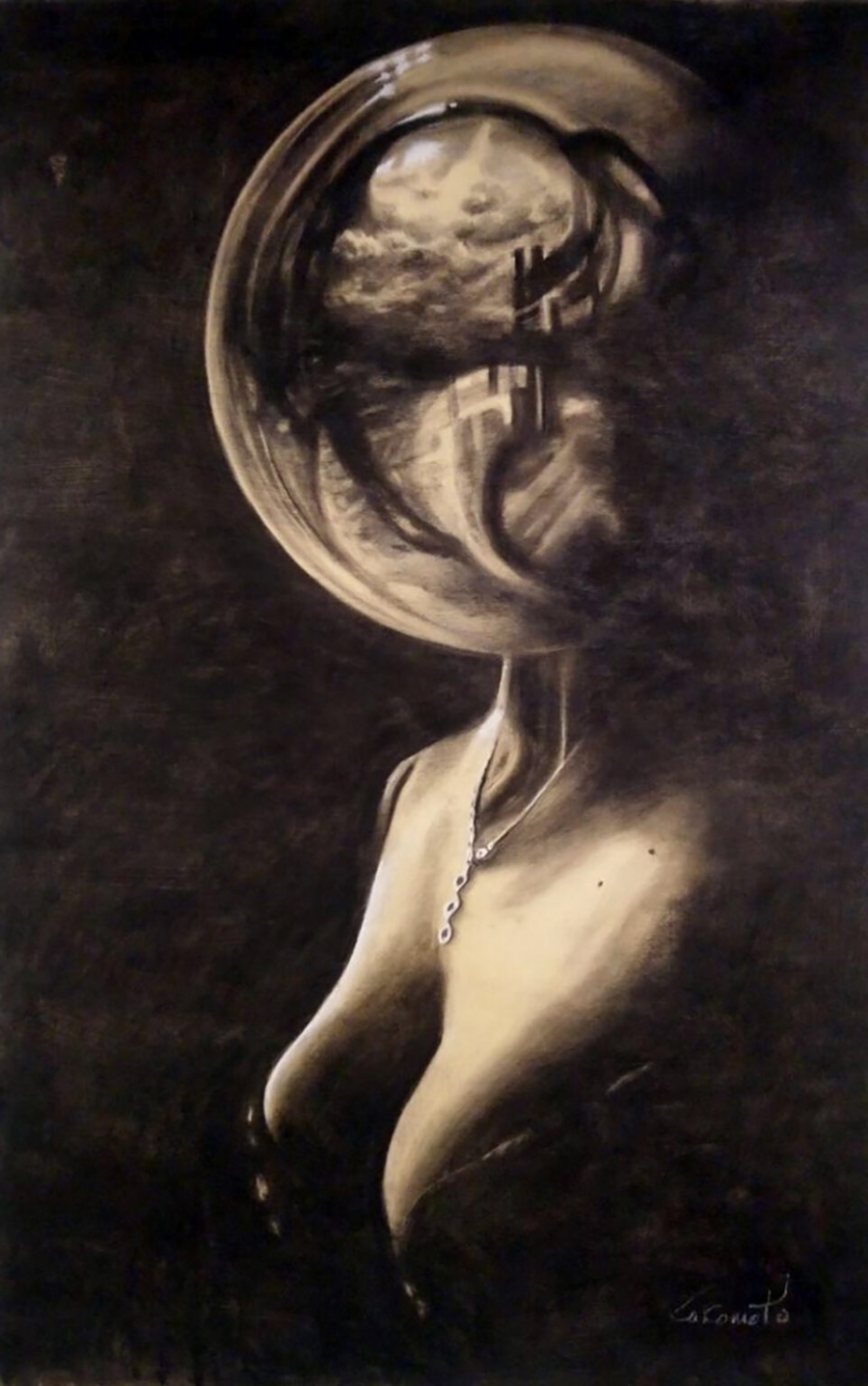 QUARANTINED
 Crises lay bare the real state of a system or a process,
and the pandemic crisis of 2019/2020 also had the merit of helping us understand where we live
and of helping us free our minds from the fictitious, hypocritical tale we have been telling ourselves until now
about our own reality.
The crisis made it possible to see what our real priorities are,
if not as a society, then at least as a group of people living in the same country
and answering to the same laws.
Finding ourselves obliged to choose between essential and non-essential services,
we took note that public education, sport, art and culture are not among them -
quite apart, of course, from denying the free movement of people across the territory,
which is guaranteed by the constitution.
After all, "Italy is a democratic Republic founded on labour", and everything else has always come afterwards.
No one cares whether workers are satisfied with their lives beyond having
the minimum means of subsistence to pay the rent and do the shopping.
Public education is considered of secondary importance,
being poor in quality; we have always known that our children will need private training
if we want to give them a high-level education.
Sport, too, has a poor reputation: in our country keeping fit is regarded
less as a way of strengthening one's immune defences than as a symptom of fascist sympathies.
Top-level sport, on the other hand (where large economic interests are at stake),
was deemed necessary and was practised without any of the absurd precautions demanded of ordinary citizens.
Art and culture are held to be important in words, but it is a widespread opinion that they belong to the sphere of those who do not really work.
The economic sphere has swallowed every sphere of life, making it necessary to create surplus value
even in fields that by their nature cannot generate it.
Public health turned into a health-care business, school turned into school-and-work,
art turned into an object of investment, science turned into a field for the investment of large funds:
these are symptoms of an illness that has to do with the perpetual search for the creation of an economic surplus.
Seen in this light, a school which - despite costing the community money - is able to train responsible,
supportive and joyful people has no value at all; the generation of a surplus other than the economic one
is considered secondary.
On top of this, the surplus generated in the economic sphere is reinvested in new activities in
search of new surplus, repeating endlessly for the mere purpose of accumulation,
rather than in fields regarded as secondary.
Finally, a good part of the tax revenue is used to prop up those same economic sectors
when they run into difficulty.
The role of the media in this crisis exposes their inability to put a range of competing arguments before the public.
The media are flattened onto a single view, to the point of branding different points of view
with the word denialist, a term born in altogether different historical circumstances.
No debate is allowed between the dominant thesis and the others; it is not permitted to discuss it.
In a crisis the media adopt a kind of wartime mode, terrifying citizens and supporting
the established power and the measures taken, whatever they may be.
By this means they increase their reach and their sales -
all of us want to know whether something particularly serious is happening -
and they find a good excuse to tighten their relations with political power
(public funding for publishing) and with economic power.
Public media too, like schools, health care, justice, art, culture and other fields,
would do their job better for a community (if there were one) if placed outside
the economic sphere, as Rudolf Steiner theorised a hundred years ago.
Schools that do not teach, media that do not inform, hospitals that do not heal, administrations and public offices
that steal our time by creating absurd bureaucratic labyrinths:
who benefits from using these services, apart from those who work in them and draw a salary
for providing a service that is usually dreadful?
Are we to maintain that it is better to have something that does not work than to have nothing at all?
Is this not the same logic that leads us to buy and consume harmful, polluting products
rather than simply do without them?
At this point, given this system's manifest inability to create a public service,
would it not be less hypocritical to give it up altogether and privatise every sphere of life?
Religion, in the context of Covid, showed itself so useless that the churches were closed.
We had imagined that most Italians had a spiritual life bound up with the message of Christ:
nothing could be further from the truth, and we had already understood as much from the election results. Evidently many went to church to perform a
superstitious rite, rendered dangerous and useless by the virus.
The only religion we really believe in, and from which we draw comfort, is science -
but we believe in it with religious fanaticism: there is one single true virologist, and even the Pope bows down to him.

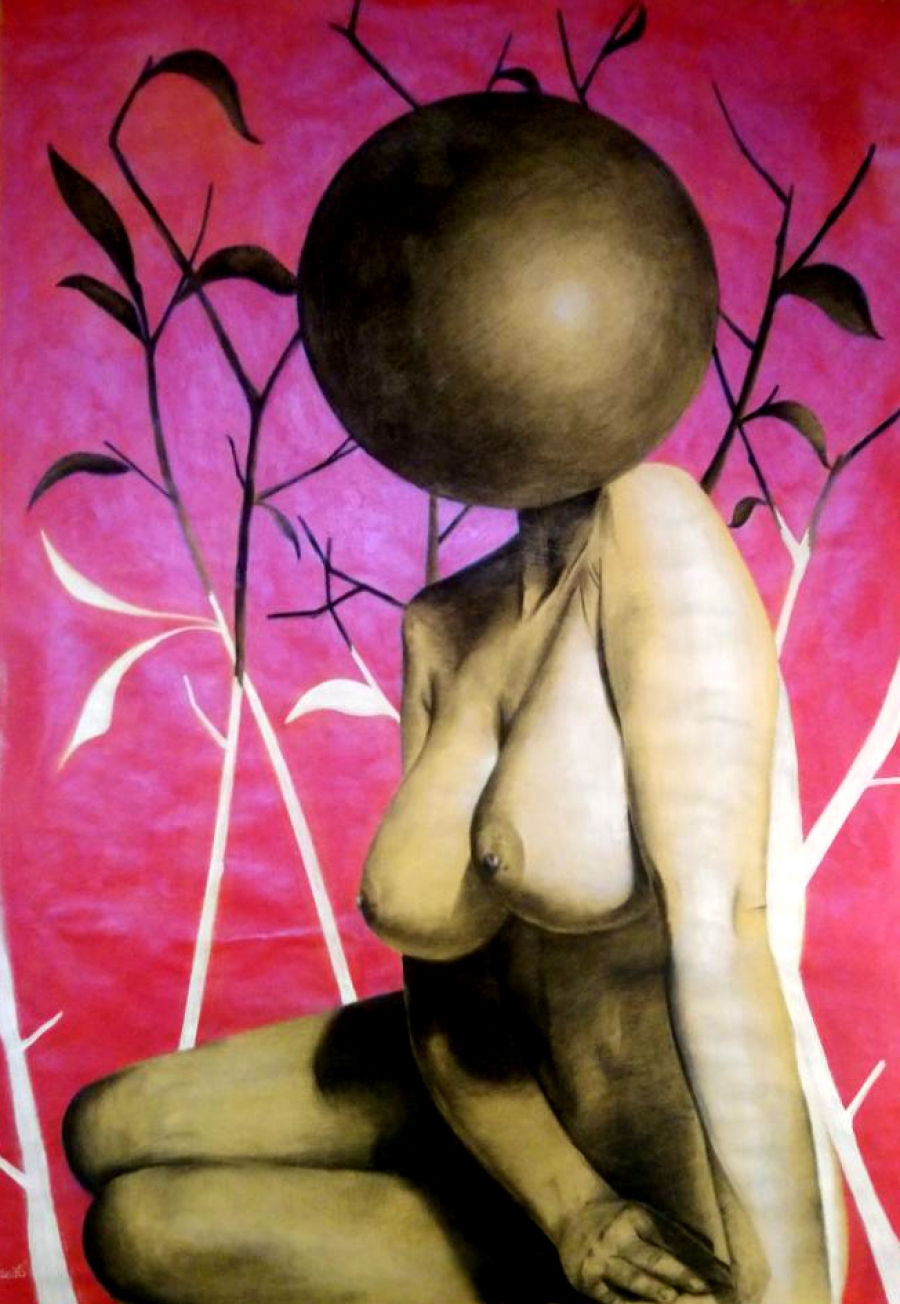 Purple quarantine