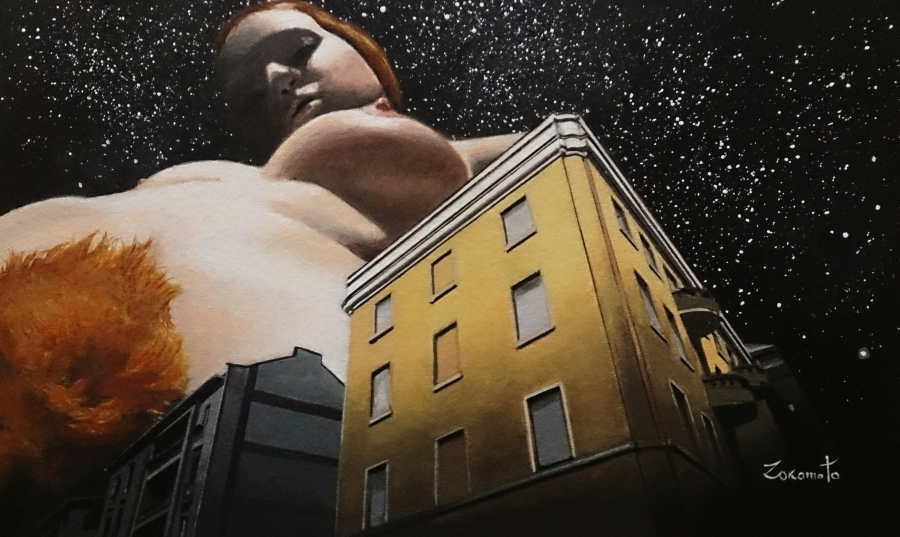
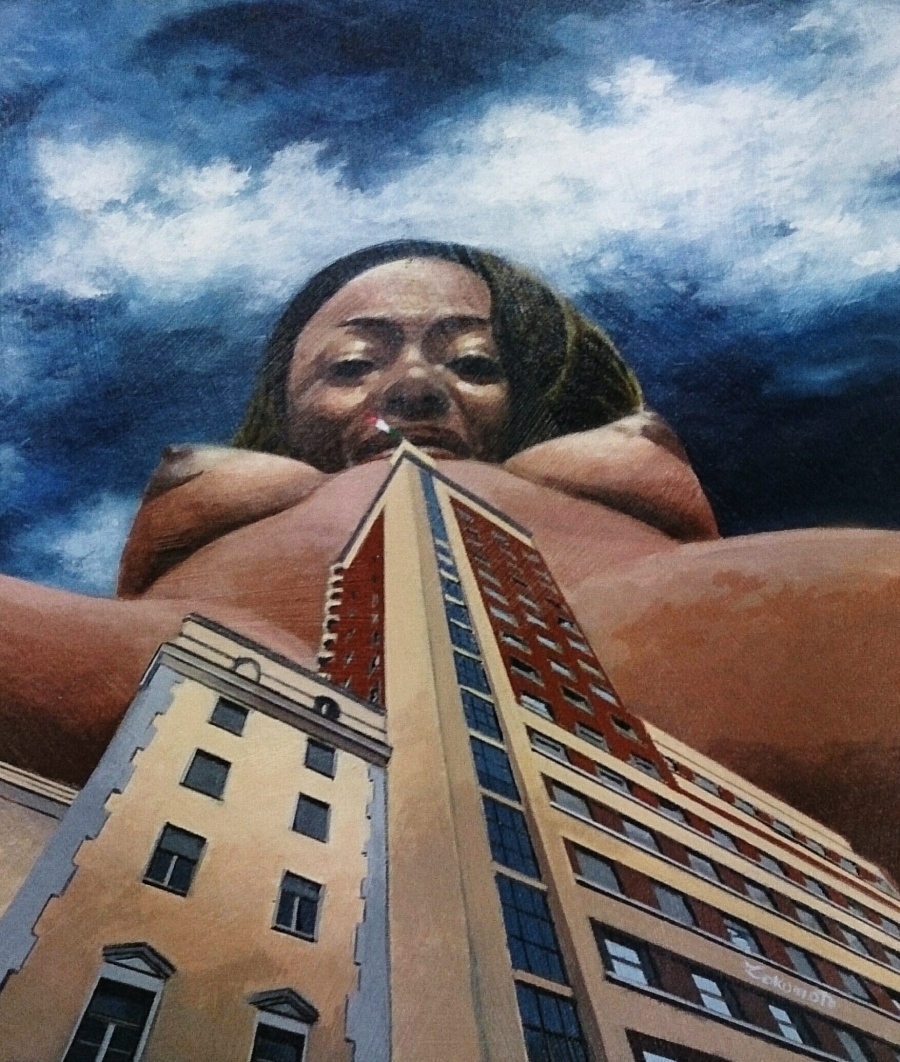
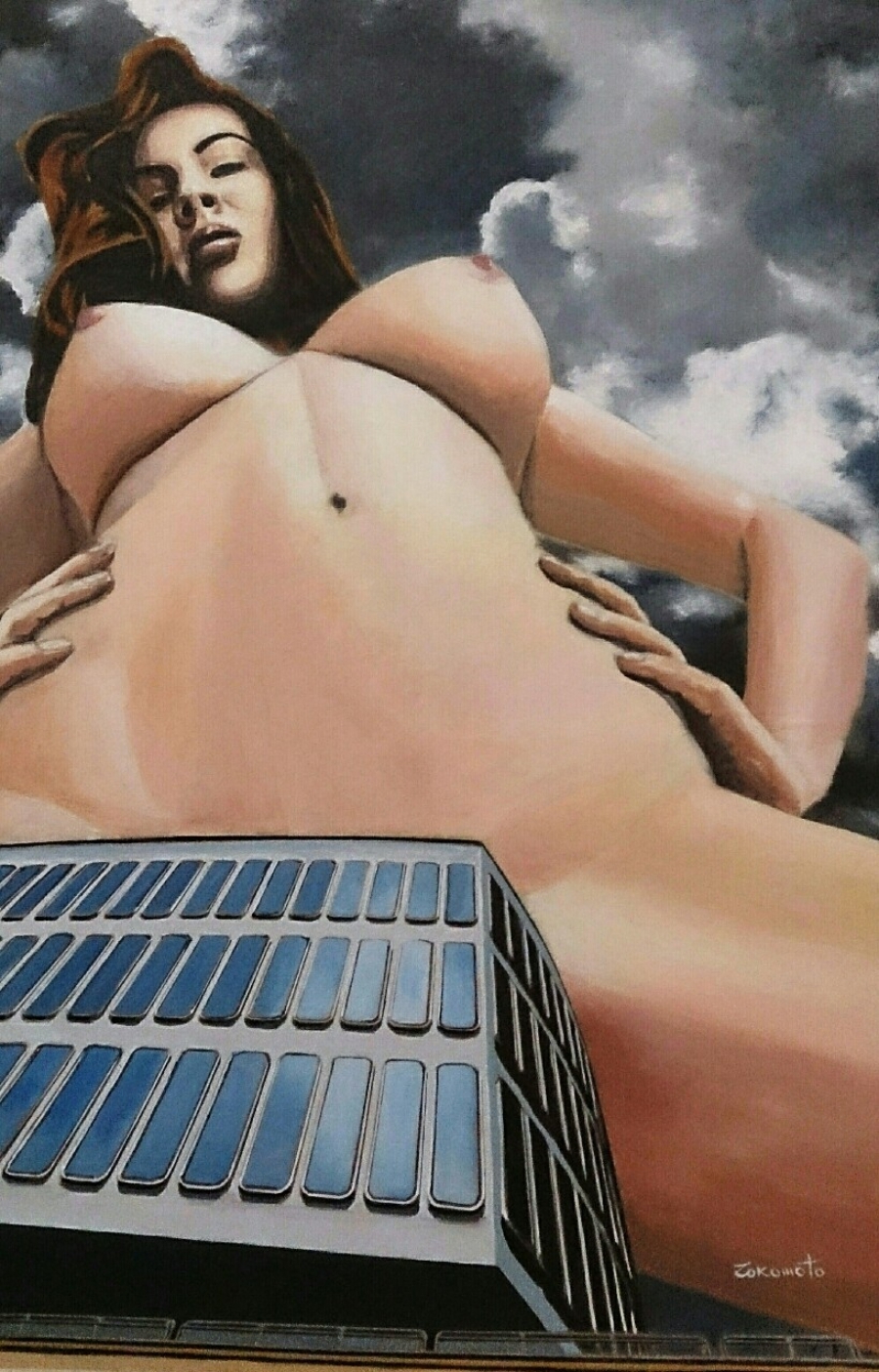
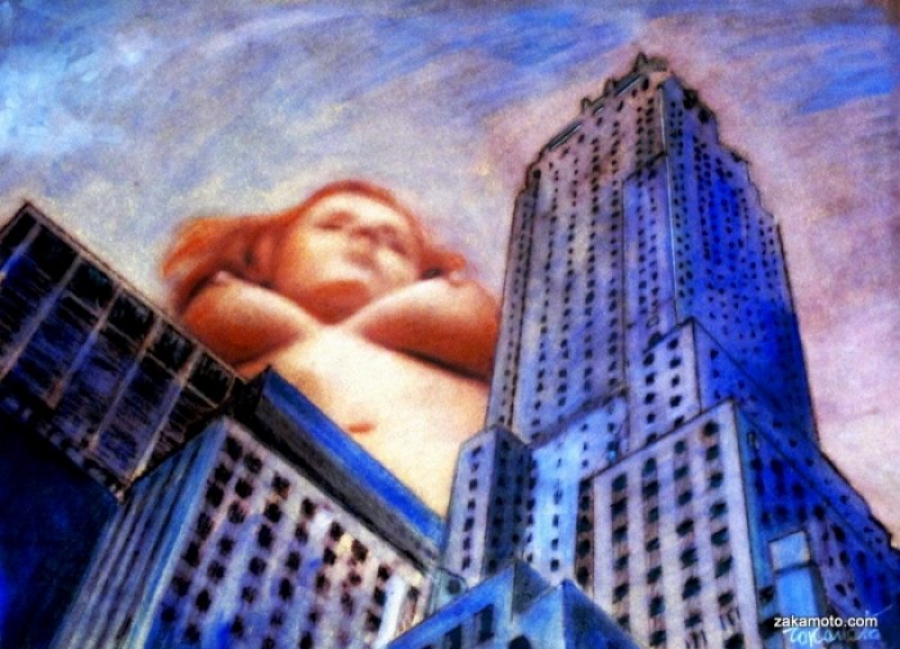
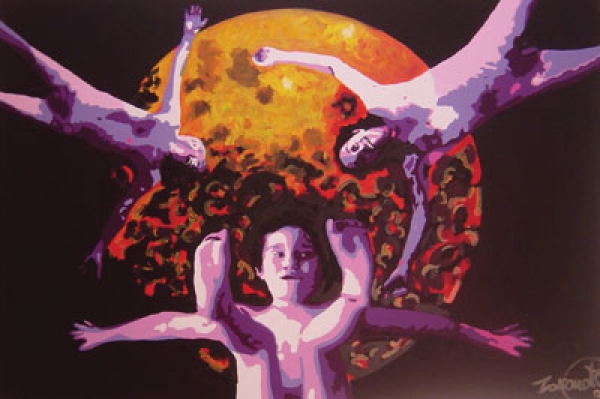
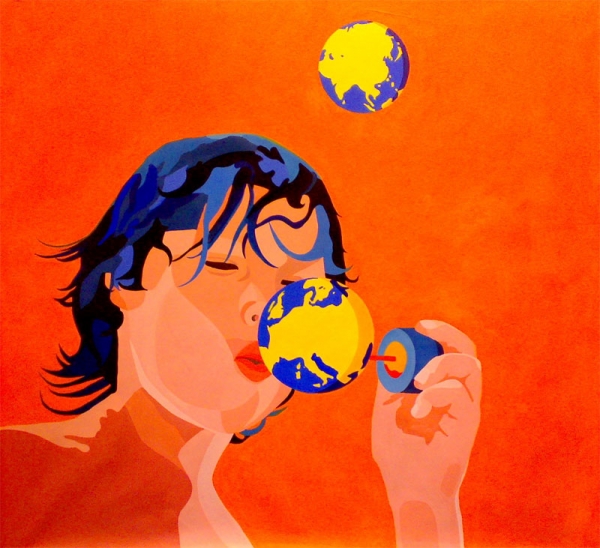
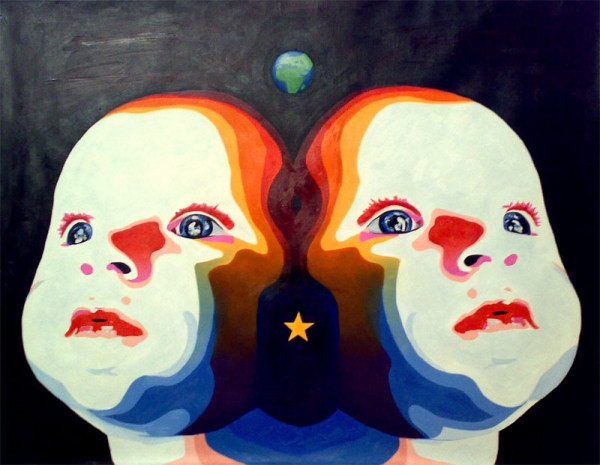
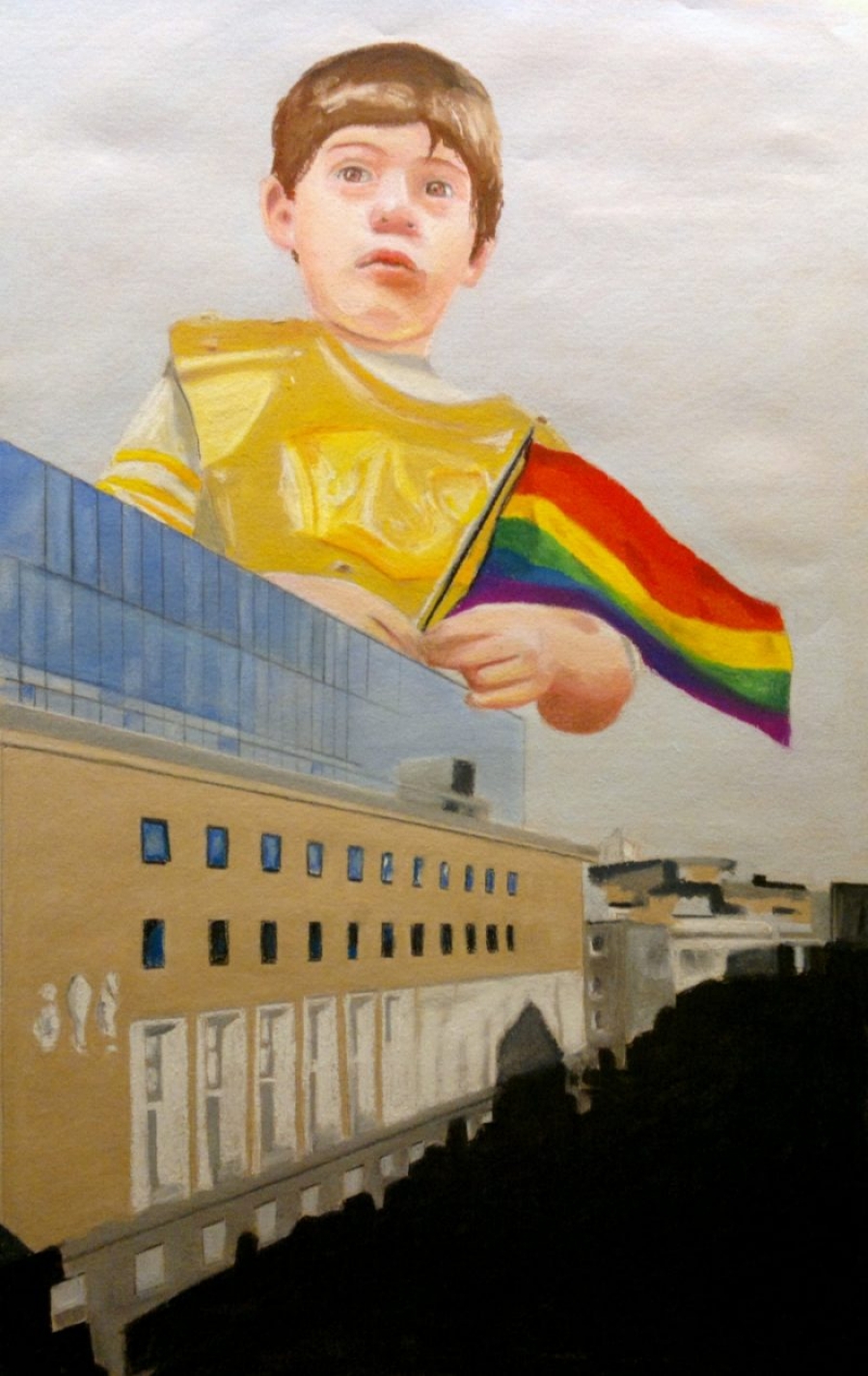
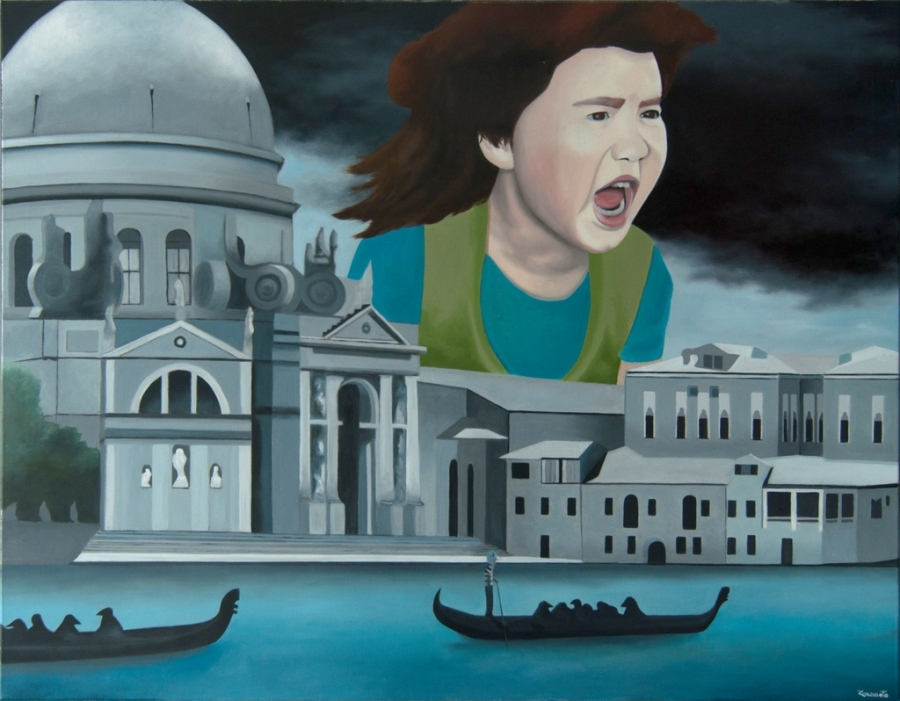
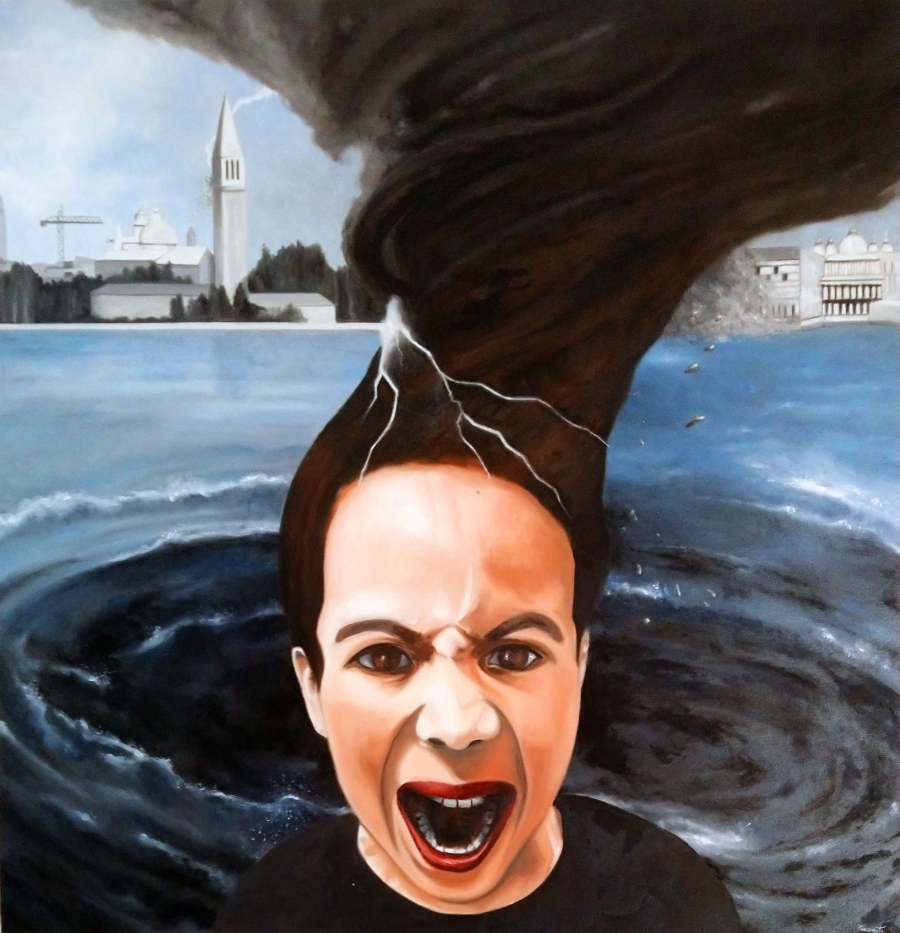
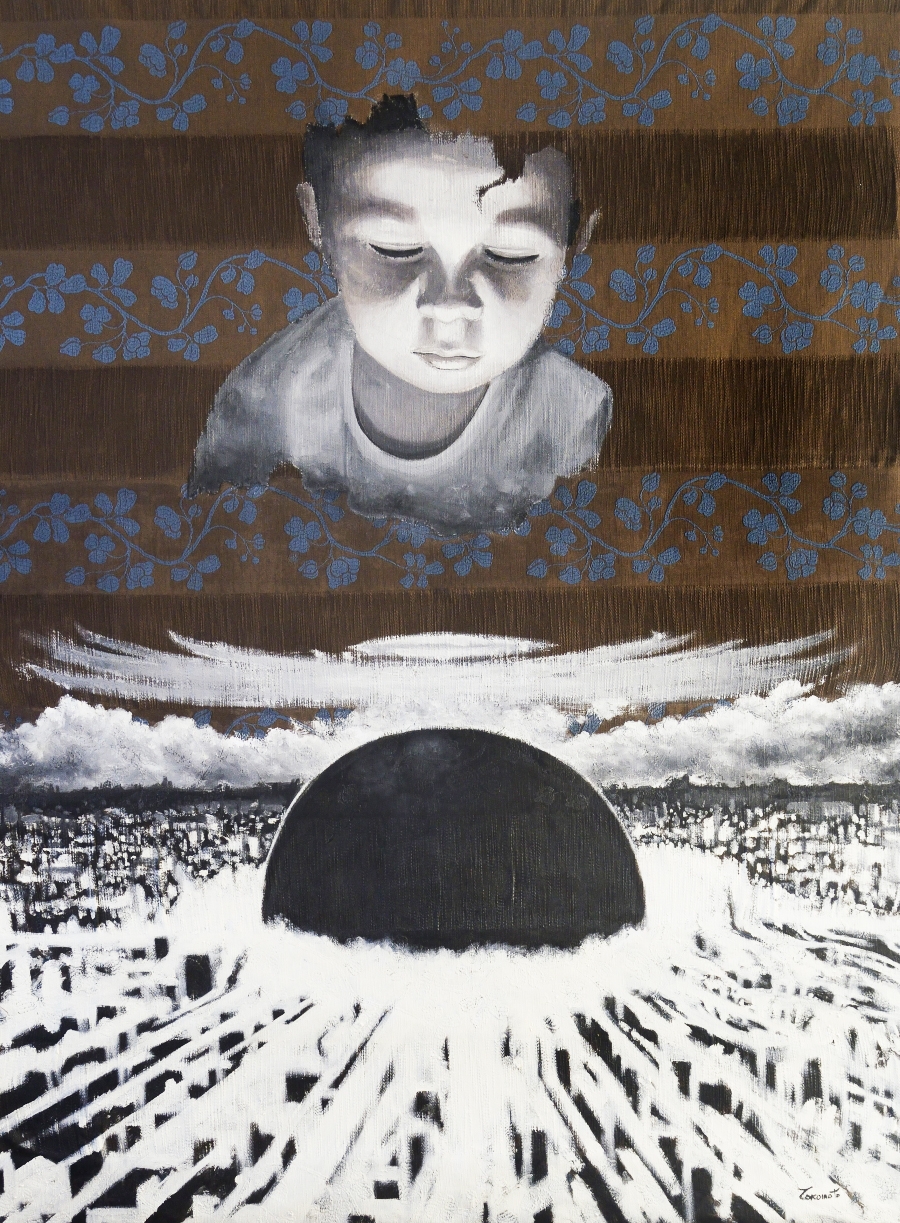
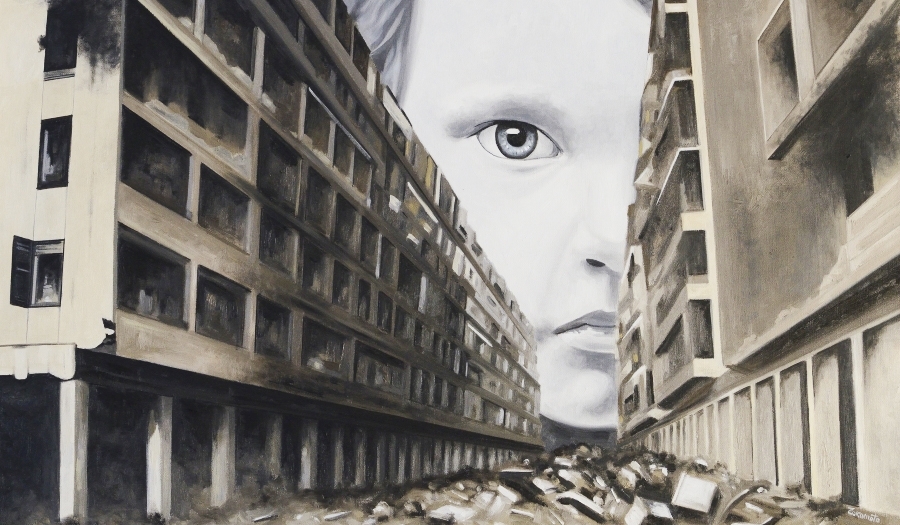
We stand on the shoulders of giant children and women, Nephilim who rebelled against the established order. Hidden for millennia beneath Mount Etna, responsible for countless natural disasters brought about by their immense arrogance, they have now returned to the light of day to show us the way to Ragnarök.
Those who created the islands and the mountains, who raised immense constructions and who openly defied the authority of God, are now among us.
Introduction to the exhibition "On the shoulders of giants", 2007
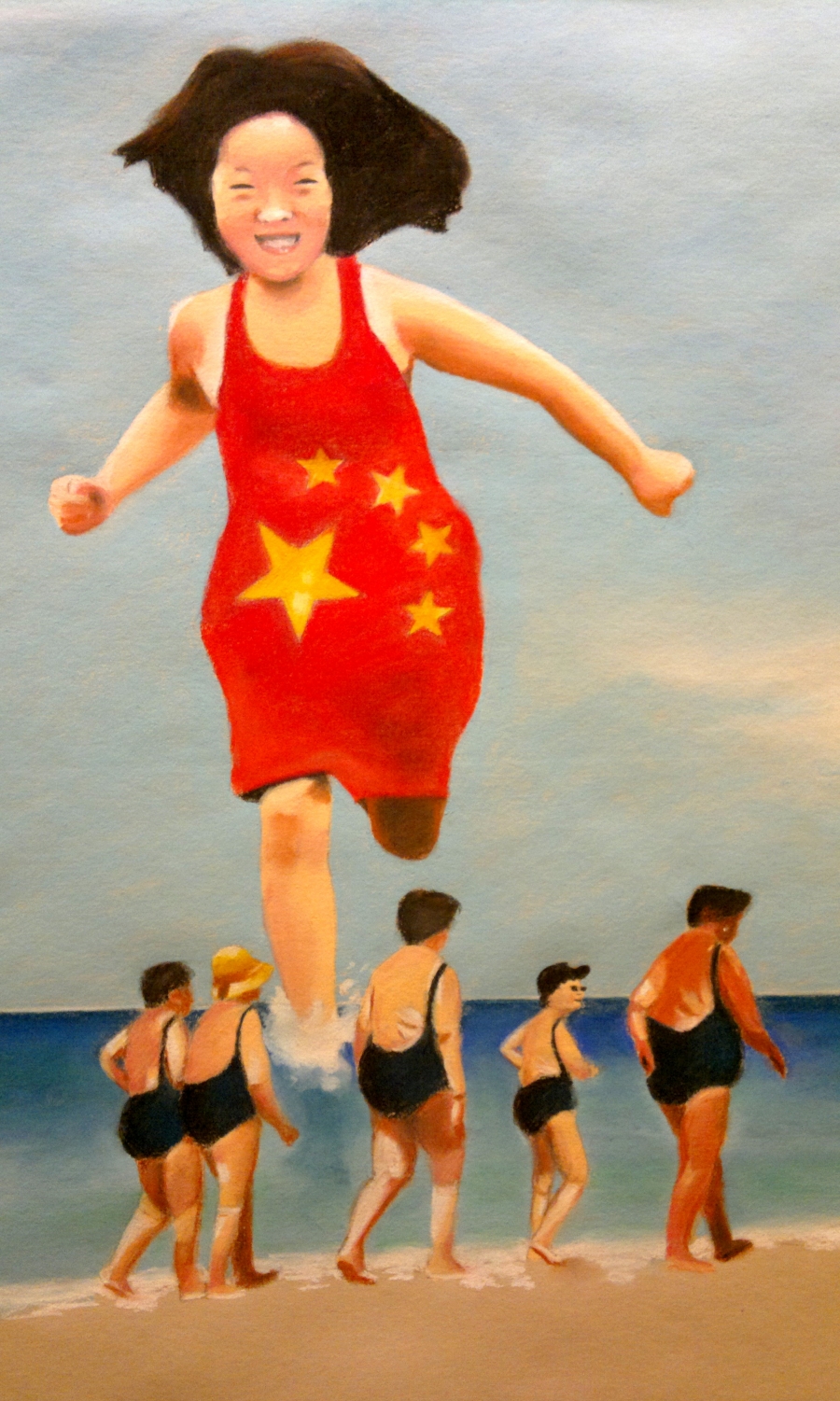
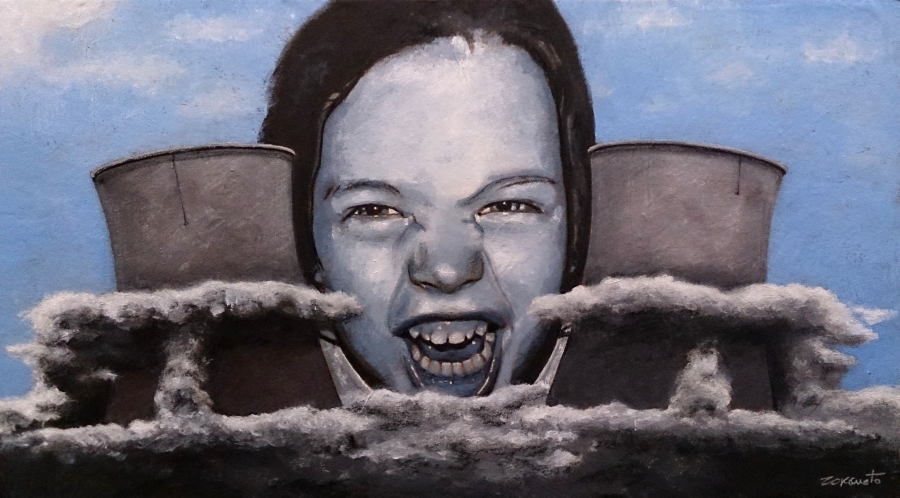 THE DAUGHTER OF POSEIDON Pastels on paper 45 x 25 cm. Akira Zakamoto
Childhood lives inside and alongside each one of us, even though it is the one dimension from which we are all irremediably excluded.
It is a multiform, fascinating universe, and at the same time unknown and mysterious. For centuries it has claimed the attention and the creativity of philosophers, poets, writers and artists; it is a journey backwards that few have been able to resist, and that each of us, in different forms, has tried to undertake at least once in a lifetime.
Perhaps because it represents, at one and the same time, our past and a possible future of ours. Fascinating, without doubt. Disquieting, without doubt. The truth is that childhood, seen from afar, is always tinged with a feeling of intense melancholy, because it is the lost world, and it stands above all for a way of feeling, seeing and touching that is unique and unrepeatable, and of which adulthood has lost all direct knowledge.
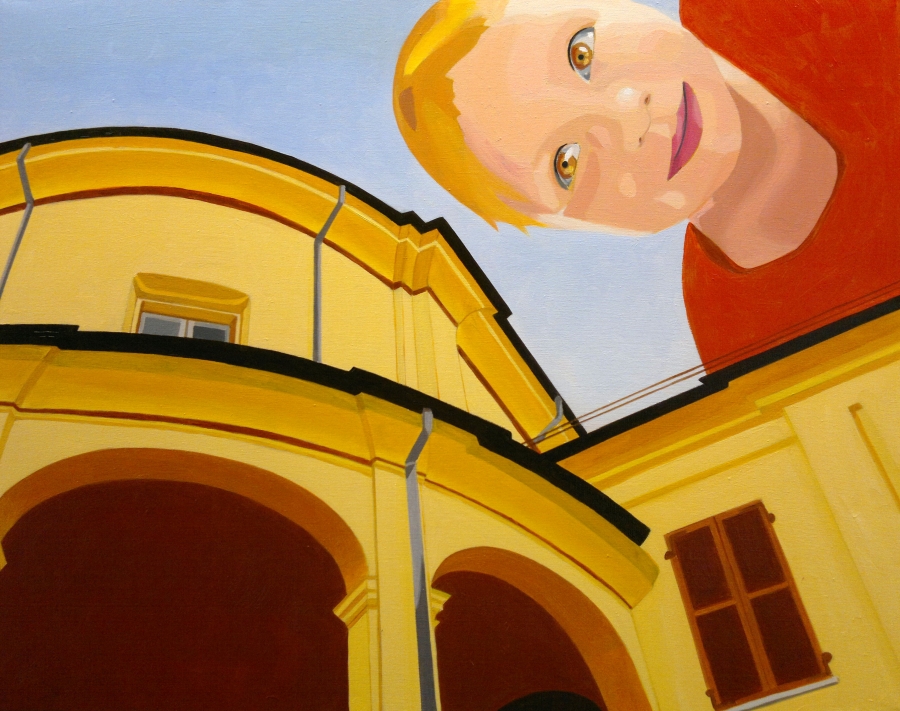
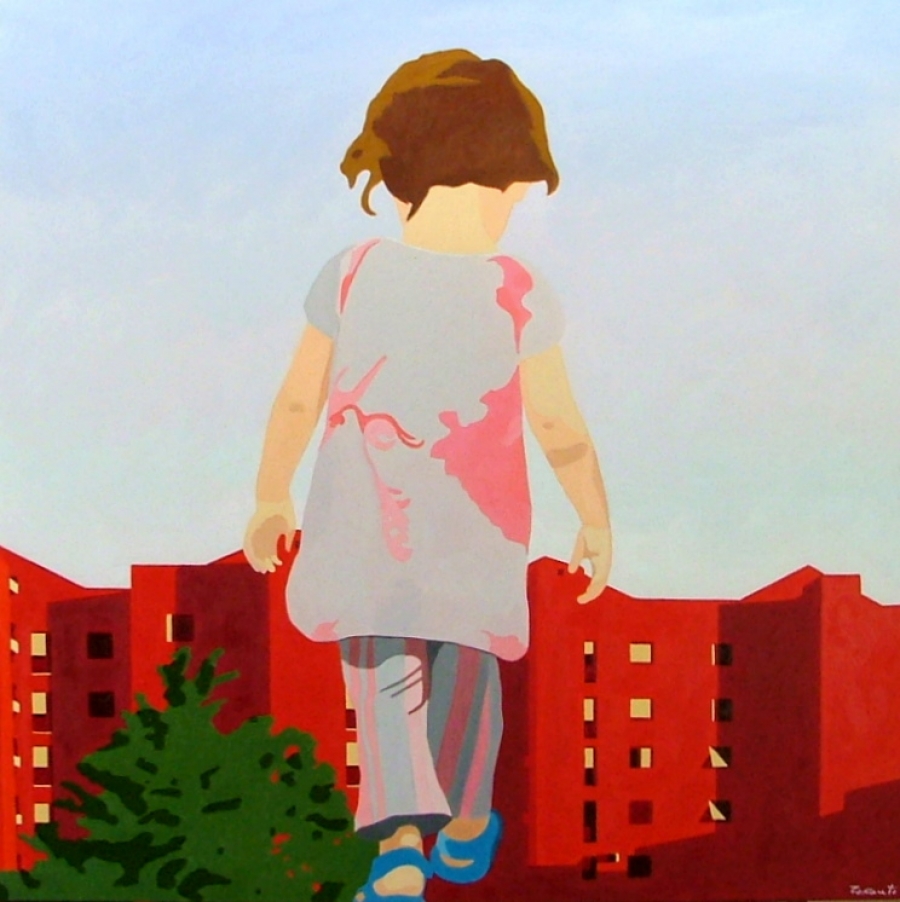
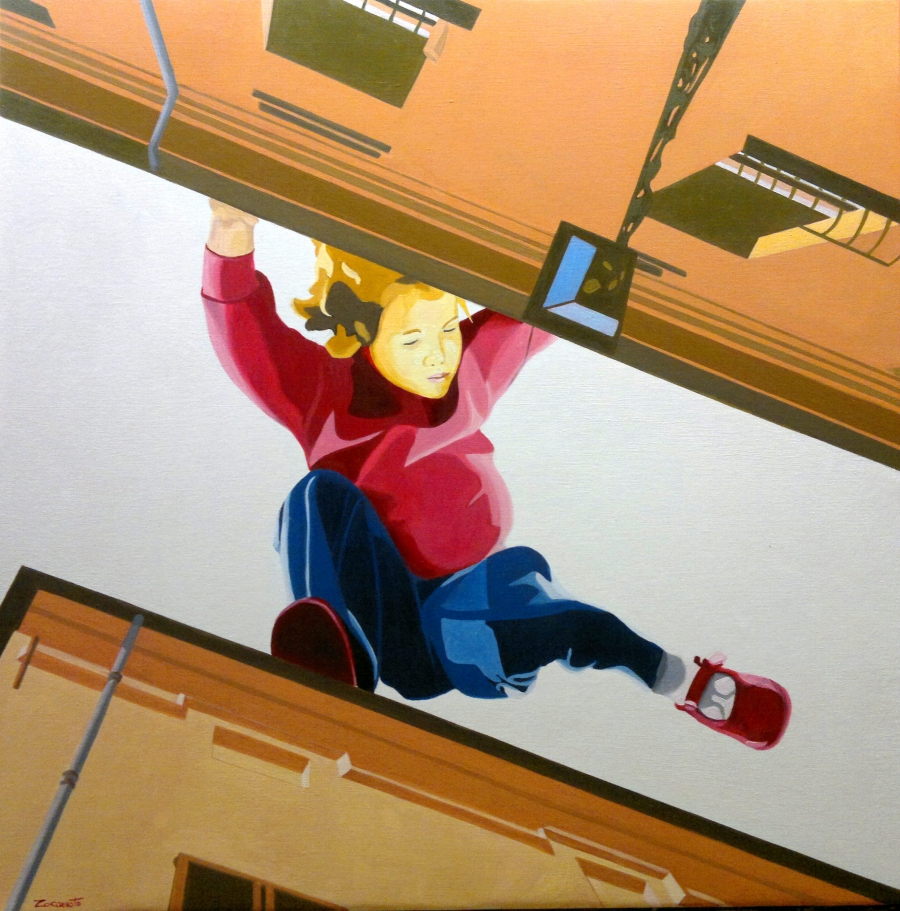
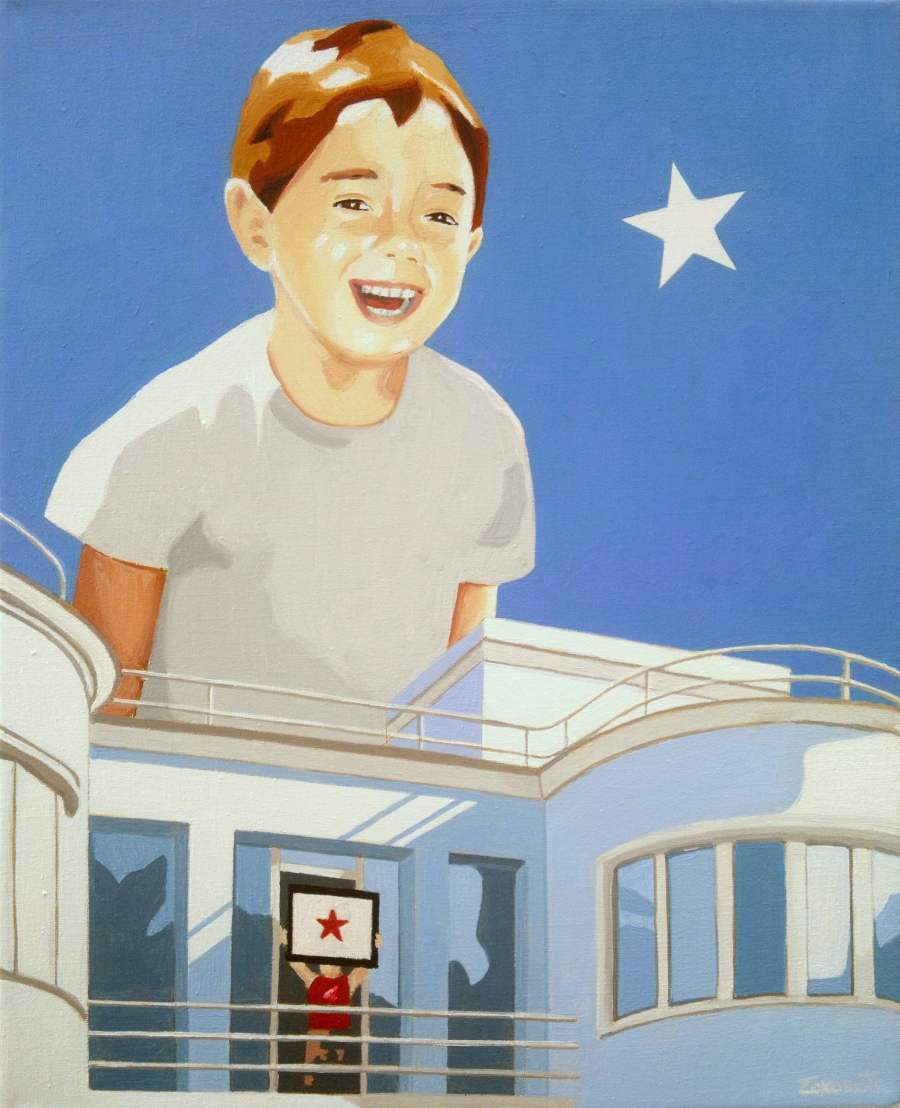
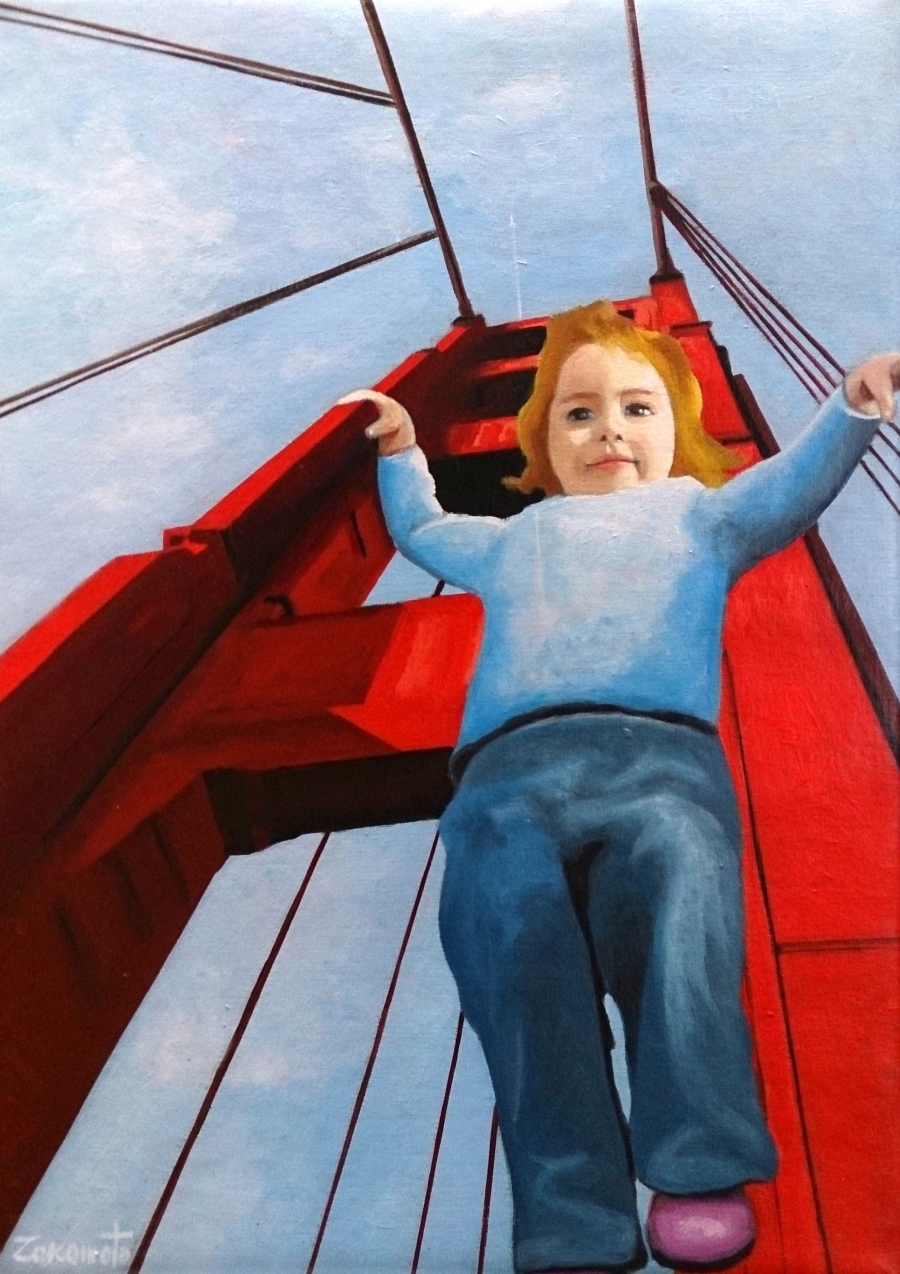
In children we envy the wonder with which they look at things, with which they try to probe the mystery of life. Naïve? No, quite the opposite. And Zakamoto's canvases prove it to us. Let us forget the blond heads and the delightful forms of the cherubs. Akira's children are true giants - and not only in stature - the keepers and bearers of a wisdom that is ancient and at the same time still in the making.
And so it is that we adults are the dwarfs on the shoulders of these giant-children, and, having climbed up on them, we have the chance to look beyond. Beyond the visible, beyond the tangible. Beyond everything that binds us, and confines us, to the present. Let us not, however, be deceived by Zakamoto's canvases.
Because, for all their constructive spareness, they carry messages that are not immediately or easily decoded. And by spareness I mean the clean, linear balance that governs each of his painted pages. Looking at one of his works, we are quick to notice that everything is exactly in the right place, that there is nothing superfluous or disturbing to the eye, that there are no useless, redundant descriptive passages designed merely to fill the space.
Absences and presences are knowingly measured out by the hand of an artist who, in my view, has no interest in pleasing at any cost. Akira has absorbed the art history of the twentieth century and at the same time seems to have wiped the slate clean of it. His works have no past - and so it is pointless to look for quotations and connections with it - but they have a present that lives and cries out powerfully in every single detail.
Let us therefore regard Zakamoto as a realist painter of our times, who does not shout his indictment of contemporary society but sublimates it and, in sublimating it, indirectly condemns it. He subverts the world we know, altering the balance of power between things: he takes us by the hand into a Lilliputian world in which houses suddenly become small and children become giants who, not by chance, almost always turn their backs on us.
He takes us to a beach where a group of mature women is towered over by the giant figure of a little girl dressed in the Chinese flag, emerging from the sea and running swiftly towards the shore: here is the sublimation of reality, which nevertheless takes on the outline of an admonition and a warning about what the future may hold for us. But his is also the world in which Agnese magically loses herself among the clouds, in which Matteo - little boy and hero at once - is a Superman resting from the labour of carrying us on his shoulders.
His is the world we can see through the gaze of the child who, full of hope and with his snack bag in his hand, begins his first day in the future. And it is a world which, in spite of everything, fills us with hope and pleases us.
Stefania Bison - On the shoulders of giants
As in a dream
the wind ruffled my hair
moving the clouds in the painted
sky
The storm of my boyhood
I played with my whole self
intent on winning
but with no purpose
and no shame,
unaware that love existed.
The game lost in time
comes looking for me again
as in a dream
Where did I meet love?
On a painted beach
among the high, unreachable towers
where I grew prickly pears
Pages torn from books of poetry
before an indescribable sea
a green and yellow sunset
Out at sea the busts of the giants
came towards us
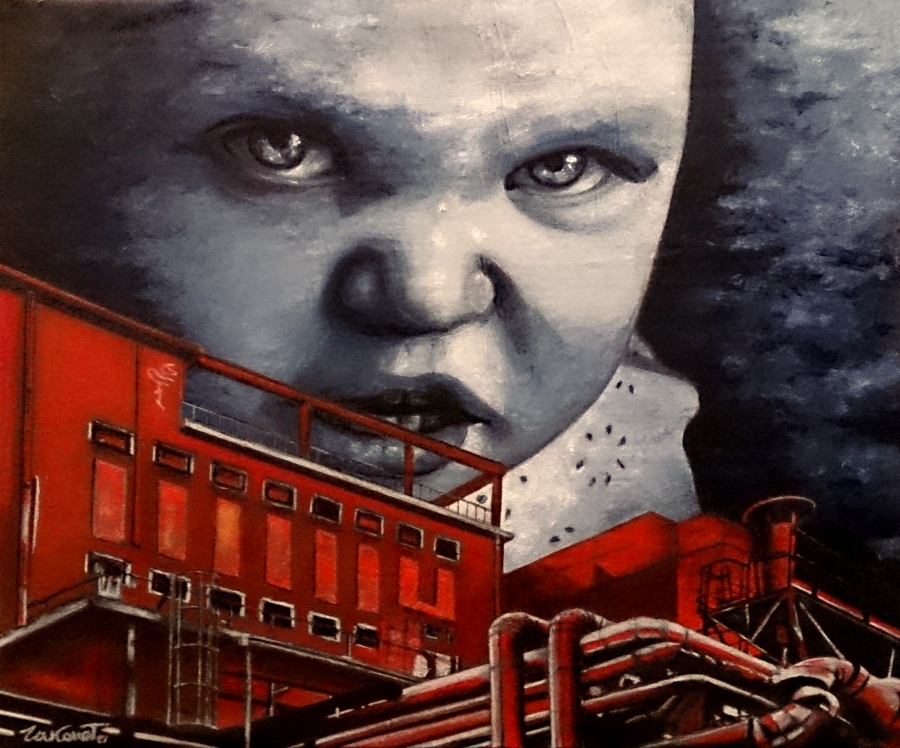
Akira Zakamoto. The industrial complex of Porto Marghera. The setting chosen by the Turin painter for the canvases made for this exhibition is emblematic. It is no accidental choice - it is dense with deep meanings - and it leaves very little room for interpretative doubt. The birth and development of Porto Marghera date back to 1917, when the Venetian entrepreneur Volpi obtained from the Ministry of Public Works the financial management of the project for building the industrial port.
Within fifty years the industrial zone tripled in size and, from production connected with shipbuilding, became the driving centre of the petrochemical sector. The economic boom increased production and, along with it, multiplied the problems of air and lagoon-water pollution and the serious, documented consequences for workers' health. The theatre of great corporate mergers, of union battles and protests, Marghera began, with the crisis of the petrochemical sector, to fold in on itself once more.
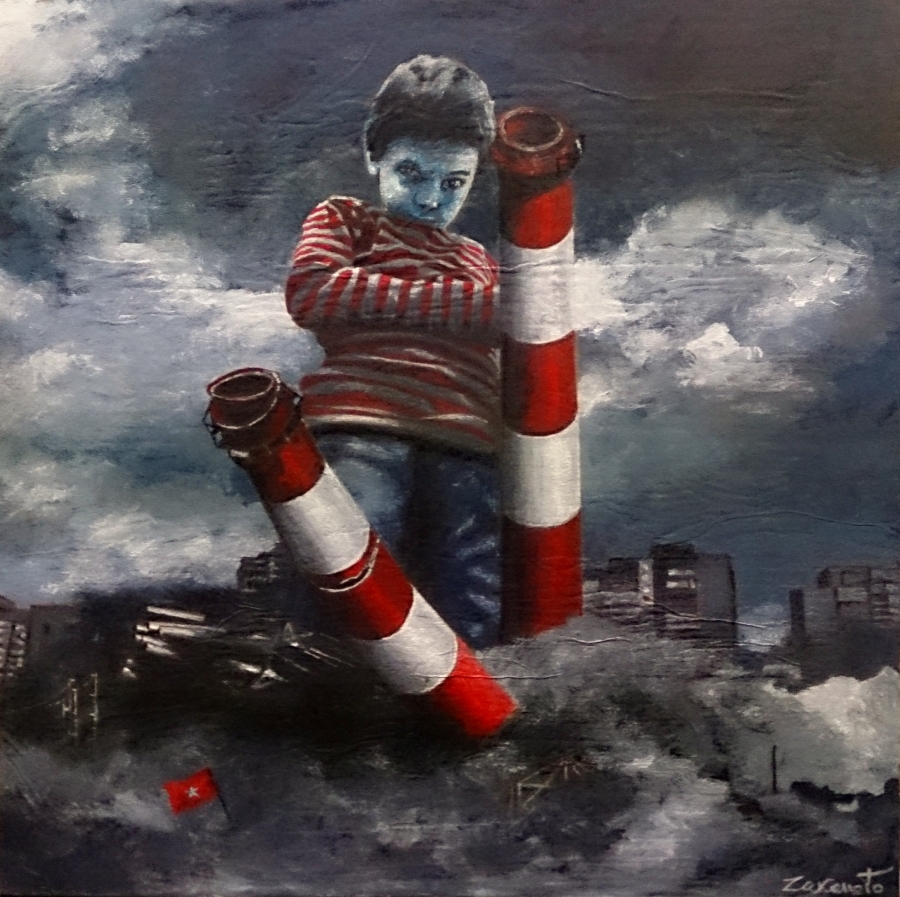
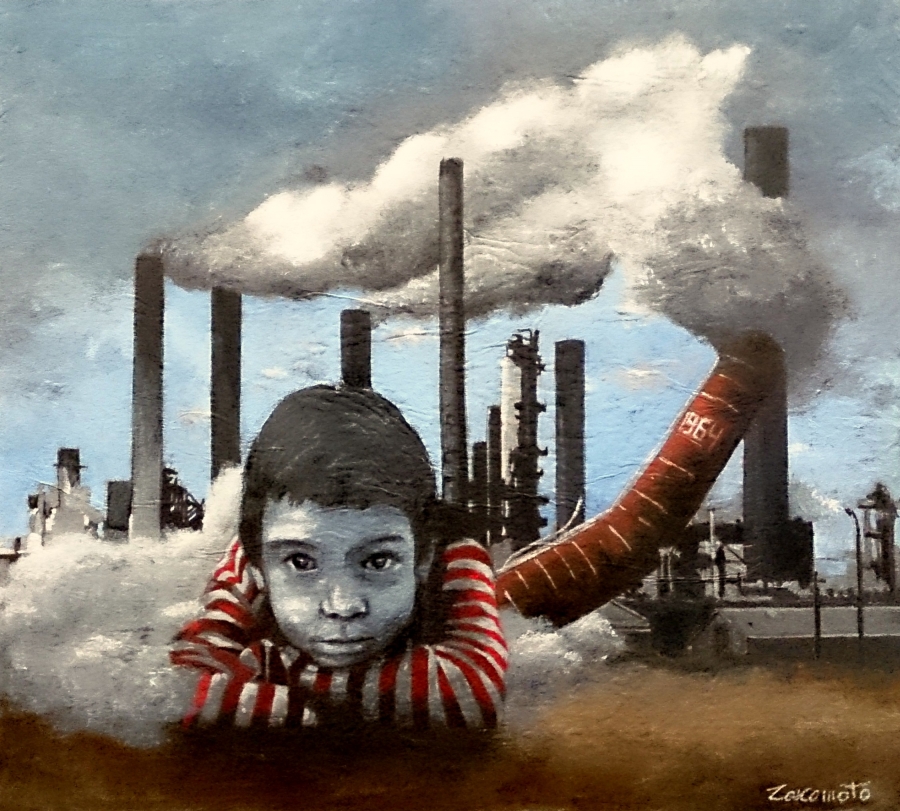
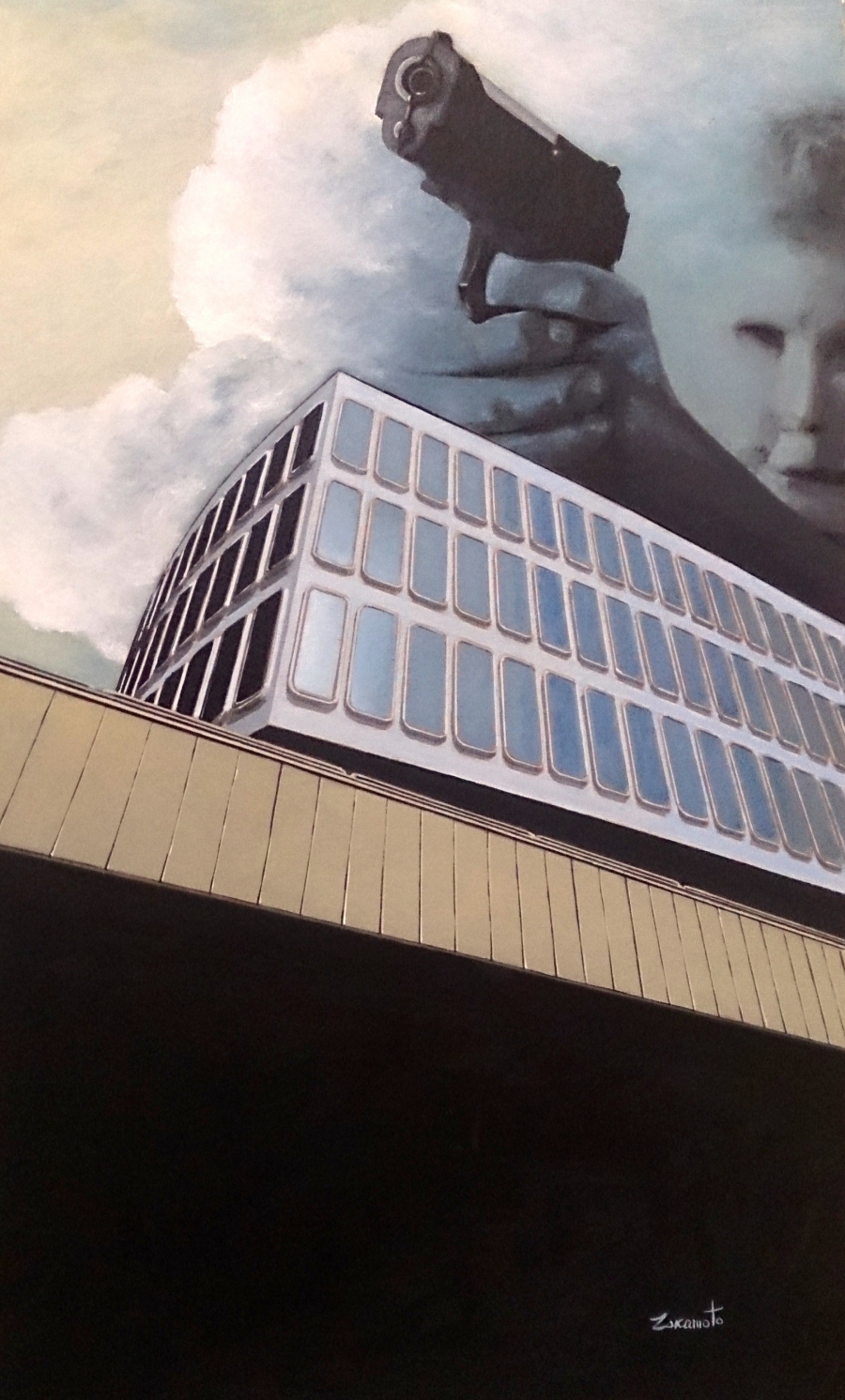
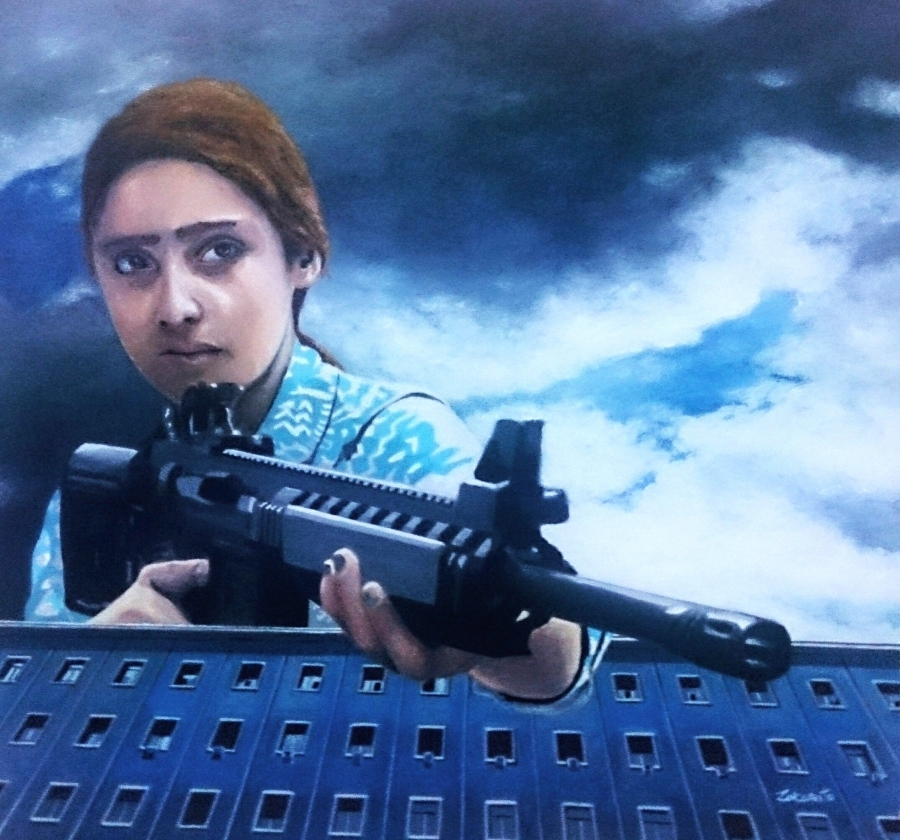
Gradually the factories were abandoned, awaiting a project for the redevelopment and clean-up of the area. And it is precisely at this moment that, beneath leaden skies saturated with pollution and behind menacing columns of smoke, Zakamoto's children come striding in. Let us forget the blond cherubs of the iconography of the past, because Akira's are not just any children. They are giants - and not only in stature - who, with their gaze now stern, now menacing, destroy chimneys and the skeletons of factories.
And, looking us straight in the face, they accuse us. It is hard to turn away in order to avoid their eyes, because before them we are all responsible for the environmental and social devastation we have managed to create in the course of a century. The iconographic means chosen by the artist to tackle the theme of labour are as interesting as they are unprecedented. On these painted pages labour is evoked exclusively by the buildings that housed it over the course of a century, just as the presence of the workers is implied but never made explicit.
In this context too Zakamoto confirms himself as a realist painter who nevertheless deliberately fails to respect the canons of this kind of painting. Akira does not openly shout his indictment of contemporary society, but sublimates it and, in sublimating it, indirectly condemns it. These are works of strong and immediate visual impact, in which the dark, rough tones play a happy chromatic counterpoint to the red of the children's shirts, which significantly recall the sheet metal of the factories.
Looking at these canvases we notice that everything is exactly in the right place, that there is nothing superfluous or disturbing to the eye, no redundant descriptive passage designed merely to wink at the viewer and fill the space. As always, the artist is able to weigh out absences and presences with skill, charging them with meaning. But let us now try to change our point of view and look at these painted compositions from a different angle.
We notice that nothing, in fact, is entirely concluded, and that there is a chink of hope: the heavy, ashen skies leave room for scraps of blue that open a view onto a future that can, and must, be different. Had Zakamoto not wished to grant himself, and us, a possibility of redemption, he would have let only the outlines of the industrial buildings speak. But here the true protagonists are the children who, by definition, are the promise and the hope of the future. It is they who, by mercilessly destroying the past, offer us the chance to lay the foundations for a different and better tomorrow.
Porto Marghera, then, is nothing other than the emblem of a century that radically changed the economy and society, often trampling on human rights and on individual lives. The child who looks at us with a mocking smile in the work The End of Labour is in reality the starting point from which to begin again. Because every ending always presupposes a new beginning.
Stefania Bison - From the ashes of the past, the resources of the future

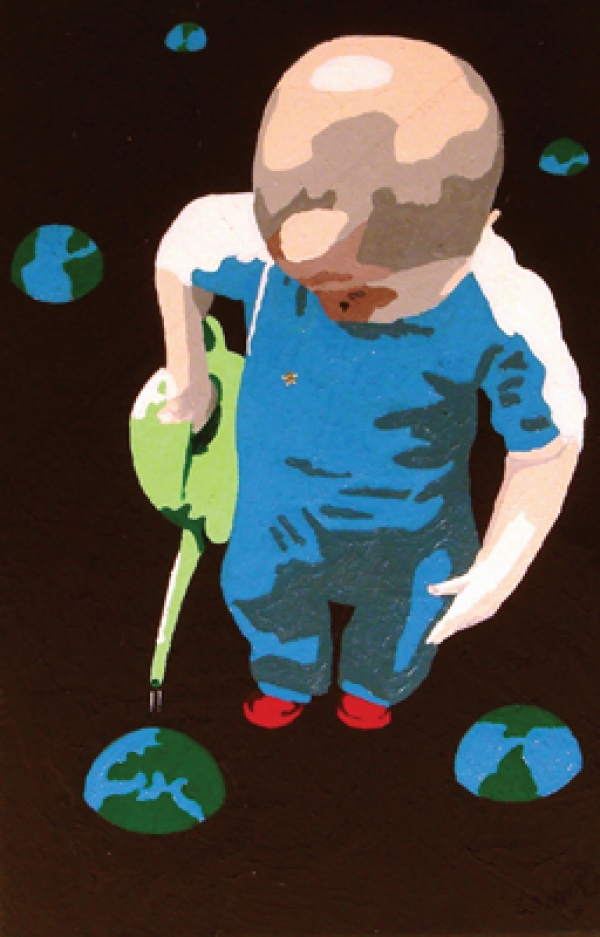 CHLOE THE CREATOR Enamel on canvas 20 x 40 cm. Akira Zakamoto
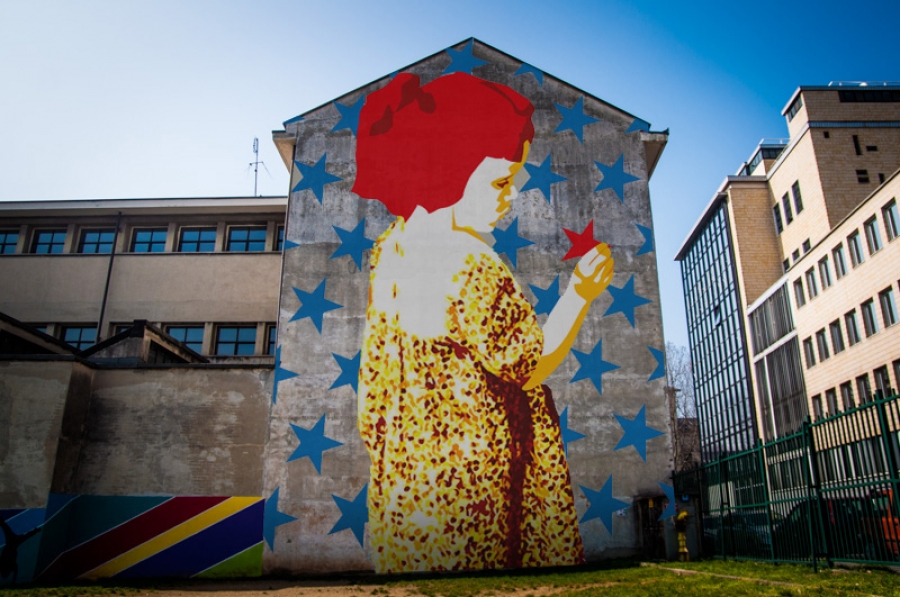
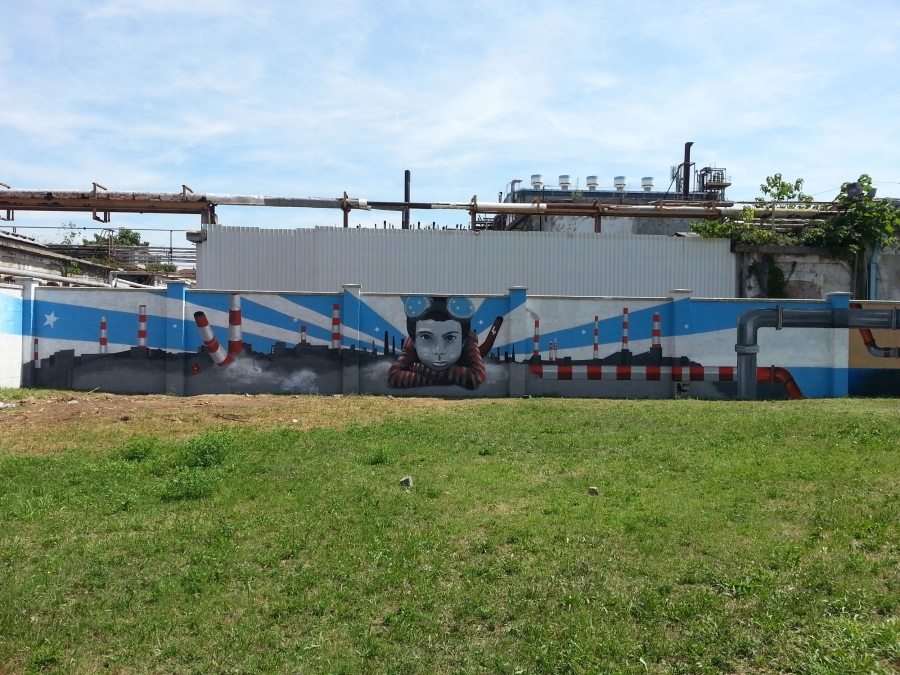 LA FABBRICA DEI SOGNI - WALL 2000 x 300 cm.
 A 54-metre mural painted in a week by three artists - Ciro Palumbo, Luca Motolese and Alessandra Carloni - working together under the name "Prometeo".
It colours the outer walls of Olon, the historic industrial plant of Settimo, in the Via Schiapparelli area of Settimo Torinese.
The work, which won the call for entries of the Fondazione Esperienze di Cultura Metropolitana through the Ecomuseo del Freidano/Ecotempo project, is one of the actions proposed by the City of Settimo Torinese for the urban regeneration of industrial areas, within the Compagnia San Paolo call entitled "Cittadino albero. Public space, green space, social space".
I portray enormous children and beautiful women who cross the seas and stride over mountains, with the awareness in their eyes of being the new human race: giants returning, looking down from above on the old, frightened dwarfs.
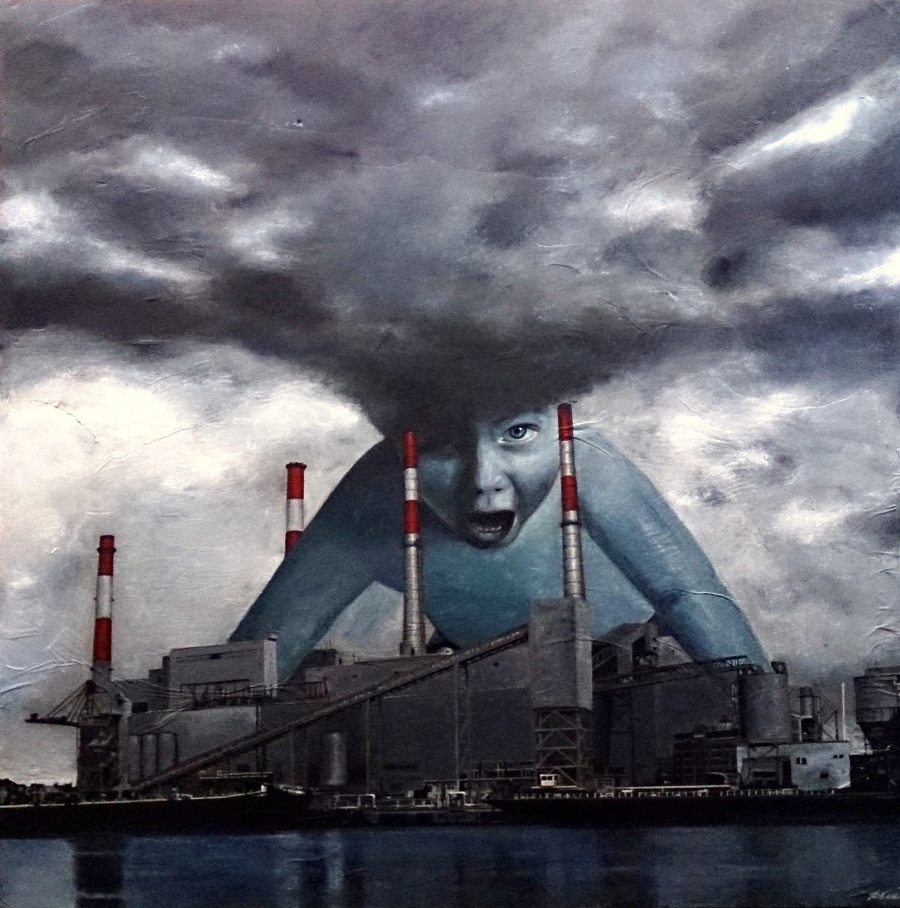 HURRICANE Pastels on paper 80x80 cm. Akira Zakamoto
 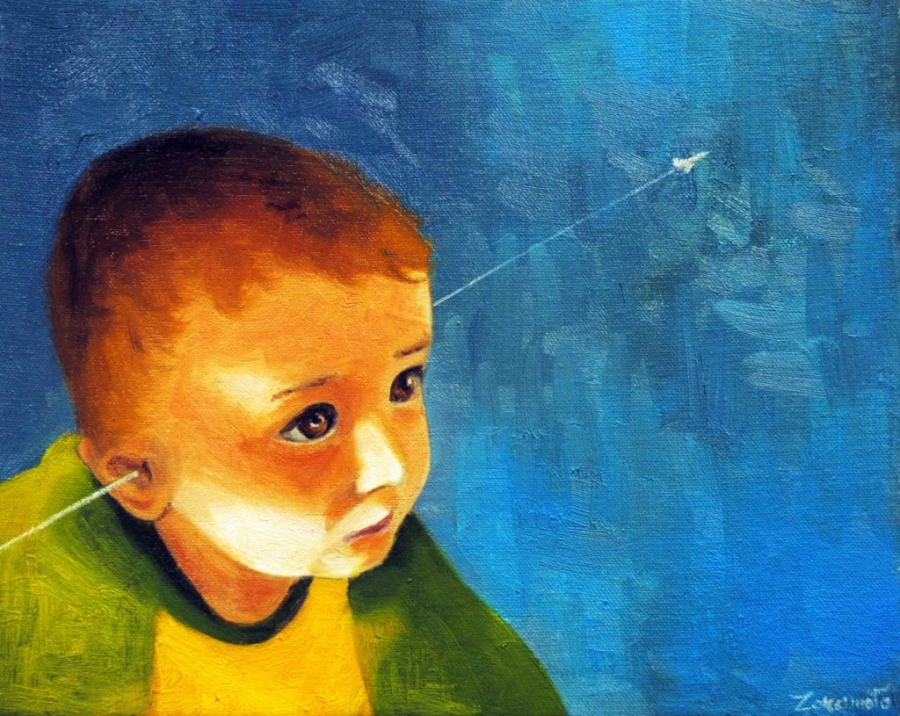 GATEWAY Oil sketch on paper 35x25 cm. Akira Zakamoto
 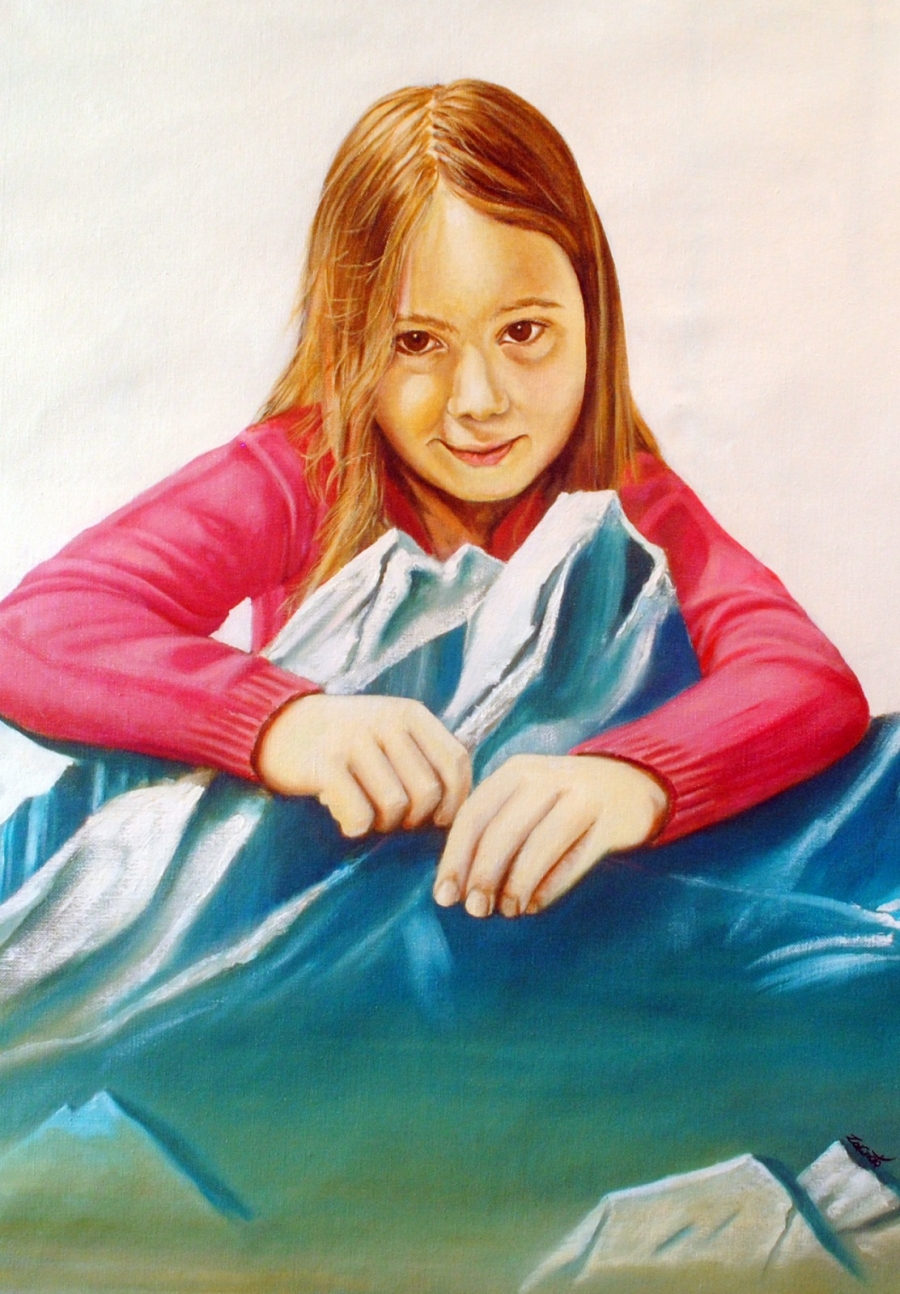 THE MOUNTAIN GODDES Oil on canvas 100x150 cm. A. Zakamoto